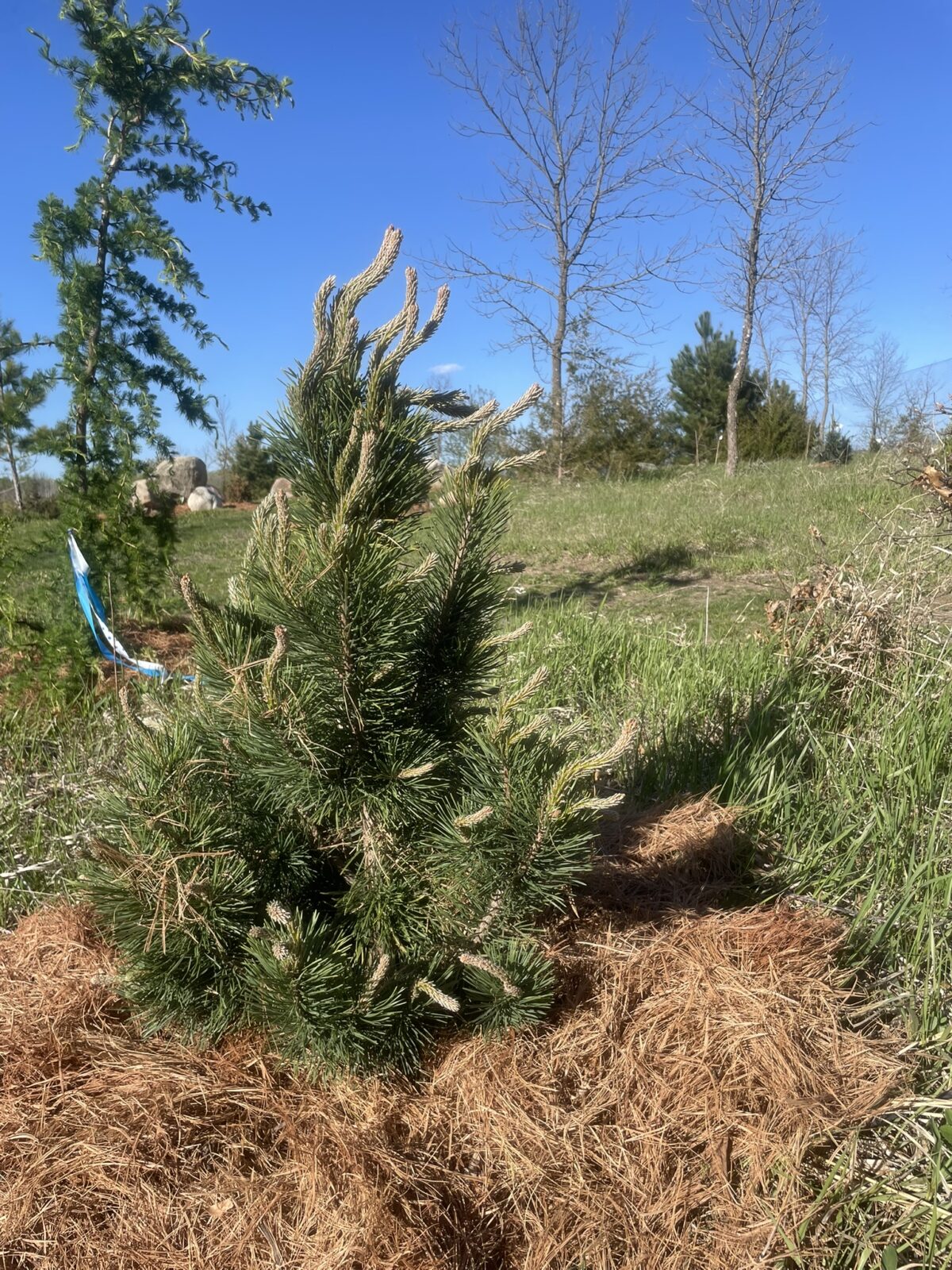
Pinus mugo ‘Tannenbaum’ has a perfect Christmas-tree shape and displays an exceptionally good habit with the tough constitution of other mugos. Believed to be the first single-stem tree form of Mugo Pine to be commercially produced and distributed, it was selected from hundreds of seedlings in the trial beds of McCrory Gardens at South Dakota State University. Foliage is rich green with a hint of gray/blue, even during winter. Highly adaptable to a wide range of environmental and climatic conditions and very hardy. The original plant reached 10 to 11′ tall and 6′ wide after 25 years. Mature size: 15’H x 12’W Zone 2
Author: admin
Mac’s Gold White Spruce (Picea glauca ‘Mac’s Gold’)
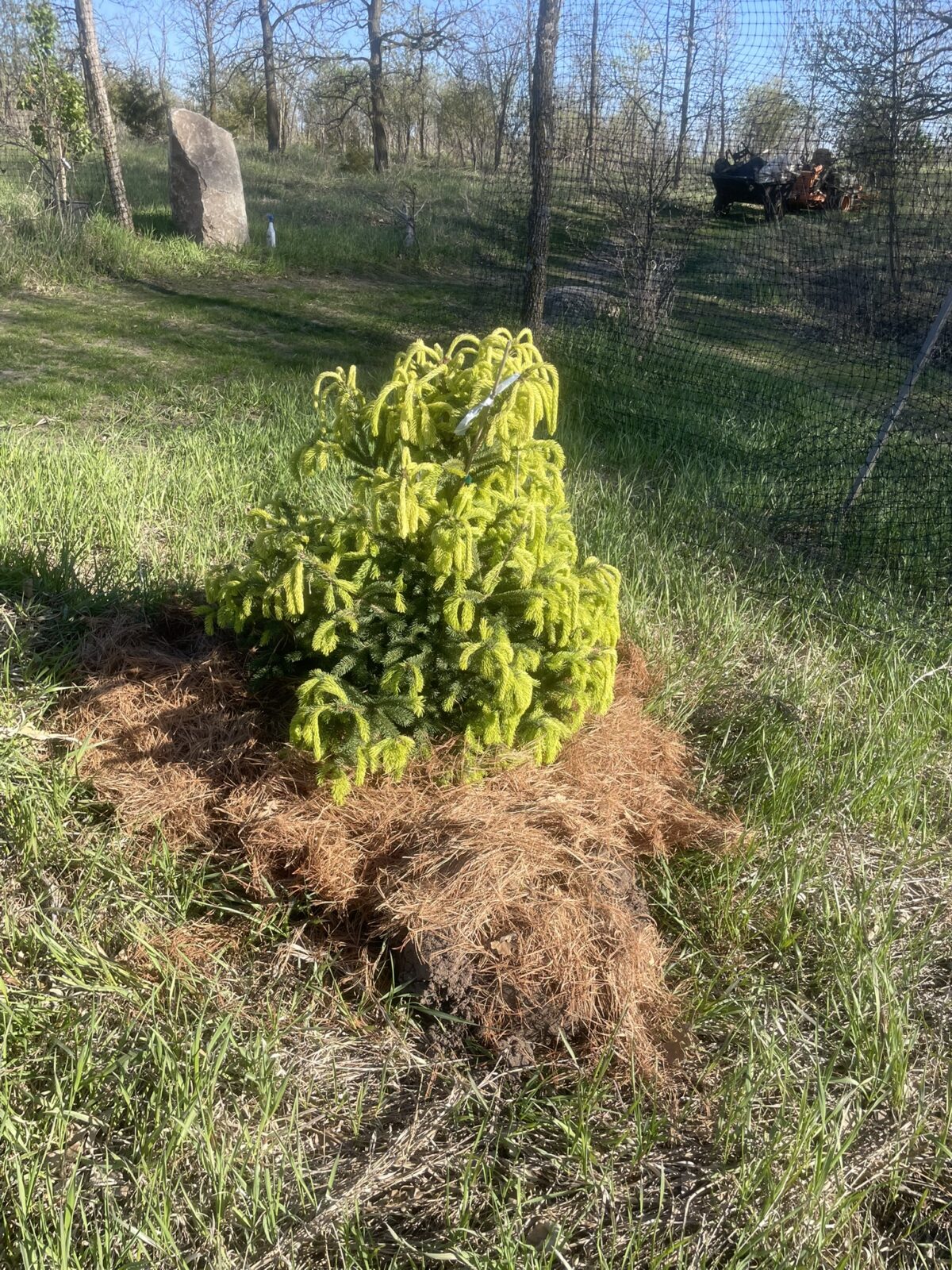
Small grayish green needles cover branches in an open growing form. An exciting springtime bonus of Picea glauca ‘Mac’s Gold’ is the bright yellow flush of new foliage and the addition of small red cones add to the display. The foliage gradually fades to green to finish out the year. A perfect background tree that adds a surprise to the early season. Mature Size: 20’H x 15’W Zone 3
Extra Blue Limber Pine )Pinus flexilis ‘Extra Blue’)
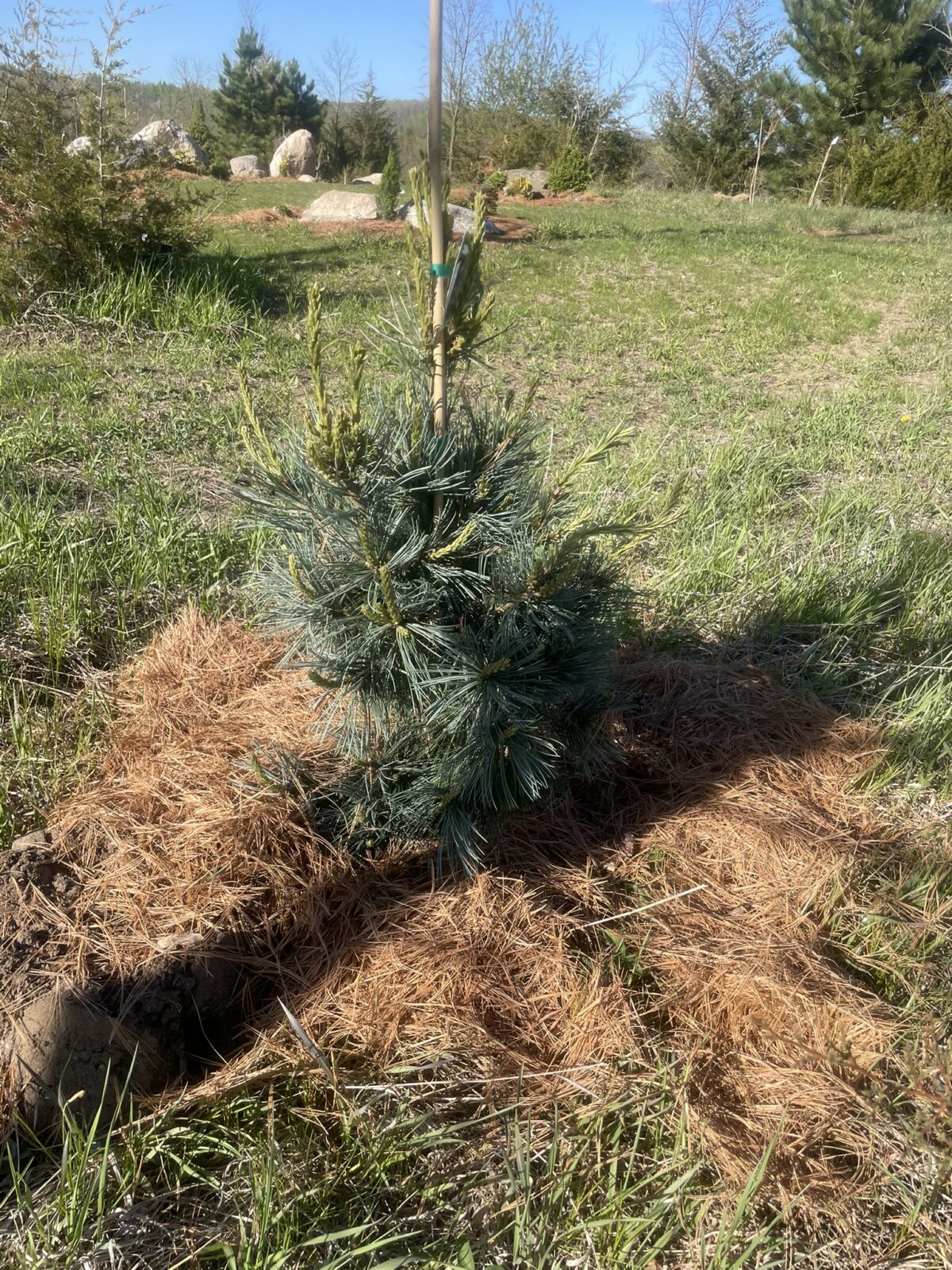
Aptly named, the standard size Pinus flexilis ‘Extra Blue’ boasts outstanding color on its clusters of five, long, slightly twisting or curving needles. The fast-growing tree, which prefers moist, well-drained soil, develops an attractive pyramidal habit and 3-6″ long, light brown, resinous cones. Mature size: 25’H x 15’W Zone 4
Silver Blue Serbian Spruce (Picea omorika ‘Silberblue’)
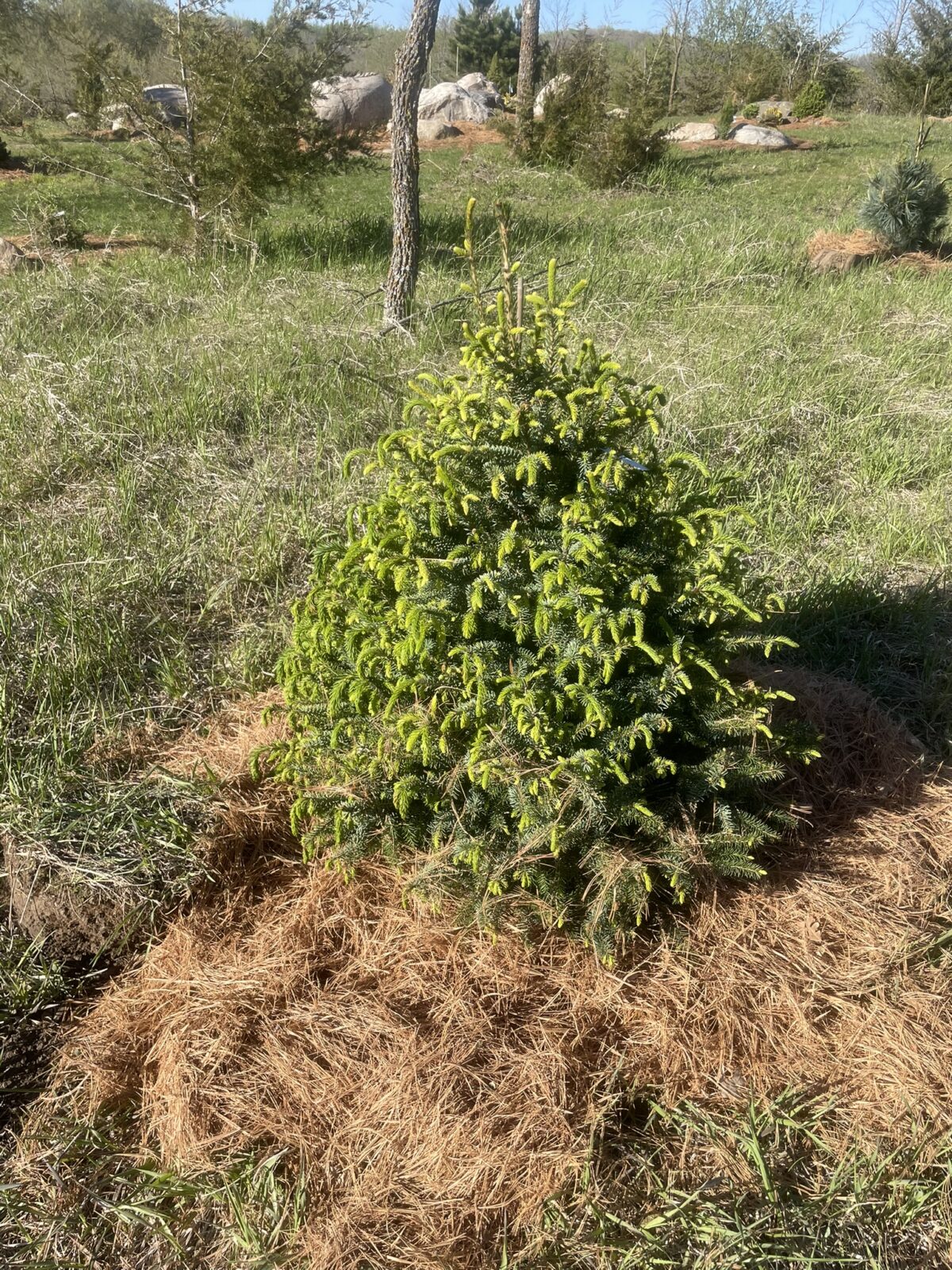
Picea omorika ‘Silberblue’ has classic two-tone needles, green with silvery-blue undersides. The branches sweep upward exposing the undersides of the needles and reflecting against the top side to display a bright silver-blue against a green background. Plant with enough space around it so that it can develop into an attractive and colorful anchor in the garden. Full sun and well-drained soil is best. Mature size 25’H x 15’W Zone 4
Troemner Hybrid Spruce (Picea x Troemner)
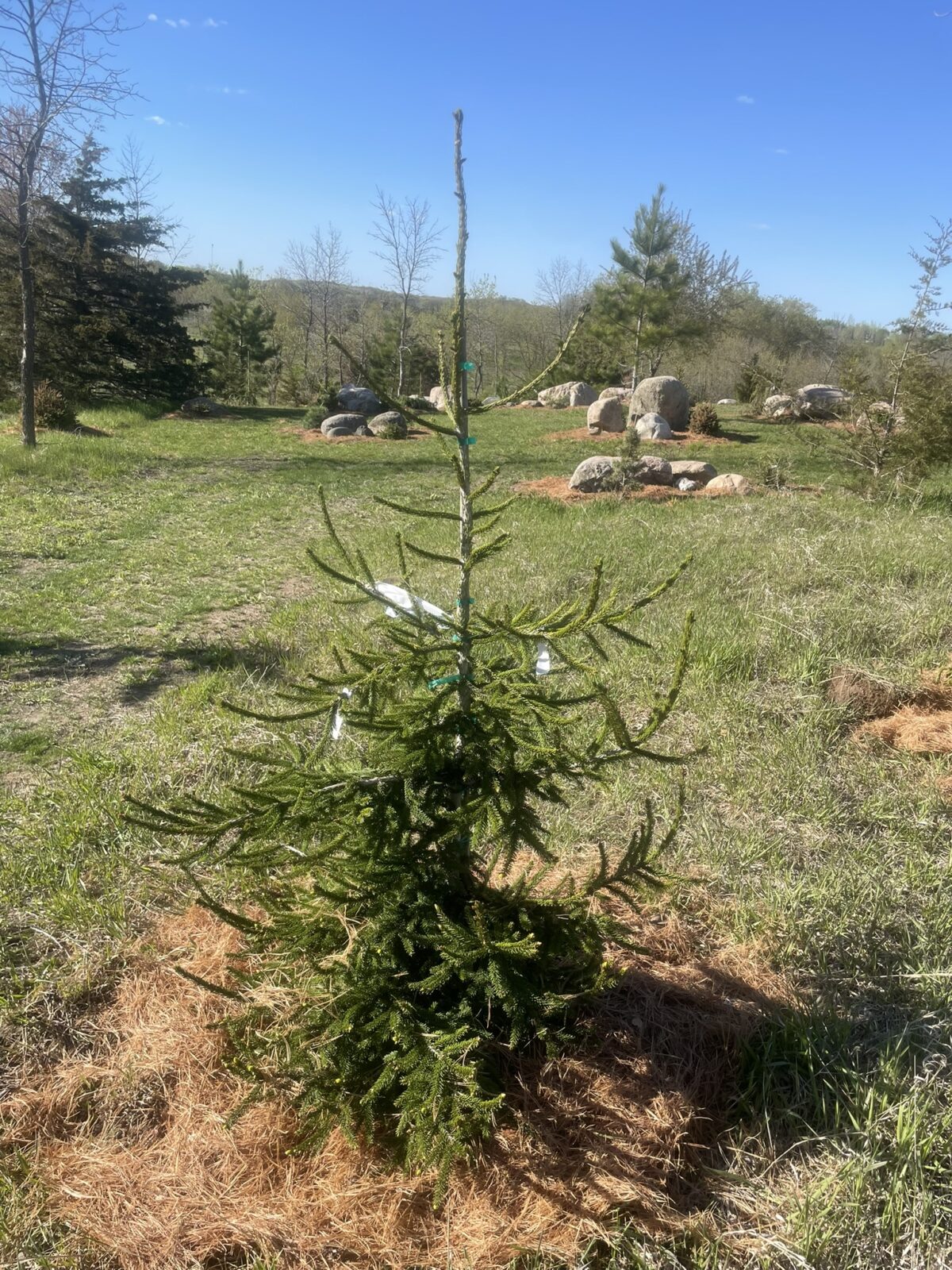
This hybrid cross of pungens and omorika has prickly pungens style needles with characteristic omorika blue-green needles. Sweeping branches and fairly fast growth form a specimen sized tree that gets better and better with age. Selected by Allen Troemner, University of Wisconsin Forestry Department. Mature size: 25’H x 15’W Zone 4
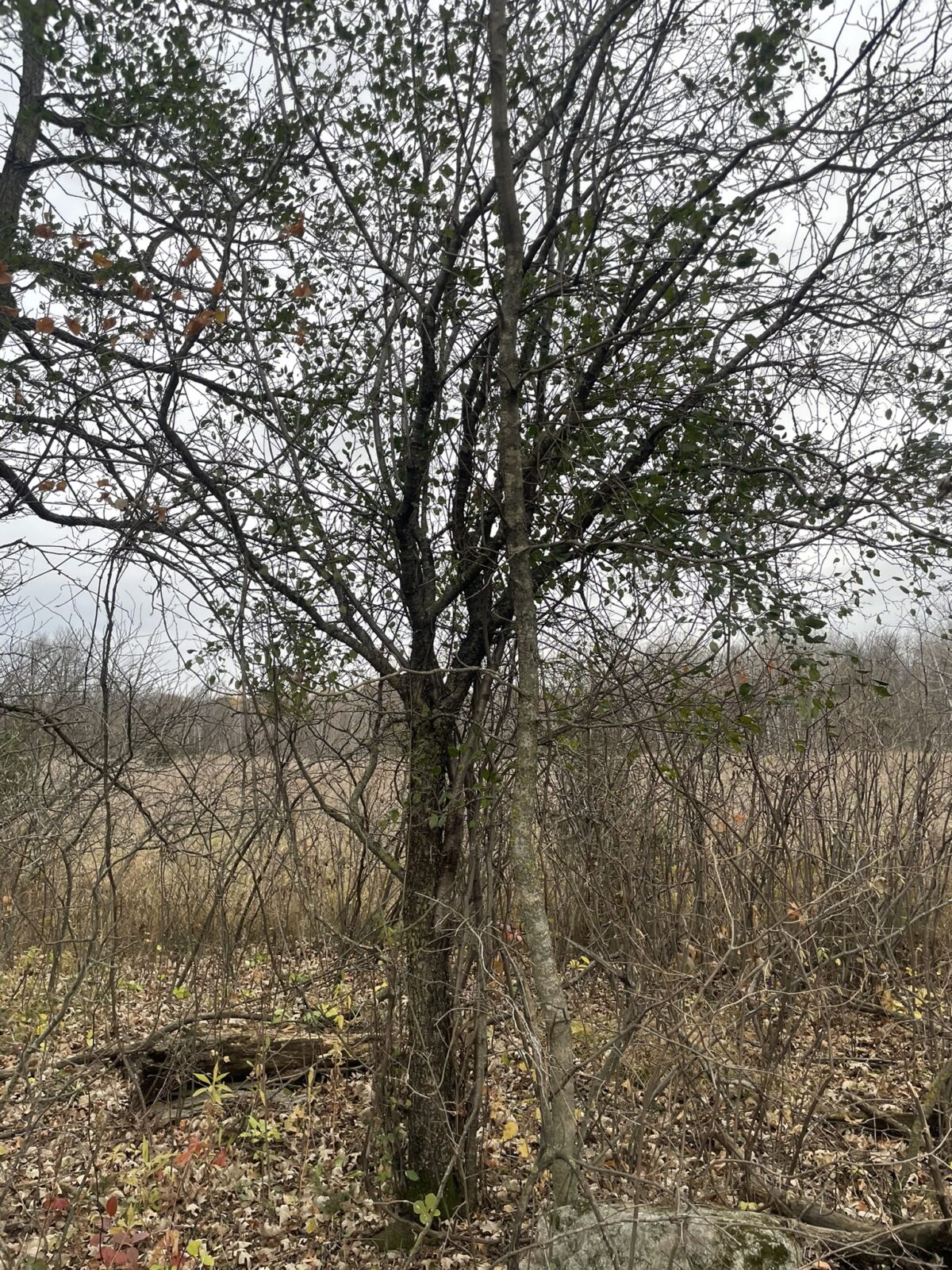
European Buckthorn (Rhamnus cathartica)

Native To State: NO
Naturally Occurring: NO
Description
Small-medium tree with glossy dark green leaves that persist after the native species have all turned color or lost their leaves. This makes it easy to spot in late October/November, which makes removal easier.
This species is the single biggest threat to the arboretum. As a result, a strict annual cut-and-treat is performed every fall. All specimens found that are thumb-thick or larger are cut and treated with Tordon to prevent resprouting. While this practice has been successful in keeping our woods from becoming a monoculture of this invader, it will be a never-ending task. None of the surrounding neighbors employ such control providing a a source for new seeds to be carried in by birds. Smaller seedling size plants are necessarily ignored until they get a little larger. The most important targets are those which are producing berries.
Occurrence
Widespread throughout the property
Autumn Spire Maple (Acer rubrum ‘Autumn Spire’)
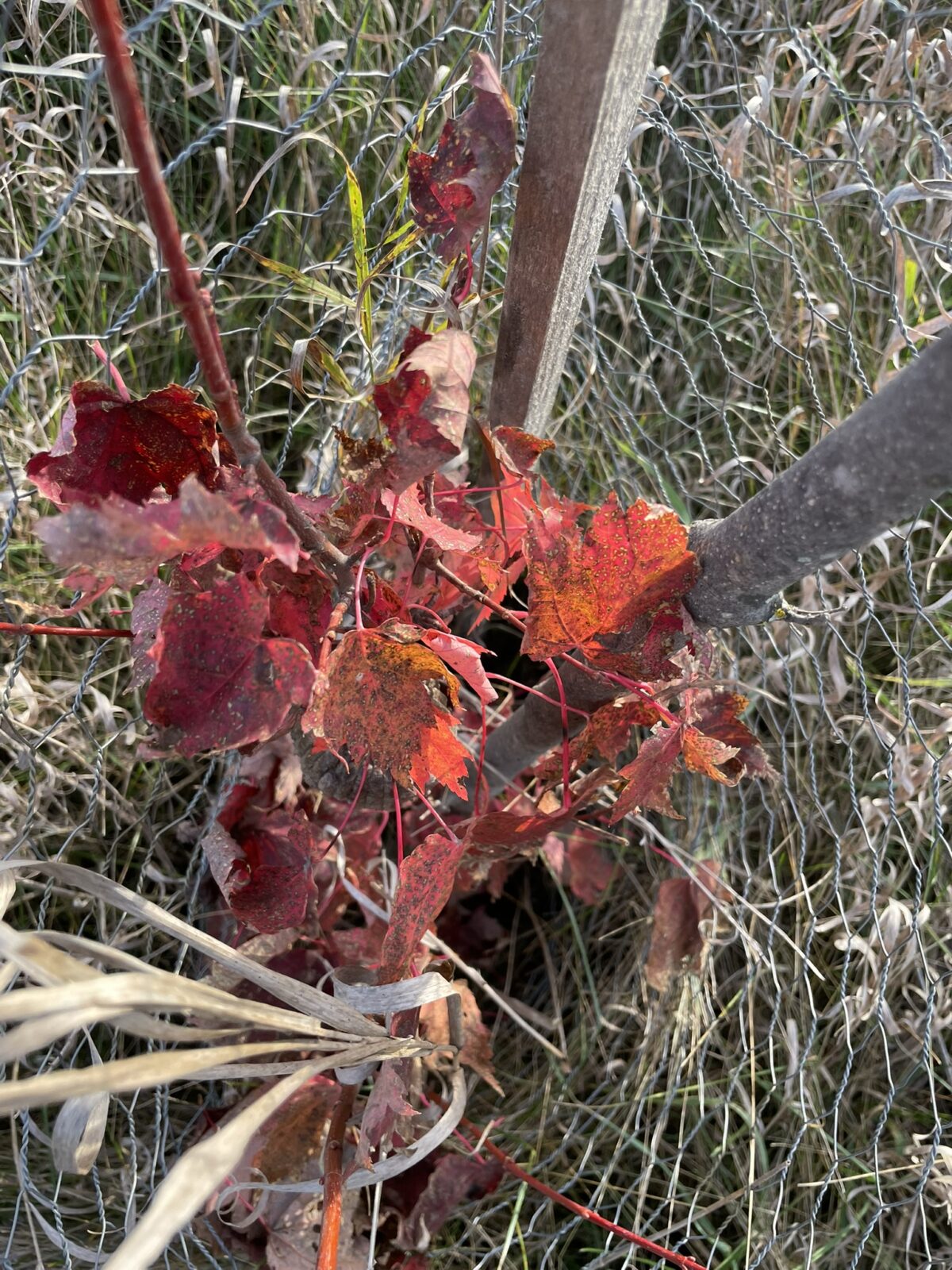
Planted in 2019 – died back and resprouted above the graft.
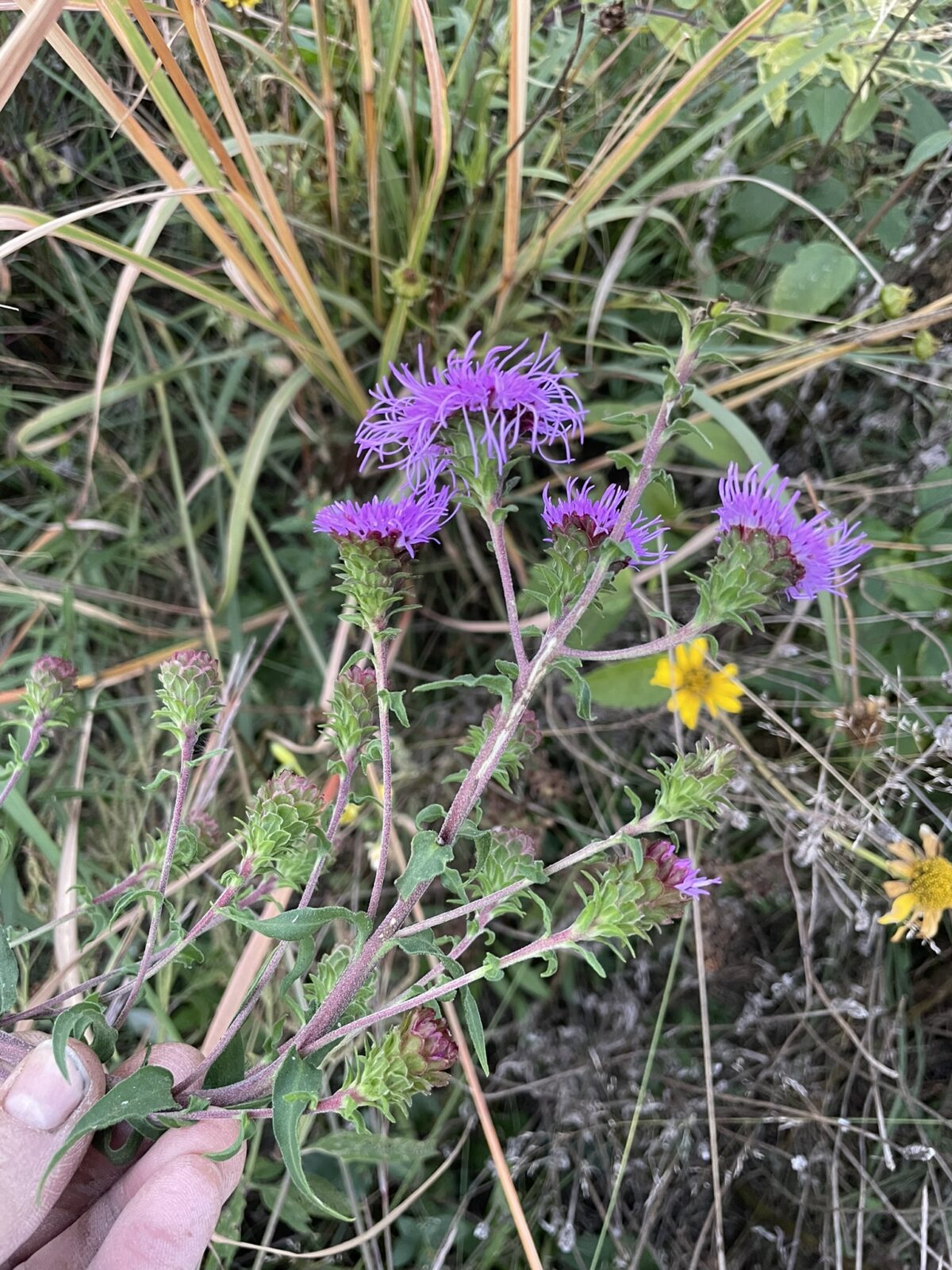
Northern Blazing Star (Liatris scariosa var. nieuwlandii)

Native To State: NO
Naturally Occurring: NO
Description
Late-flowering liatris with large flowers on spread-out stalks. Very distinct among the genus
Occurrence
Seeded in Large Prairie
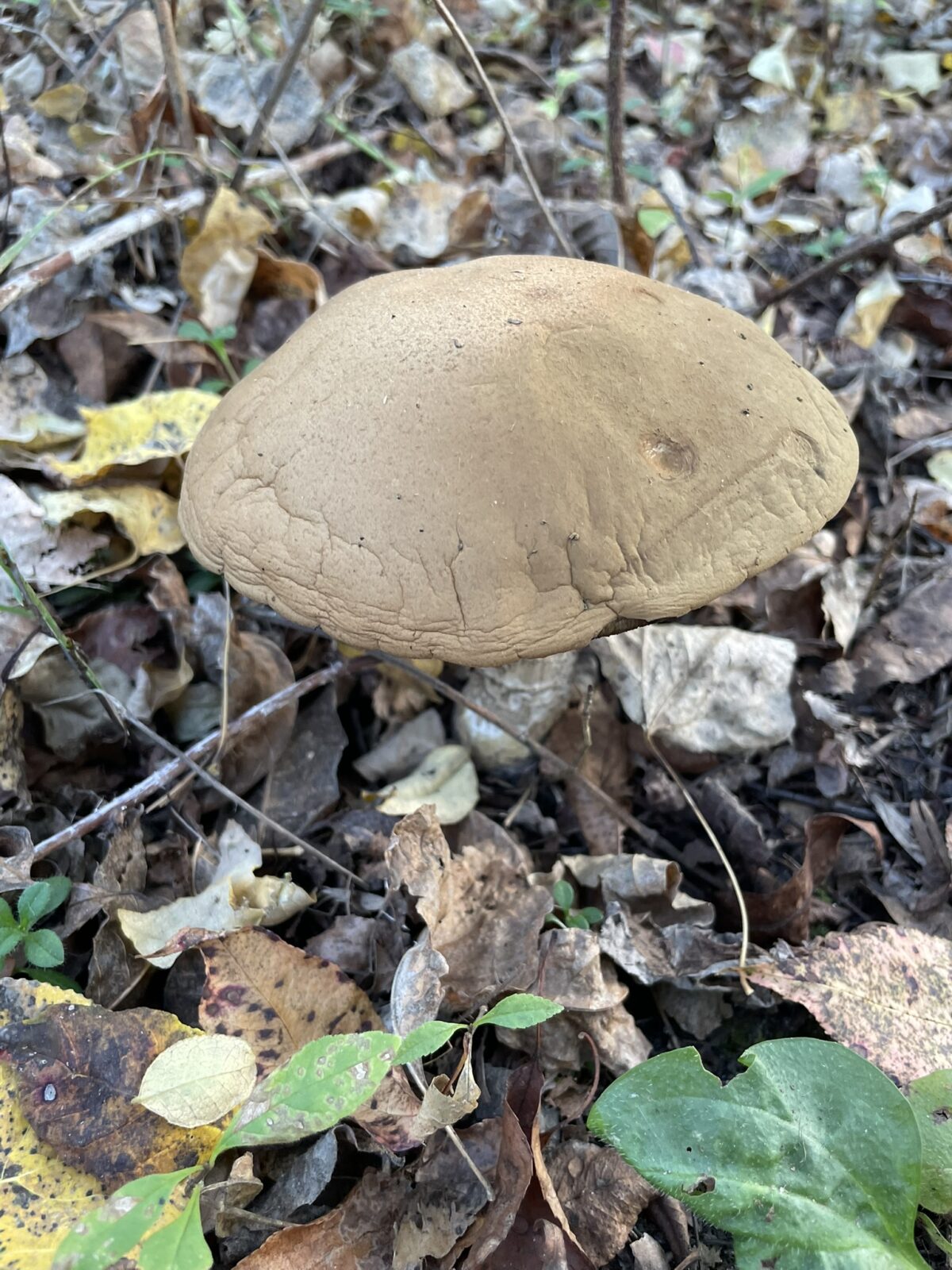
Brown Birch Bolete (Leccinum scabrum)

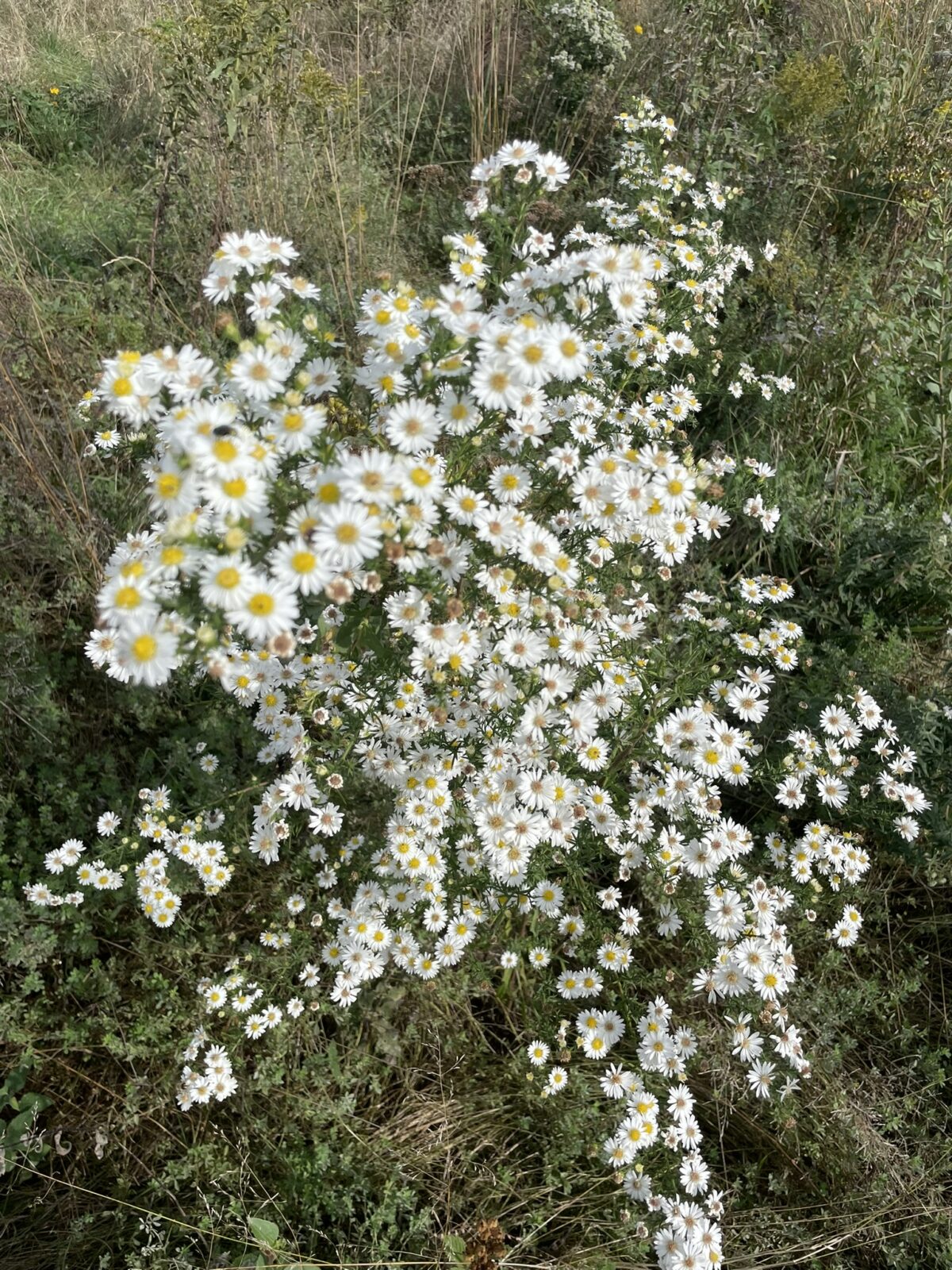
Heath Aster (Symphyotrichum ericoides)

Native To State: YES
Naturally Occurring: YES
Description
White-flowering aster with narrow leaves and usually dense flower clusters
Occurrence
Found in various open areas and wood margins