
Native To State: YES
Naturally Occurring: NO
Description
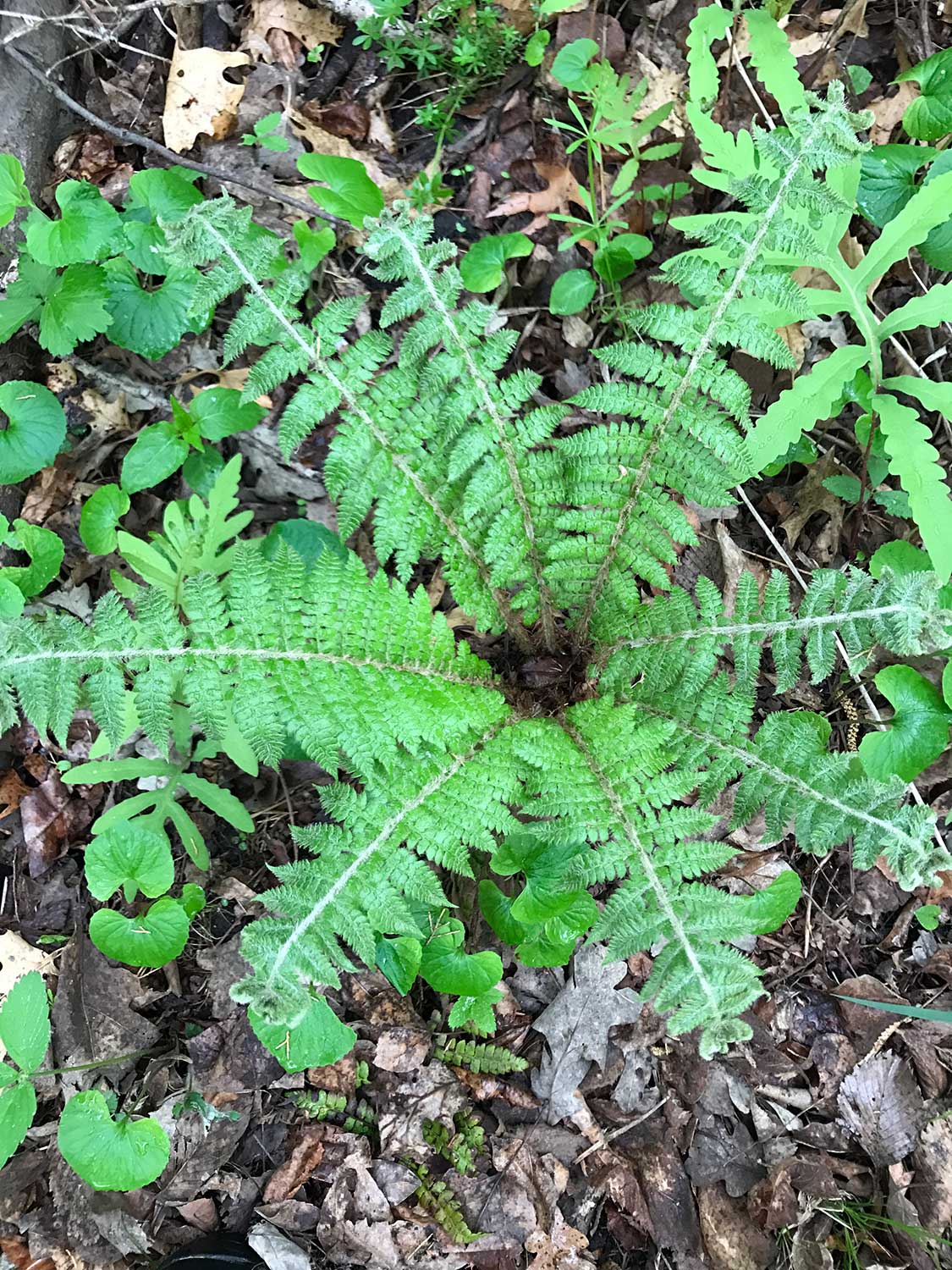
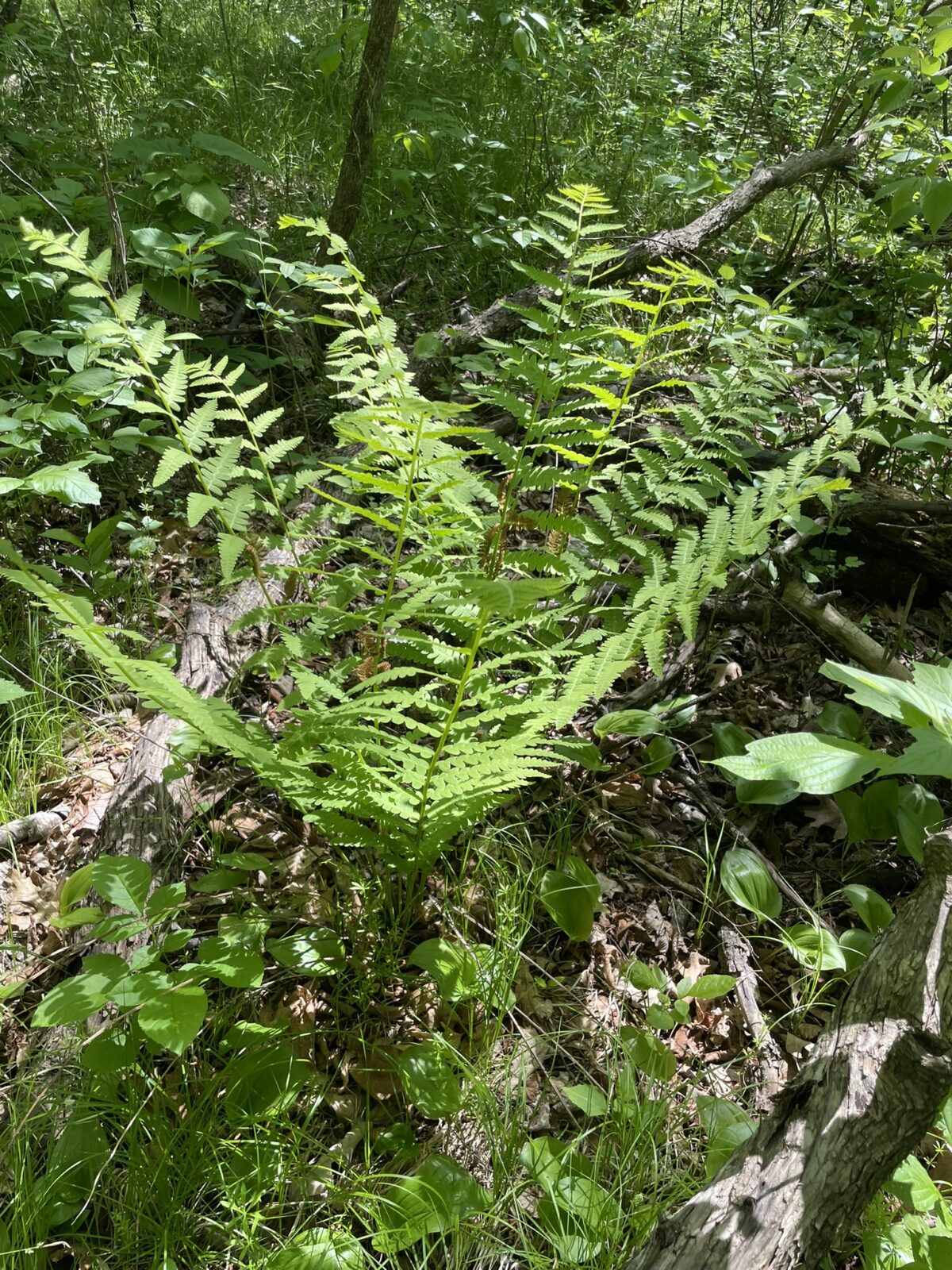
Appearance: Larger fern with fronds “interrupted” by spore capsules. Easy to identify.
Distribution: Native to North America.
Occurrence
Found in several places in the woods
Native To State: YES
Naturally Occurring: NO
Description
Appearance: Larger fern with fronds “interrupted” by spore capsules. Easy to identify.
Distribution: Native to North America.
Occurrence
Found in several places in the woods
Native To State: YES
Naturally Occurring: NO
Description
Appearance: A smaller fern with long, narrow fronds. Produces small rolled up ferns on the bottom of the fronds, which drop off and grow.
Distribution: Native to North America.
Occurrence
Found in several places in the woods
Native To State: YES
Naturally Occurring: NO
Description
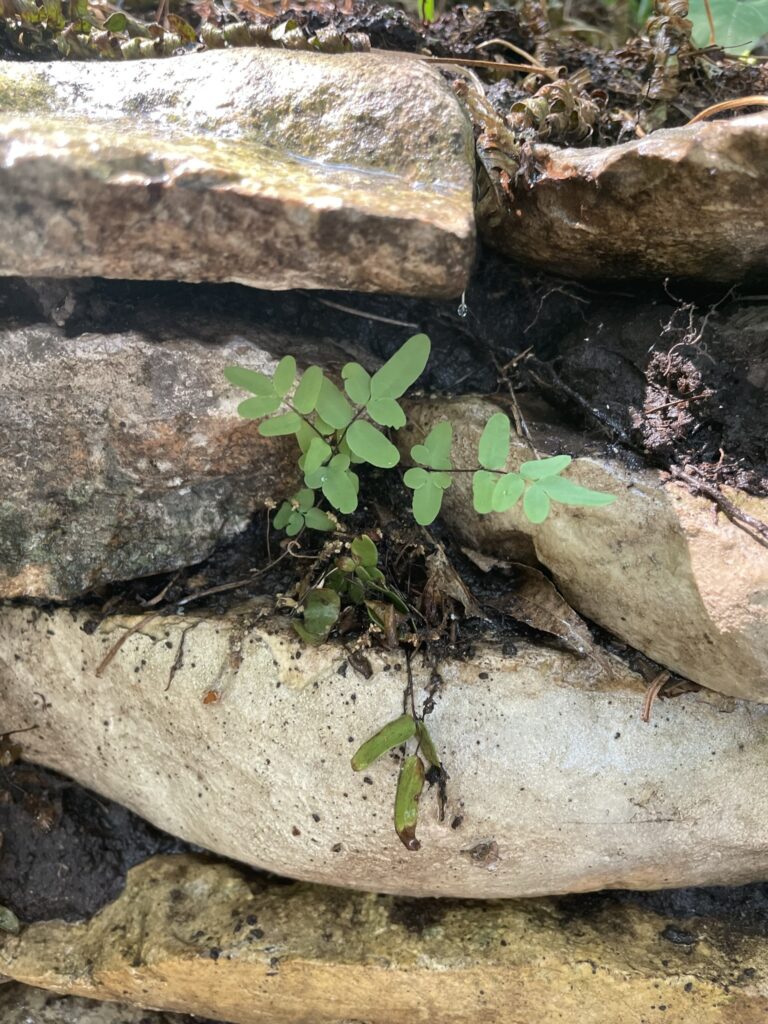
Appearance: Pellaea glabella is a fern known for its delicate, finely divided fronds and shiny, dark stalks.
Fronds: The fronds are finely divided, lance-shaped, and have a glossy appearance.
Spores: Spore clusters (sori) are found on the undersides of the fronds.
Habitat: It is commonly found on rocky cliffs and outcrops.
Distribution: Smooth cliff brake fern is native to North America.
Occurrence
Found in large brush island
Native To State: YES
Naturally Occurring: NO
Description
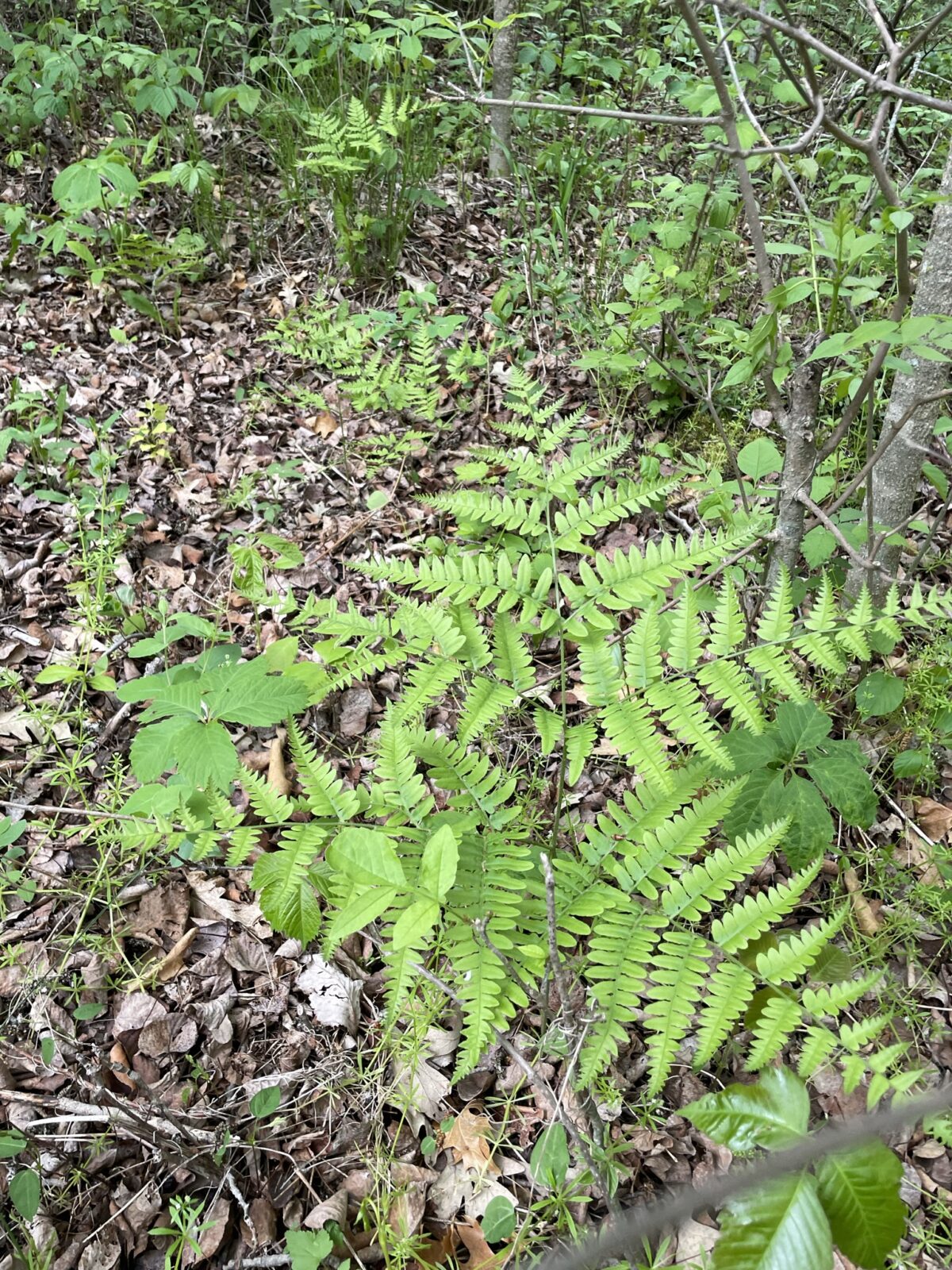
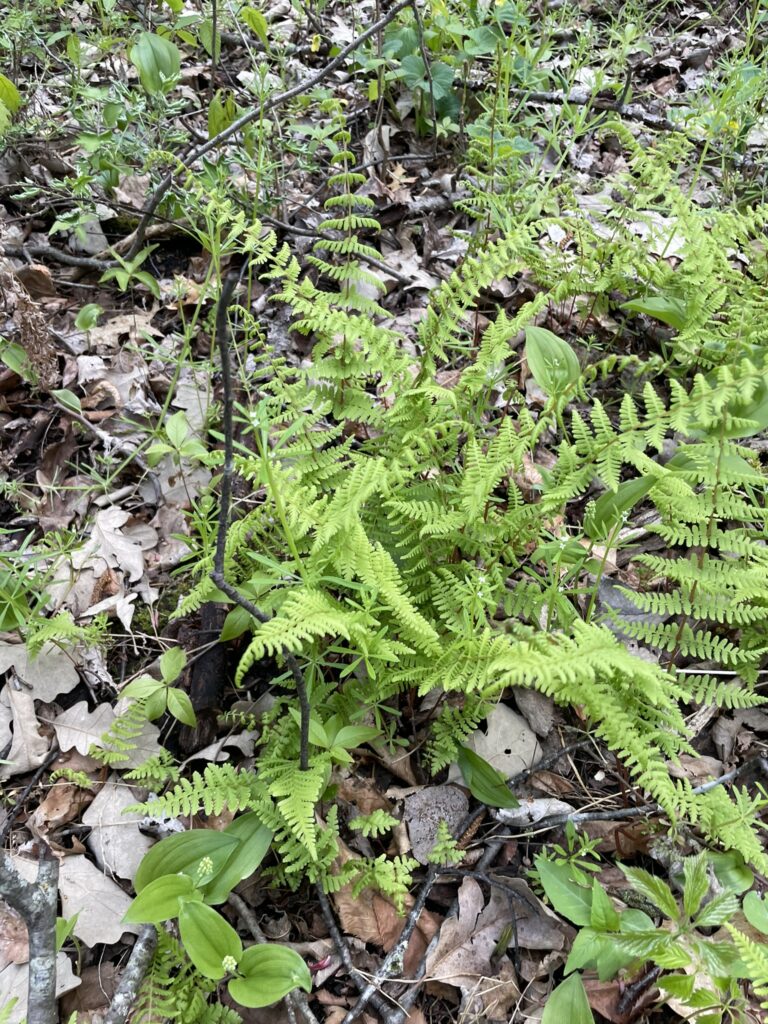
Appearance: Pteridium aquilinum is a large, deciduous fern known for its triangular fronds and tall, upright growth.
Leaves: The fronds are triangular and deeply lobed, resembling the shape of a feather.
Spores: Reproduction occurs through spores produced on the underside of the fronds.
Habitat: It is commonly found in a wide range of habitats, including woodlands, grasslands, and disturbed areas.
Distribution: Bracken fern is found in many parts of the world.
Occurrence
Planted along fern path and on the spring in the back 40 woods.
Native To State: NO
Naturally Occurring: NO
Description
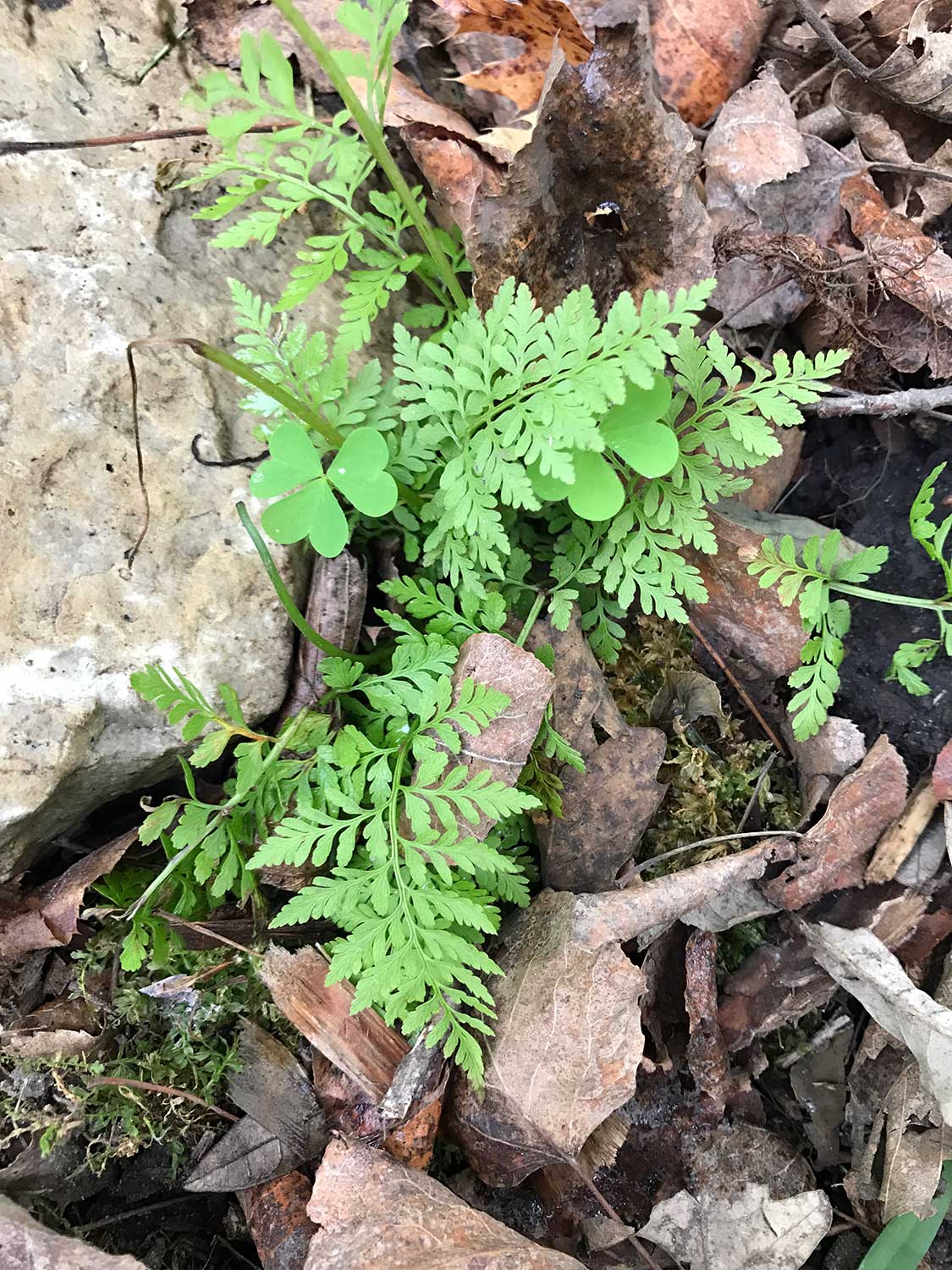
Appearance: Cystopteris protrusa is a delicate fern known for its finely divided fronds and fragile appearance.
Fronds: The fronds are finely divided and appear delicate.
Sori: It produces sori (spore clusters) on the undersides of the fronds.
Habitat: It is commonly found in moist woodlands and rocky slopes.
Distribution: Lowland fragile fern is native to North America.
Occurrence
Found on outcropping on fern walk

Native To State: YES
Naturally Occurring: NO
Description
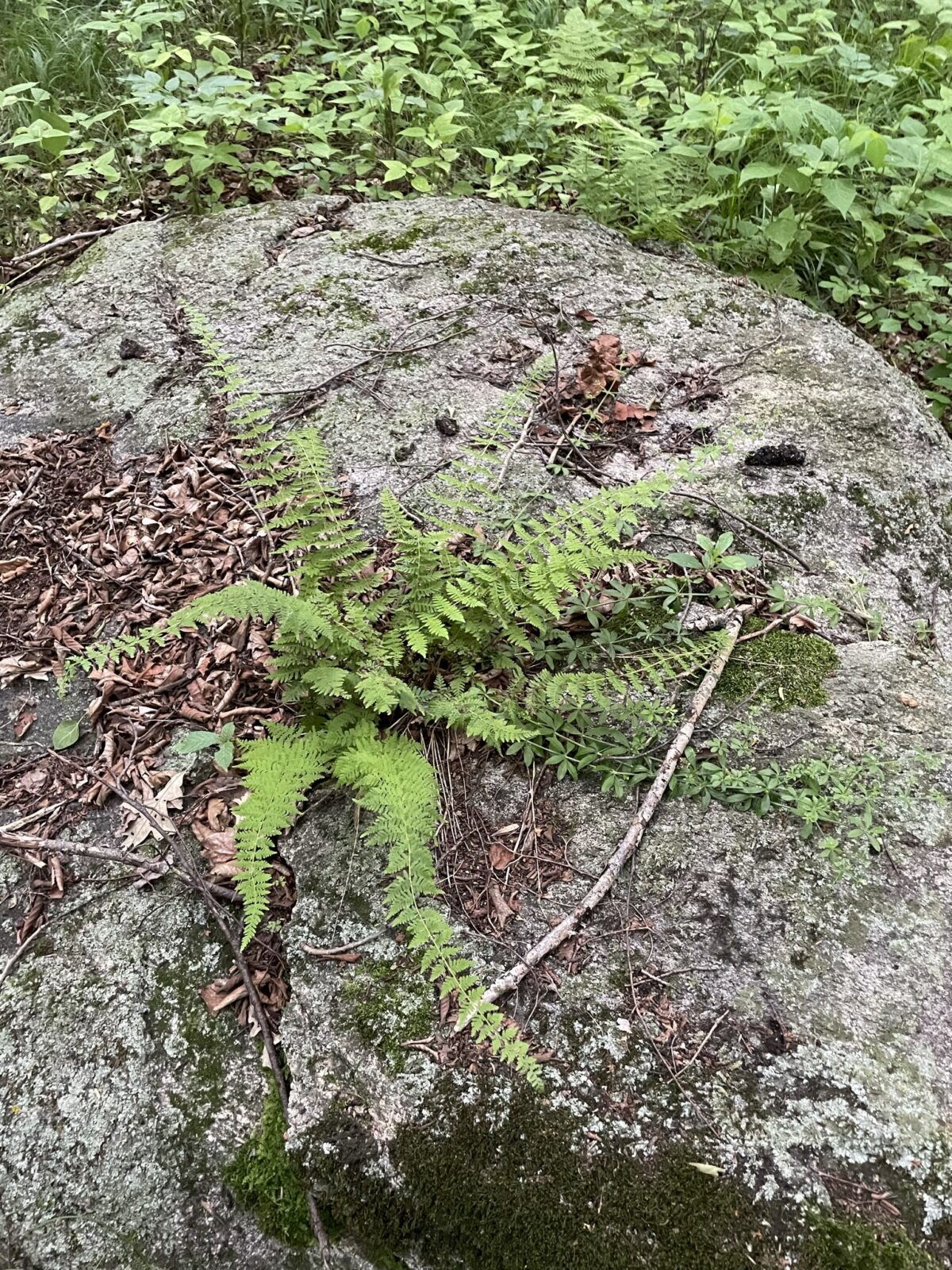
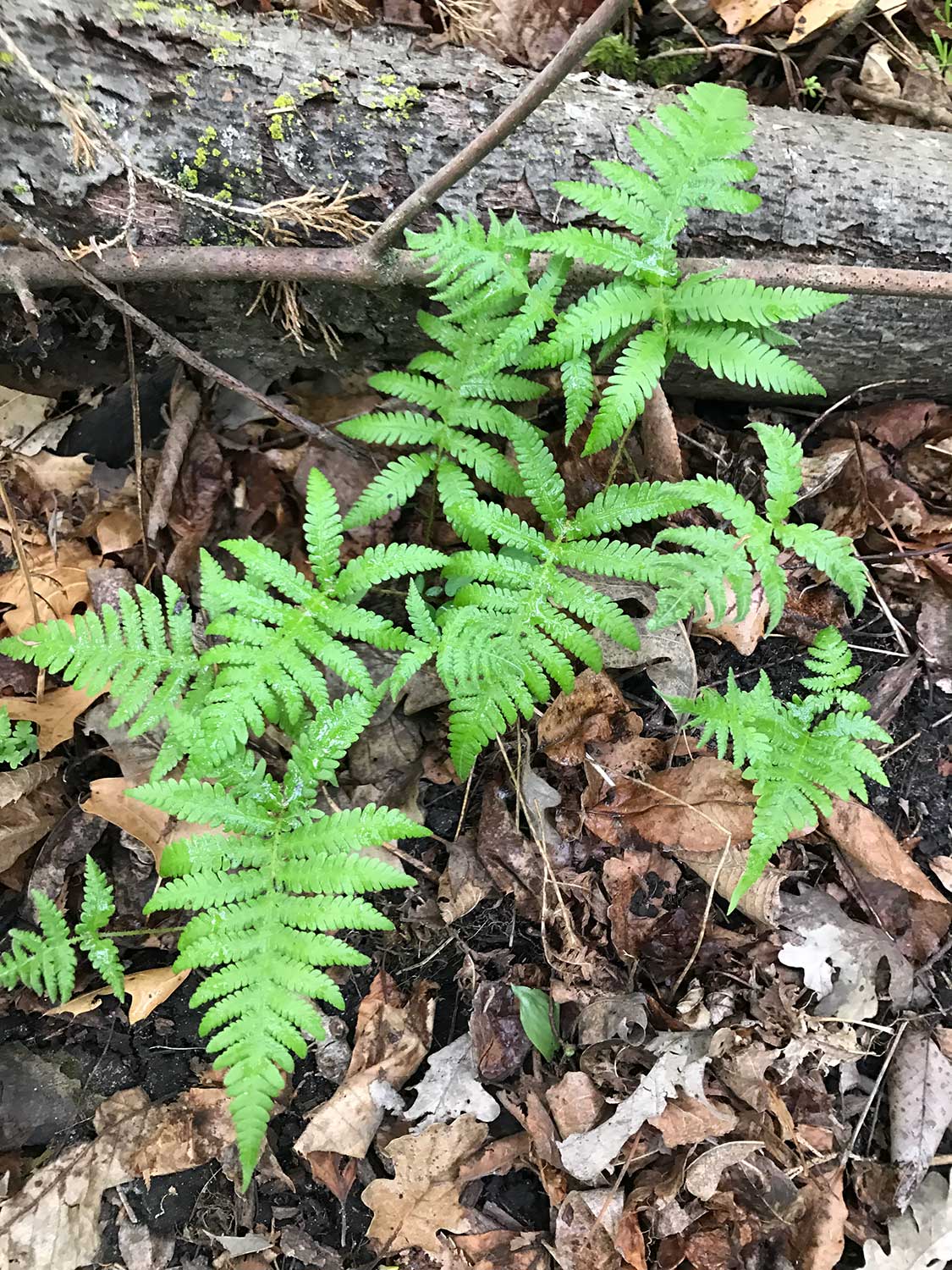
Appearance: Hexagonoptera hexagonoptera is a fern known for its fronds that are shaped like a hexagon.
Fronds: The fronds have a distinctive hexagonal shape.
Sori: It produces sori (spore clusters) on the undersides of the fronds.
Habitat: It is commonly found in moist woodlands.
Distribution: Hexagonoptera fern is native to North America.
Occurrence
Found along fern walk
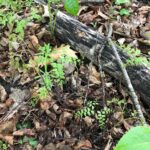
Native To State: YES
Naturally Occurring: NO
Description
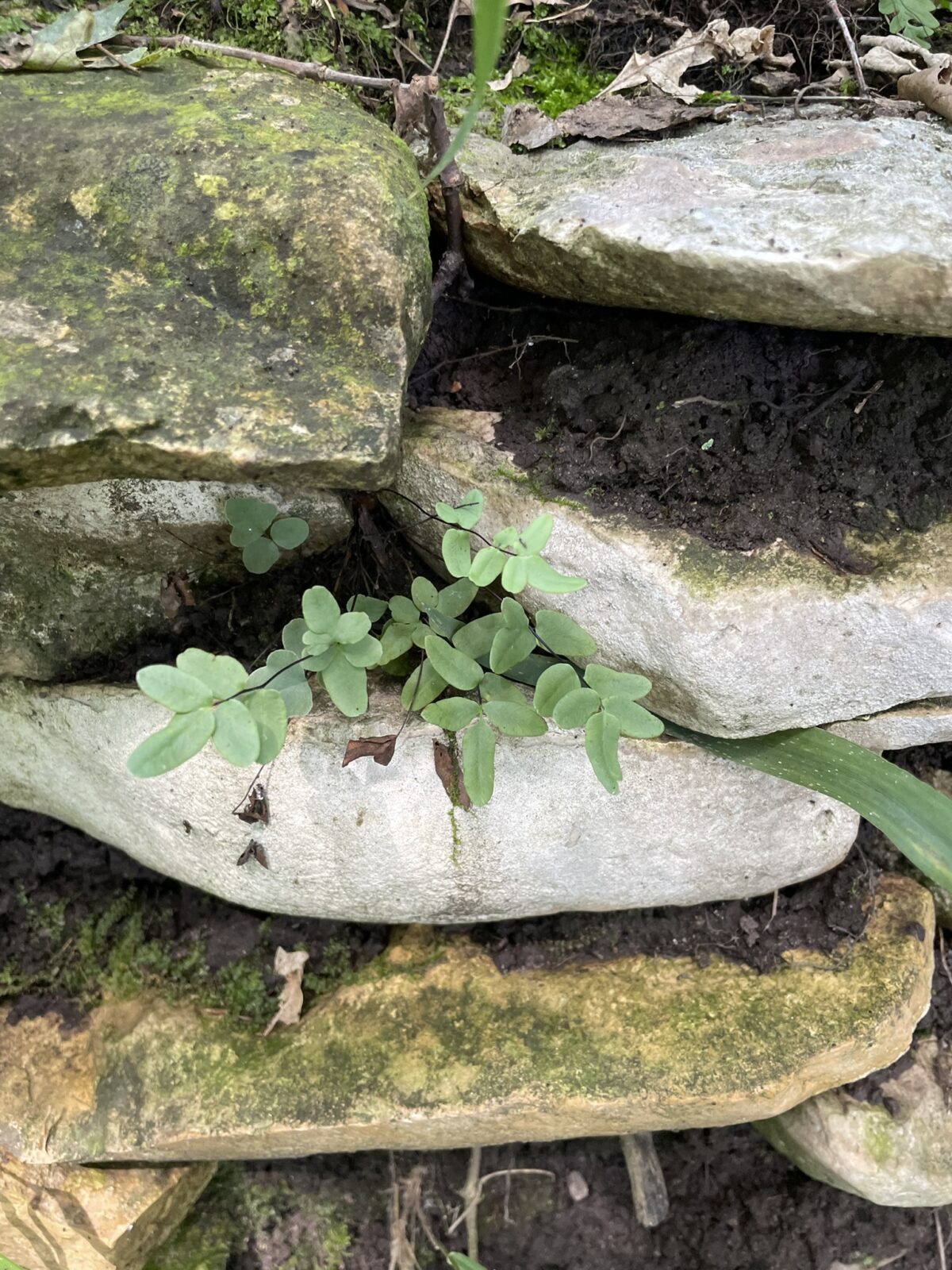
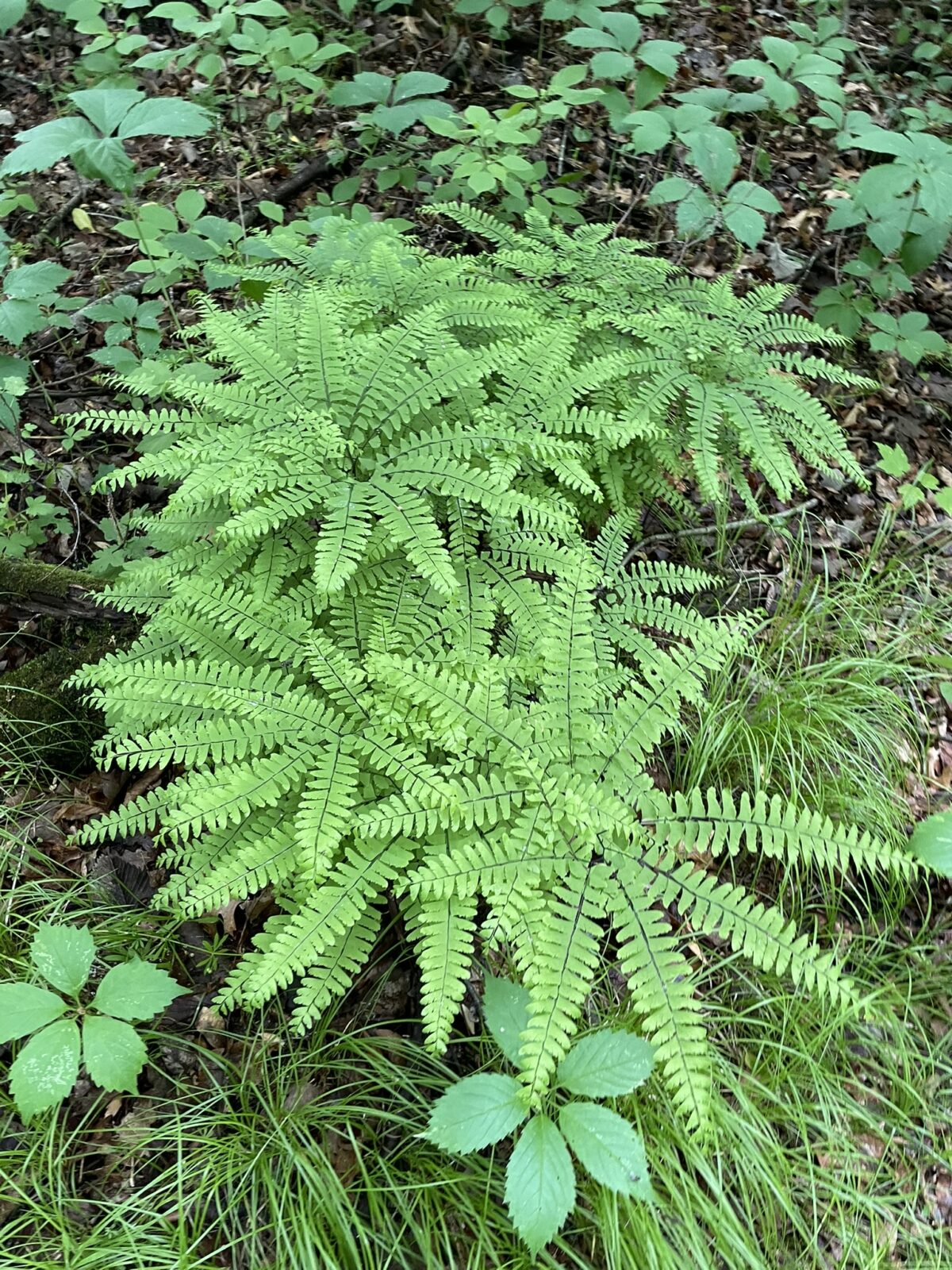
Appearance: Adiantum pedatum is a delicate fern known for its fan-shaped fronds and wiry, black stems.
Fronds: The fronds are fan-shaped and composed of numerous small leaflets.
Sori: It produces sori (spore clusters) on the undersides of the fronds.
Habitat: It is commonly found in moist, shaded woodlands.
Distribution: Maidenhair fern is native to North America.
Occurrence
Found near the crick and along the fern walk
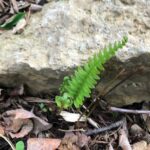
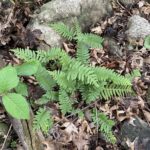
Native To State: YES
Naturally Occurring: NO
Description
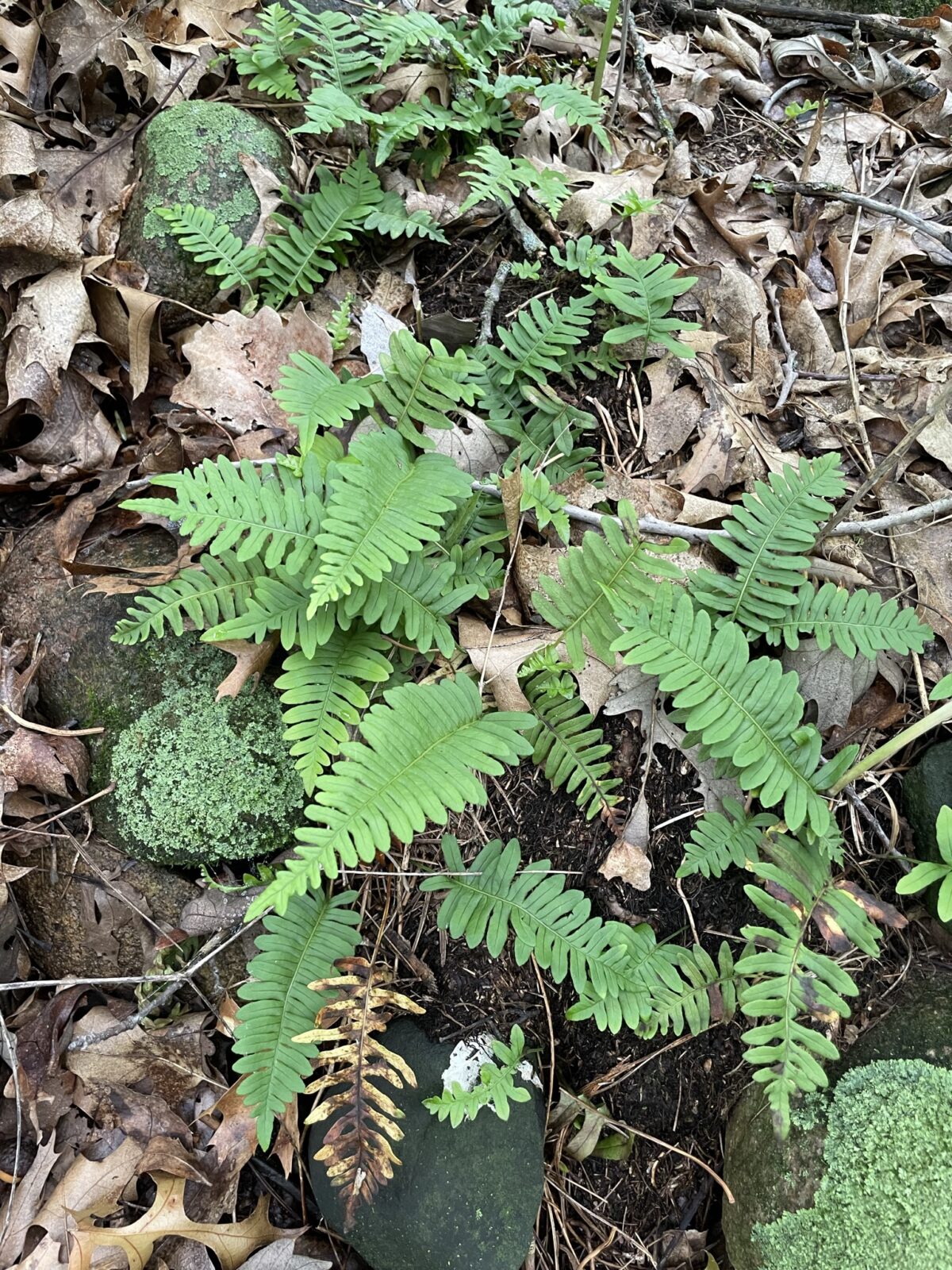
Appearance: Polypodium virginianum is a fern known for its evergreen fronds with spore clusters on the undersides.
Fronds: The fronds are evergreen and pinnately divided.
Sori: It produces sori (spore clusters) on the undersides of the fronds.
Habitat: It is commonly found on rocky outcrops and cliffs.
Distribution: Rock polypody is native to North America.
Occurrence
Found in the rock outcropping on the fern walk.
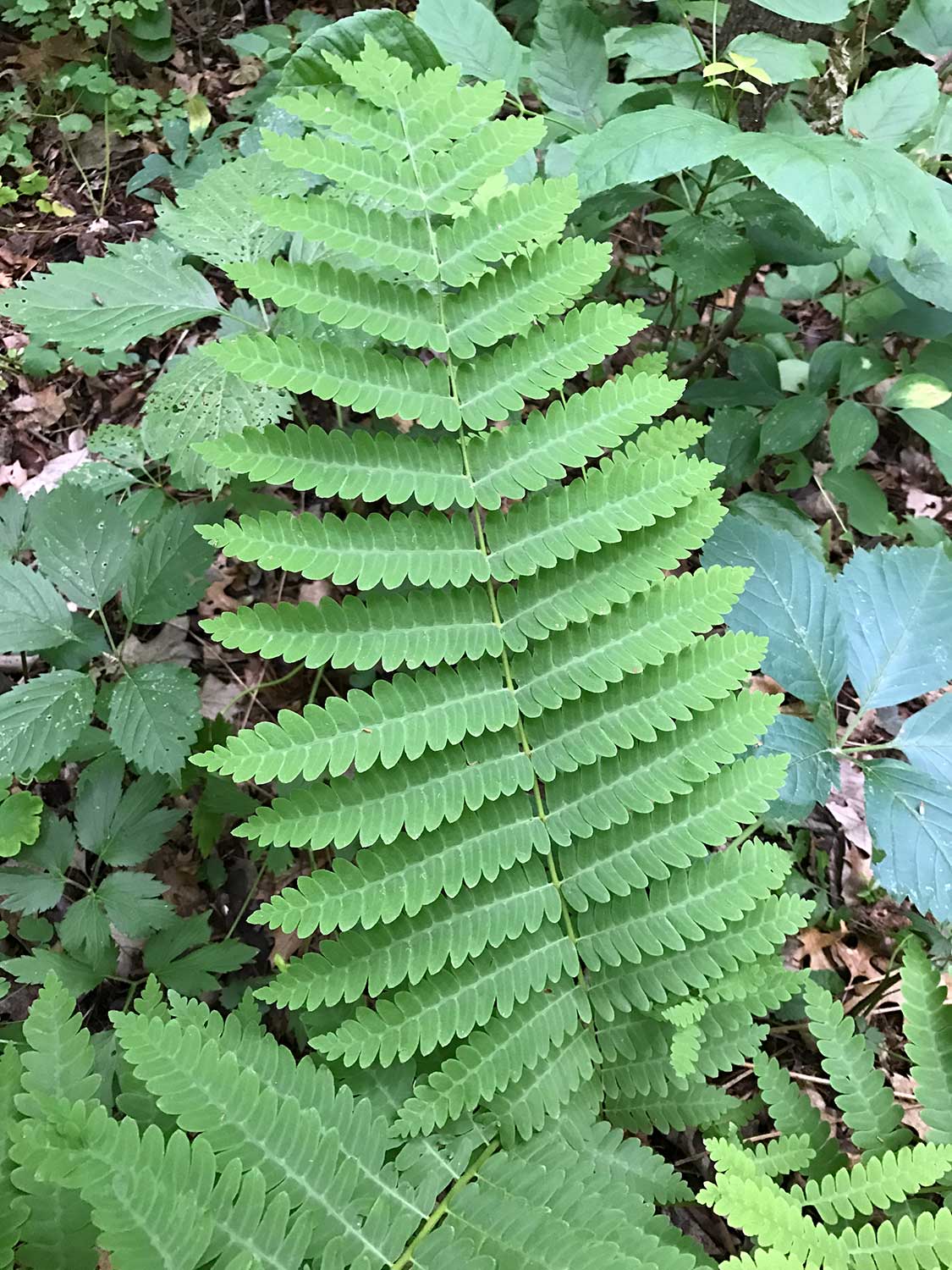


Native To State: YES
Naturally Occurring: NO
Description
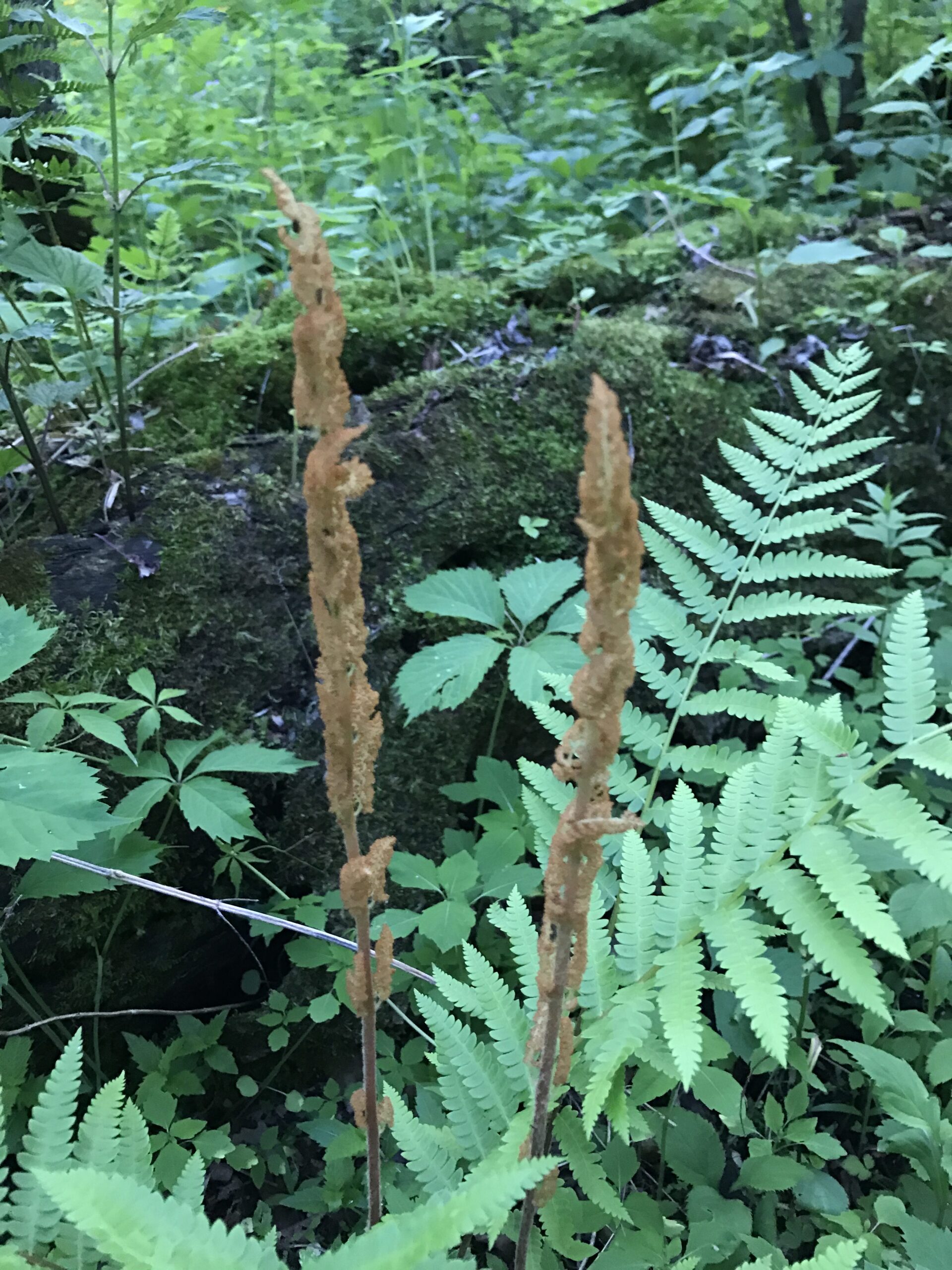
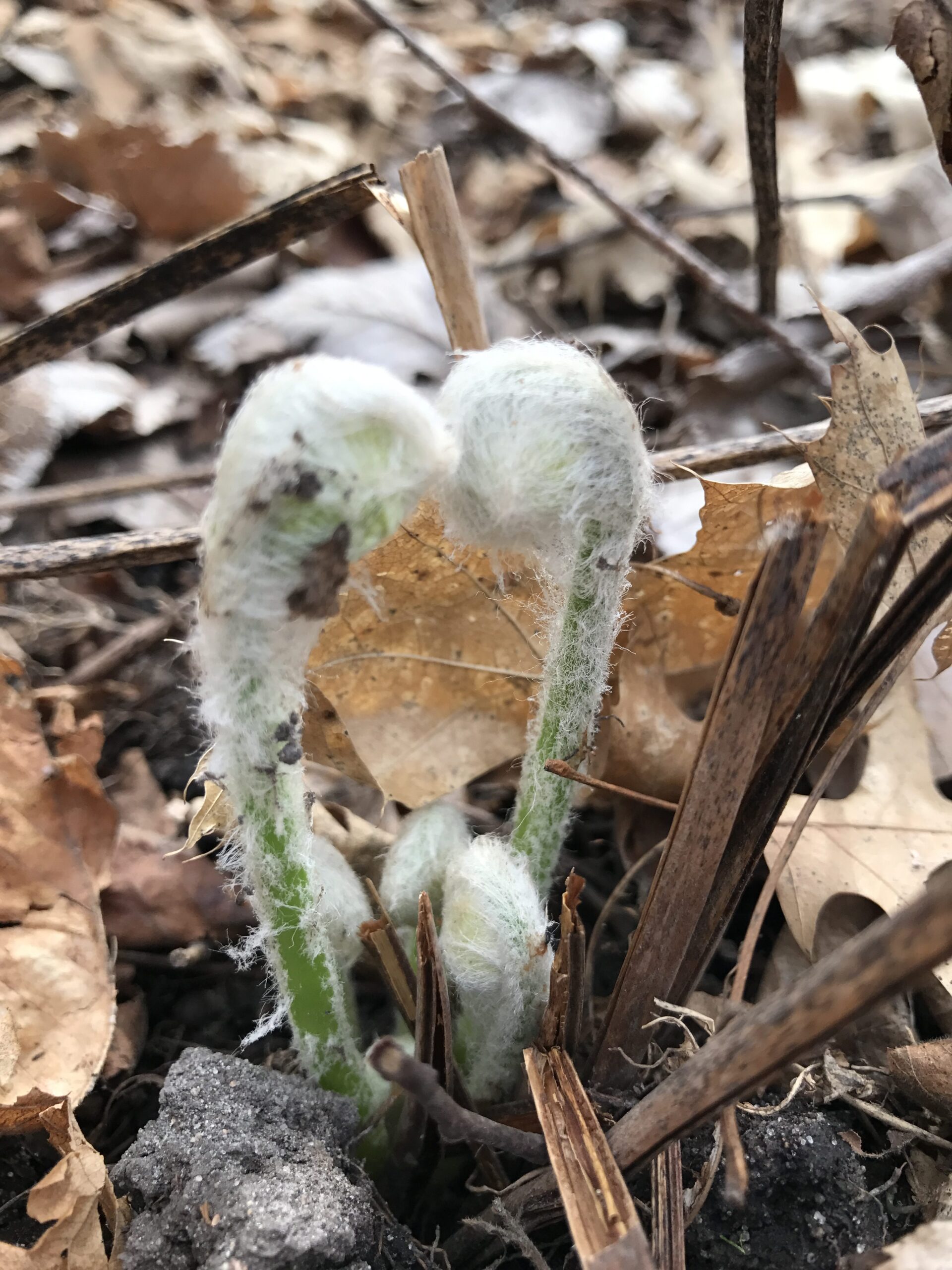
Appearance: Osmundastrum cinnamomeum is a large fern known for its upright, fertile fronds and distinctive cinnamon-colored spore-bearing structures.
Fronds: It has two types of fronds – sterile, green fronds and fertile, cinnamon-colored fronds.
Sori: The cinnamon-colored structures are fertile fronds bearing spores.
Habitat: It is commonly found in wetlands and along streams.
Distribution: Cinnamon fern is native to North America.
Occurrence
Several specimens found along fern walk as well as near creek and in the back 40 spring area.
Native To State: YES
Naturally Occurring: NO
Description
Appearance: Polystichum braunii is a fern known for its evergreen fronds with spore clusters on the undersides.
Fronds: The fronds are evergreen, lance-shaped, and pinnately divided.
Sori: It produces sori (spore clusters) on the undersides of the fronds.
Habitat: It is commonly found in moist woodlands.
Distribution: Braun’s holly fern is native to North America.
Occurrence
Several specimens found along fern walk