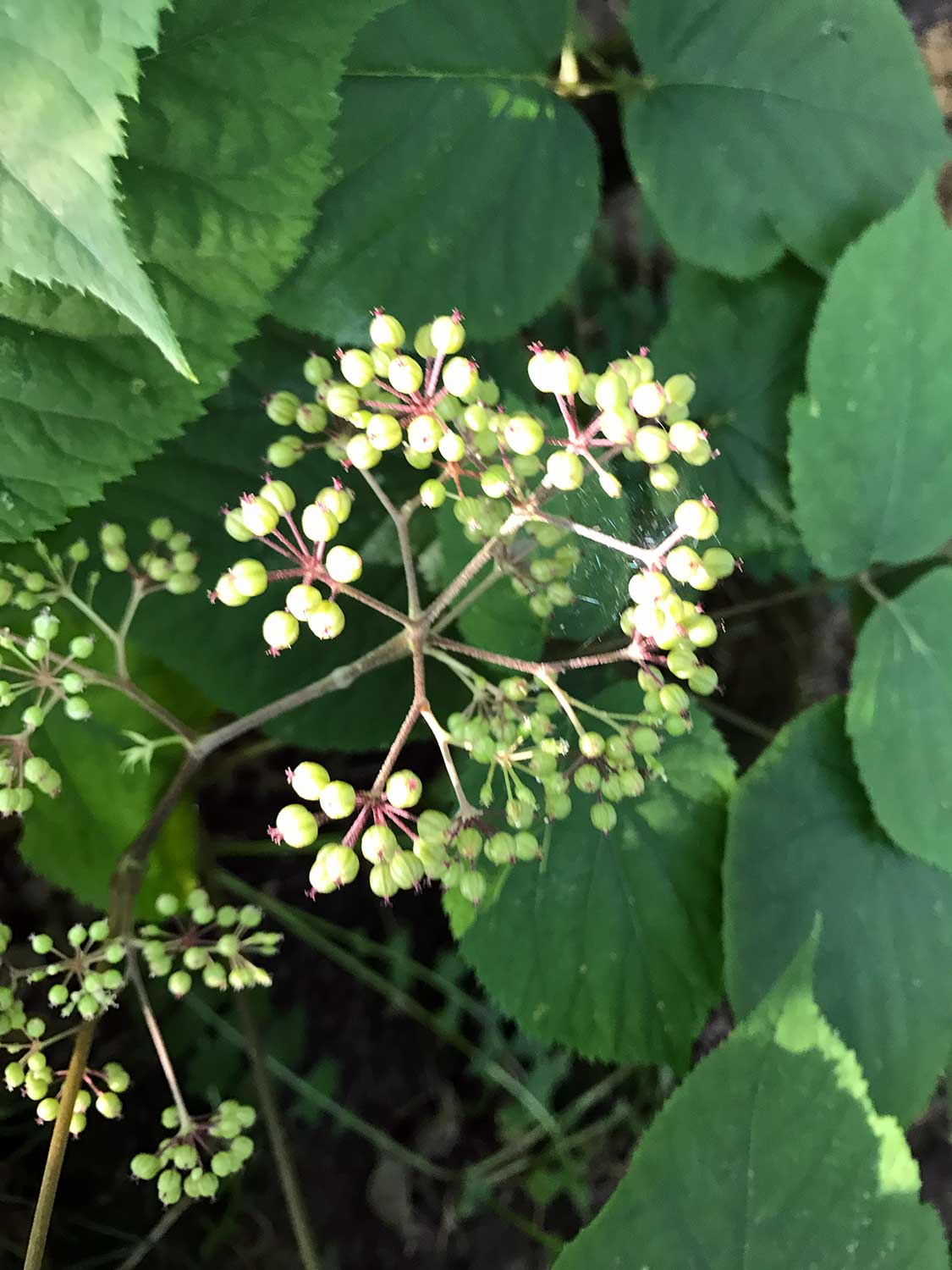
Hackberry – Celtis occidentalis

Native To State: YES
Naturally Occurring: NO

Description

Appearance: Celtis occidentalis is a deciduous tree known for its serrated leaves and small, berry-like fruits.

Leaves: The leaves are serrated, elliptical to lance-shaped, and alternate along the stem.

Fruits: The plant produces small, round, berry-like fruits that turn dark purple when ripe.

Habitat: It is commonly found in a variety of habitats, including woodlands and open areas.

Distribution: Common hackberry is native to North America.

Occurrence
Many seedlings planted in various places in 2016

Black Walnut – Juglans nigra

Native To State: YES
Naturally Occurring: NO

Description

Appearance: Juglans nigra is a deciduous tree known for its compound leaves and large, edible nuts.

Leaves: The leaves are pinnately compound, with multiple leaflets arranged along a central stem.

Fruits: The plant produces large, round, brown nuts with a hard shell.

Habitat: It is commonly found in woodlands and along stream banks.

Distribution: Black walnut is native to eastern North America.

Occurrence
Many seedlings planted in various places in 2016

Nannyberry – Viburnum lentago

Native To State: YES
Naturally Occurring: YES

Description

Appearance: Viburnum lentago is a deciduous shrub or small tree known for its opposite, toothed leaves and clusters of white flowers.

Leaves: The leaves are opposite, toothed, and typically have a lance-shaped appearance.

Flowers: The plant produces clusters of small, white, five-petaled flowers.

Fruits: It produces dark blue to black berries.

Habitat: It is commonly found in woodlands and along stream banks.

Distribution: Nannyberry is native to eastern North America.

Occurance
Found throughout the property – mostly near lower moist areas.

Common Evening Primrose – Oenothera biennis

Native To State: YES
Naturally Occurring: YES

Description

Appearance: Oenothera biennis is a biennial plant known for its tall, erect stems and yellow, four-petaled flowers.

Leaves: The leaves are lance-shaped and alternate along the stem.

Flowers: The plant produces bright yellow, four-petaled flowers that open in the evening.

Habitat: It is commonly found in open areas, roadsides, and disturbed habitats.

Distribution: Common evening primrose is native to North America.

Occurrence
Found spread through grassy areas on the property

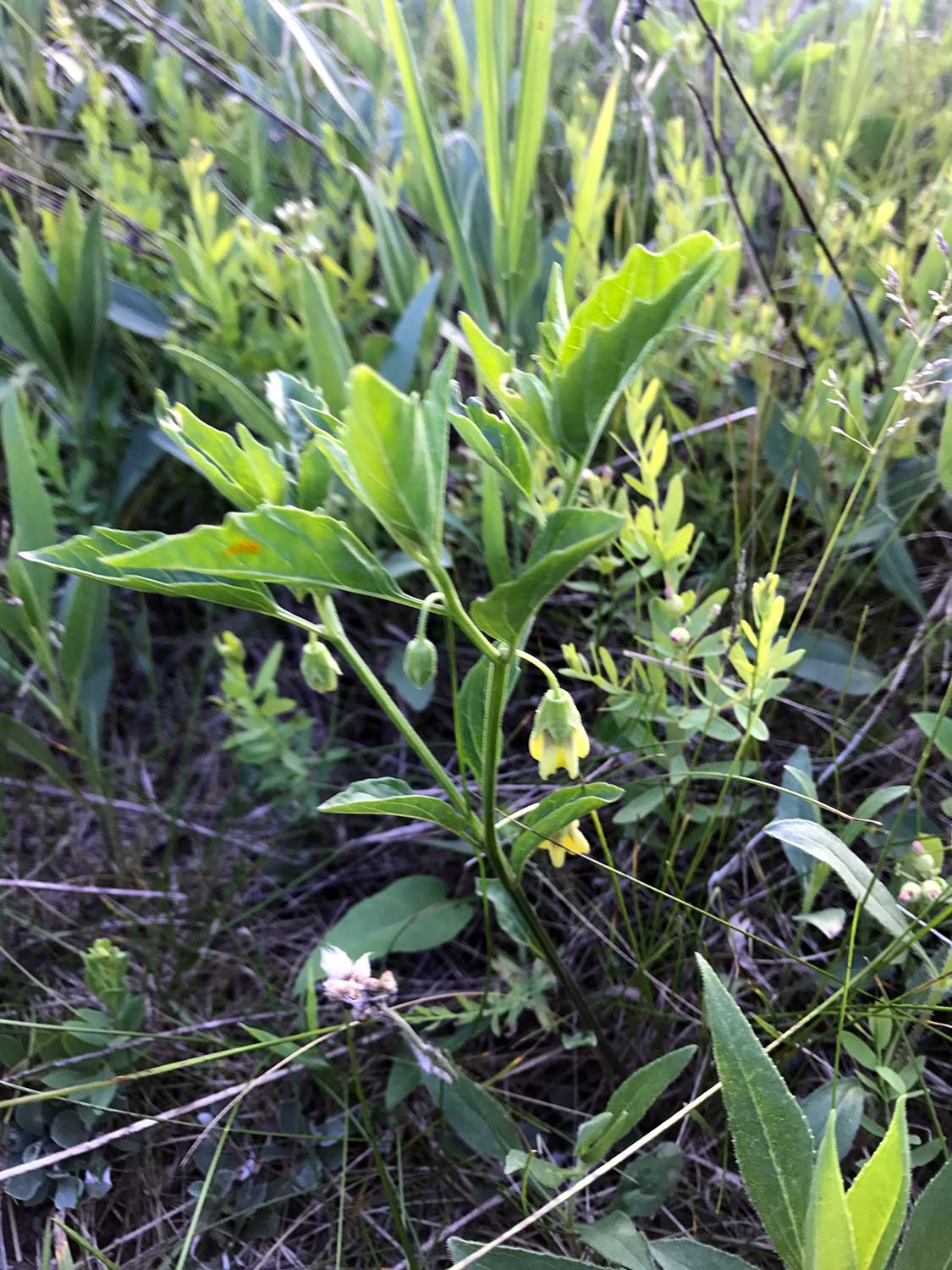
False Gromwell – Onosmodium molle

Native To State: YES
Naturally Occurring: YES

Description

Appearance: Onosmodium molle is an herbaceous perennial known for its rough, bristly leaves and small, tubular flowers.

Leaves: The leaves are lance-shaped, covered in bristly hairs, and arranged alternately along the stem.

Flowers: The plant produces small, tubular, greenish-white flowers.

Fruits: It produces small, prickly fruits.

Habitat: It is commonly found in open woodlands and meadows.

Distribution: False gromwell is native to eastern North America.

Occurrence
Few specimens found in Prairie section – may be naturally occurring or may have been seeded unknowingly.

Eastern Cottonwood – Populus deltoides

Native To State: YES
Naturally Occurring: NO

Description

Appearance: Populus deltoides is a tall deciduous tree known for its triangular leaves and cottony seeds.

Leaves: The leaves are triangular or deltoid in shape, coarsely toothed, and often have a flattened petiole.

Flowers: The tree produces male and female flowers in separate catkins.

Fruits: The female catkins release cottony seeds that are dispersed by the wind.

Habitat: It is commonly found along riverbanks and in floodplains.

Distribution: Eastern cottonwood is native to North America.

Occurrence
One planted in north west corner along crick in 2018

White Sage – Artemisia ludoviciana

Native To State: YES
Naturally Occurring: YES

Description

Appearance: Artemisia ludoviciana is a herbaceous perennial known for its silvery-gray leaves and small, yellow flowers.

Leaves: The leaves are silvery-gray, lance-shaped, and deeply lobed.

Flowers: The plant produces small, yellow flowers in clusters.

Habitat: It is commonly found in dry, open areas and prairies.

Distribution: White sagebrush is native to North America.

Occurrence
Found in the north west corner

Scotch Pine – Pinus sylvestris

Native To State: NO
Naturally Occurring: NO

Description

Appearance: Pinus sylvestris is a coniferous tree known for its long needles and conical shape.

Leaves: The tree has long, slender needles that are typically in pairs and have a bluish-green color.

Cones: It produces cylindrical cones that are reddish-brown when mature.

Bark: The bark is orange-brown and becomes scaly with age.

Habitat: It is commonly found in a variety of habitats, including forests and open woodlands.

Distribution: Scots pine is native to Europe and Asia.

Occurrence
Multiple planted in former field area in 2016.

Austrian Pine – Pinus nigra

Native To State: NO
Naturally Occurring: NO

Description

Appearance: Pinus nigra is a coniferous tree known for its dark, fissured bark and long needles.

Leaves: The tree has long, slender needles that are typically in pairs and have a dark green color.

Cones: It produces ovoid cones that are brown when mature.

Bark: The bark is dark brown to black and becomes deeply fissured with age.

Habitat: It is commonly found in a variety of habitats, including forests and rocky slopes.

Distribution: Black pine is native to Europe and Asia.

Occurrence
Multiple planted in former field area in 2016.

Early Meadow Rue – Thalictrum dioicum

Native To State: YES
Naturally Occurring: YES

Description

Appearance: Thalictrum dioicum is a herbaceous perennial known for its tall, feathery clusters of flowers and finely divided leaves.

Leaves: The leaves are finely divided and typically arranged in a basal rosette.

Flowers: The plant produces feathery clusters of small, greenish-white to purplish flowers.

Habitat: It is commonly found in moist woodlands and along stream banks.

Distribution: Early meadow rue is native to eastern North America.

Occurrence
Found throughout the woods