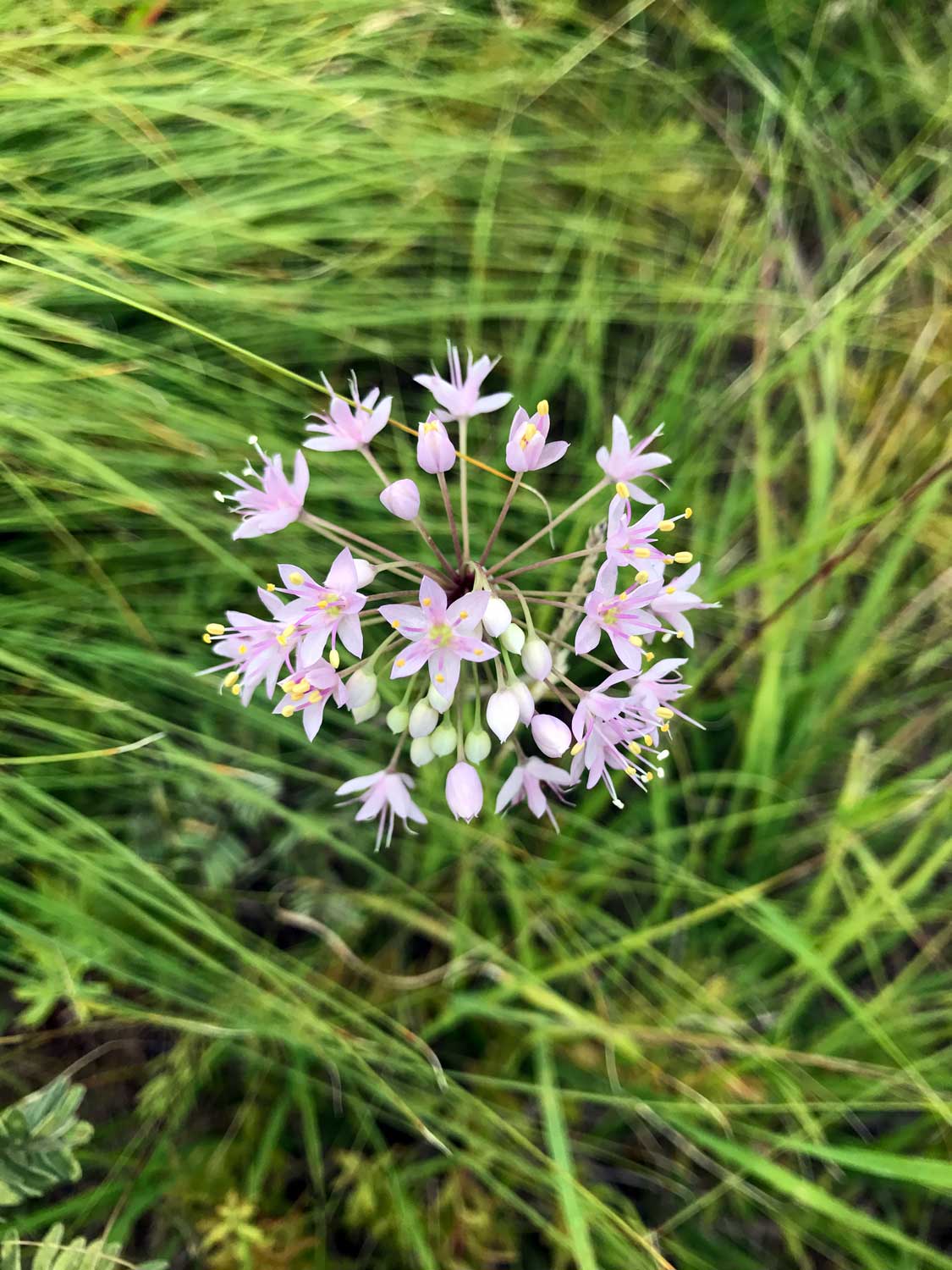
Prairie Onion – Allium stellatum

Native To State: YES
Naturally Occurring: YES

Description

Appearance: Allium stellatum is a bulbous perennial known for its clusters of pink to lavender, star-shaped flowers.

Leaves: The plant has linear leaves that arise from the base.

Flowers: It produces clusters of pink to lavender, star-shaped flowers in umbels.

Habitat: It is commonly found in prairies and open fields.

Distribution: Prairie onion is native to North America.

Occurrence
Found in the prairie section
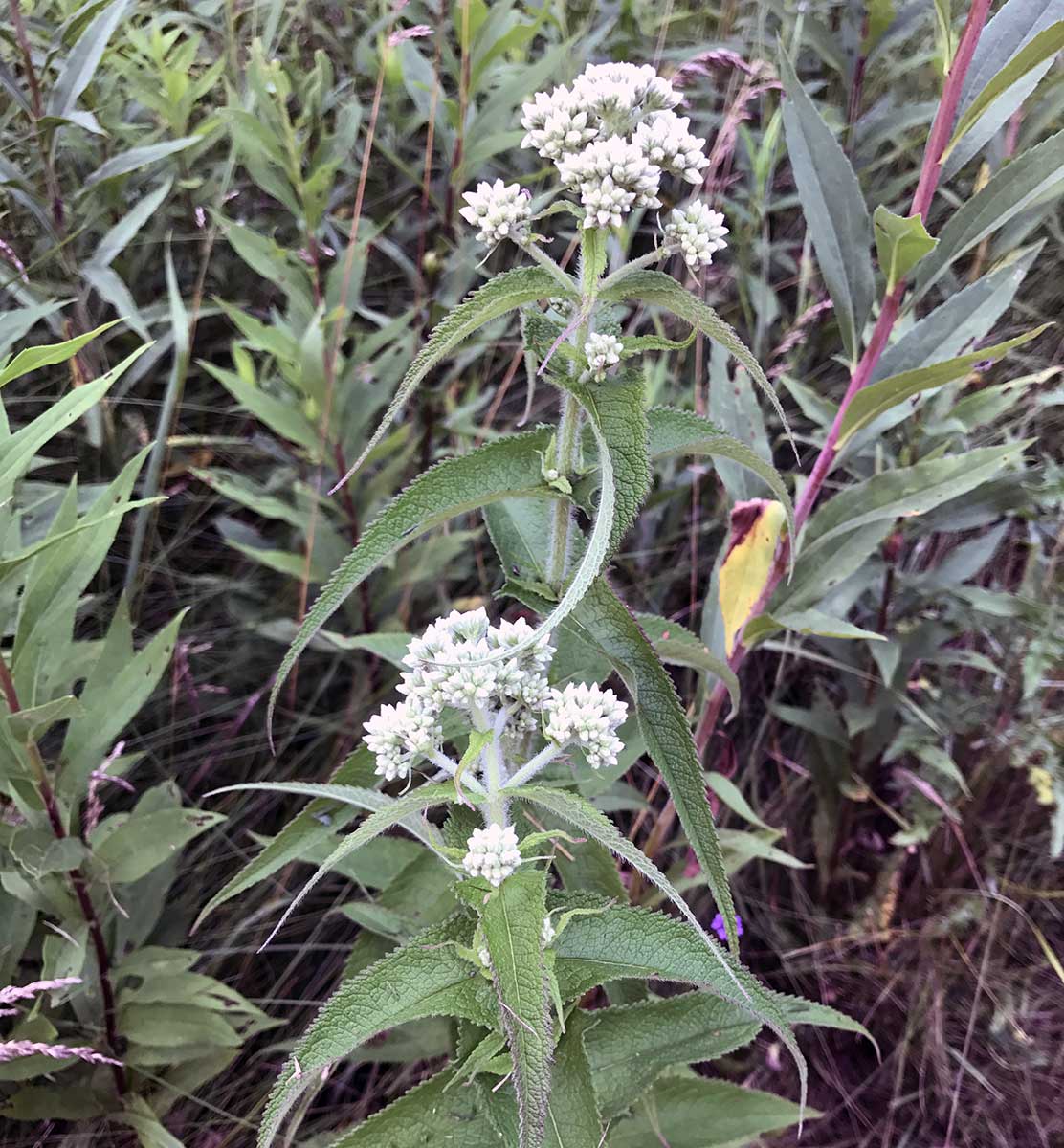
Common Boneset – Eupatorium perfoliatum

Native To State: YES
Naturally Occurring: YES

Description

Appearance: Eupatorium perfoliatum is a herbaceous perennial known for its clusters of white, fluffy flowers and opposite, perfoliate leaves.

Leaves: The leaves are opposite, united around the stem, and have a perfoliate (stem-piercing) appearance.

Flowers: It produces clusters of small, white, fluffy flowers.

Habitat: It is commonly found in wet meadows and along stream banks.

Distribution: Boneset is native to North America.

Occurrence
Found naturally throughout the property in the prairie and other grassy areas.

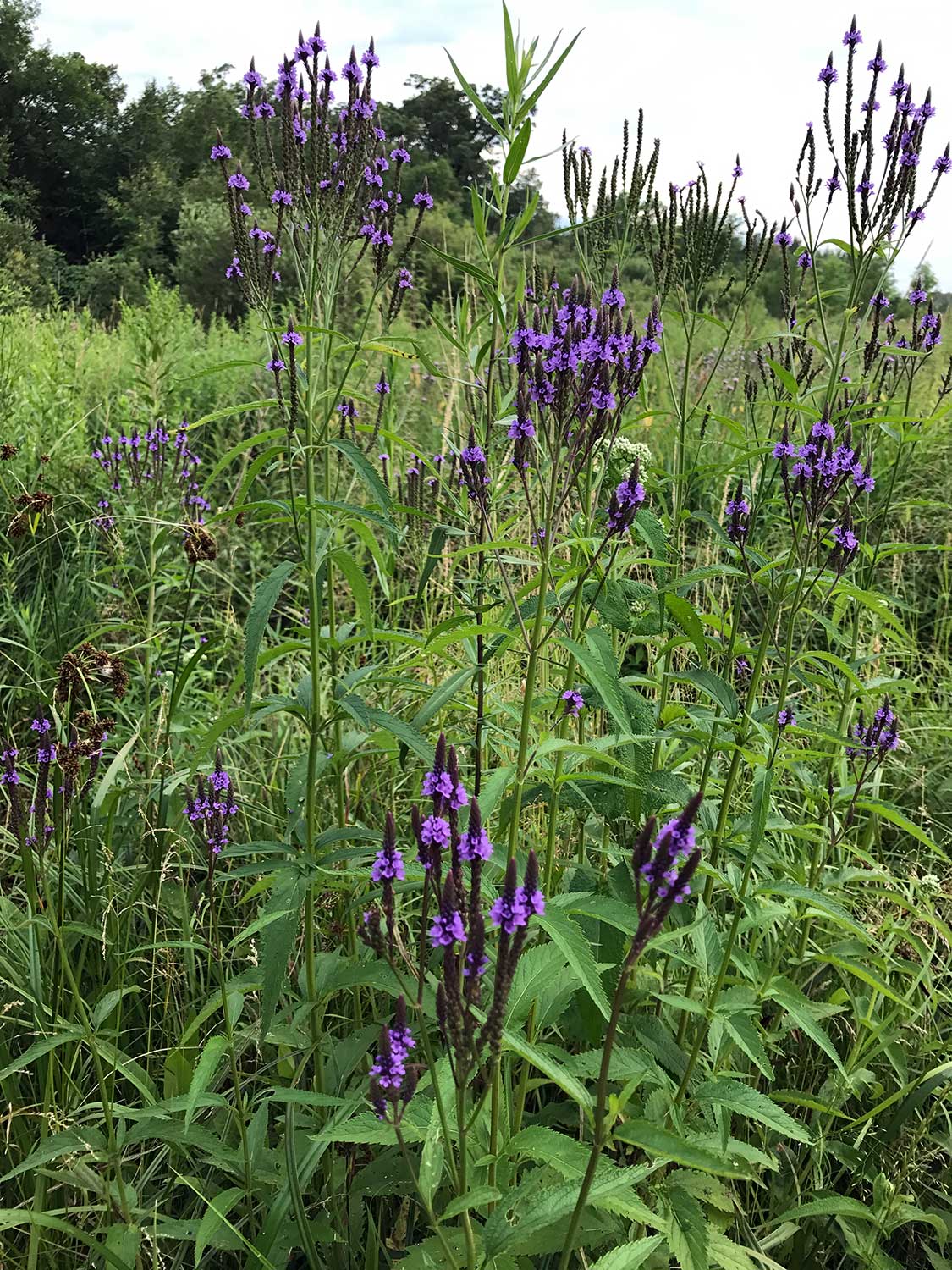
Blue Vervain – Verbena hastata

Native To State: YES
Naturally Occurring: YES

Description

Appearance: Verbena hastata is a herbaceous perennial known for its spikes of small, tubular, blue to purple flowers.

Leaves: The leaves are lance-shaped and typically toothed along the margins.

Flowers: It produces spikes of small, tubular, blue to purple flowers.

Habitat: It is commonly found in wet meadows and along stream banks.

Distribution: Blue vervain is native to North America.

Occurrence
Found naturally throughout the property in the prairie and other grassy areas.

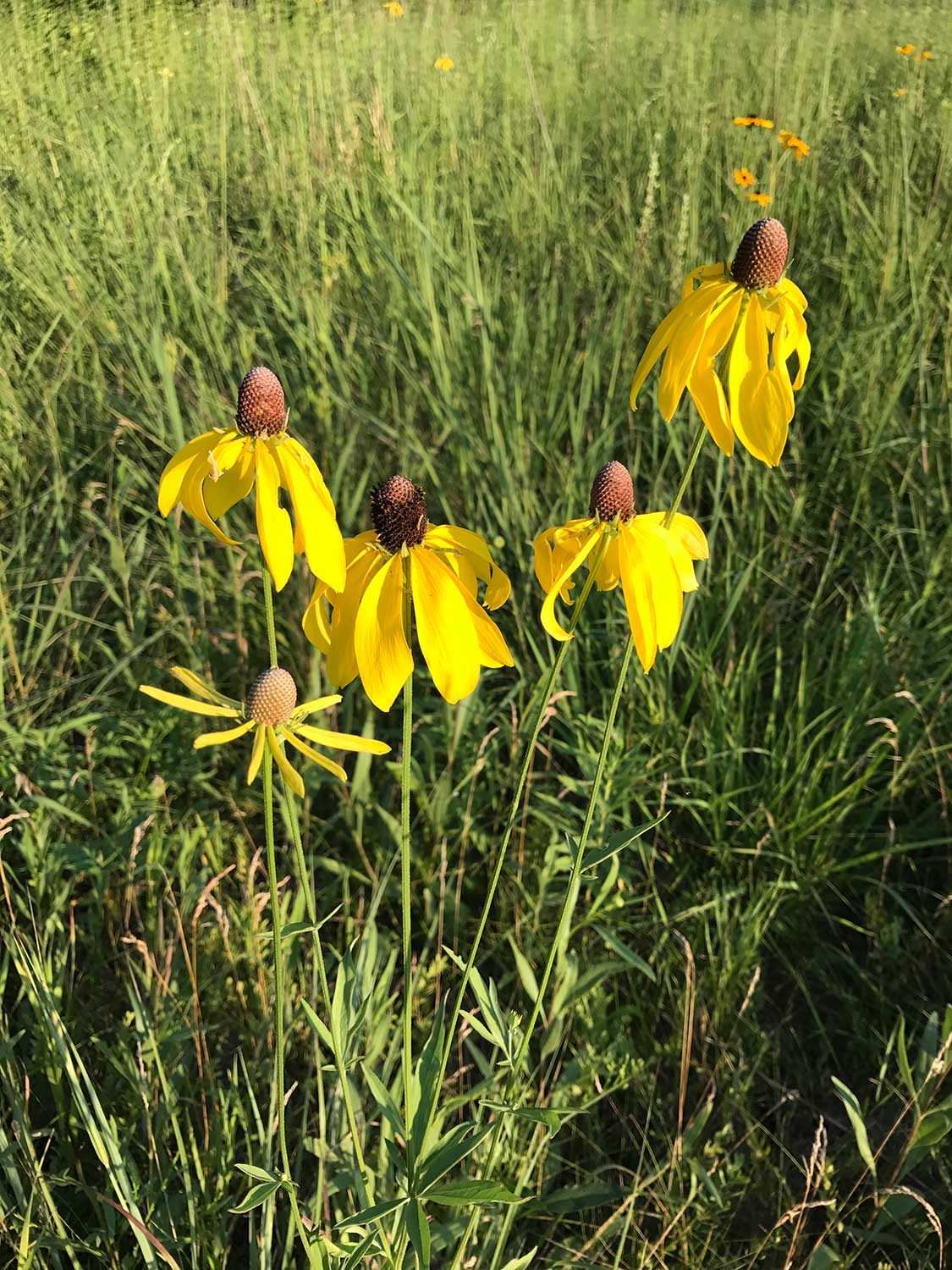
Grey-Headed Coneflower – Ratibida pinnata

Native To State: YES
Naturally Occurring: NO

Description

Appearance: Ratibida pinnata is a herbaceous perennial known for its yellow, drooping ray flowers and prominent cone-shaped disk.

Leaves: The leaves are pinnately divided and deeply lobed.

Flowers: It produces yellow, drooping ray flowers around a prominent cone-shaped disk.

Habitat: It is commonly found in prairies and open woodlands.

Distribution: Yellow coneflower is native to North America.

Occurrence
Well established in the prairie section
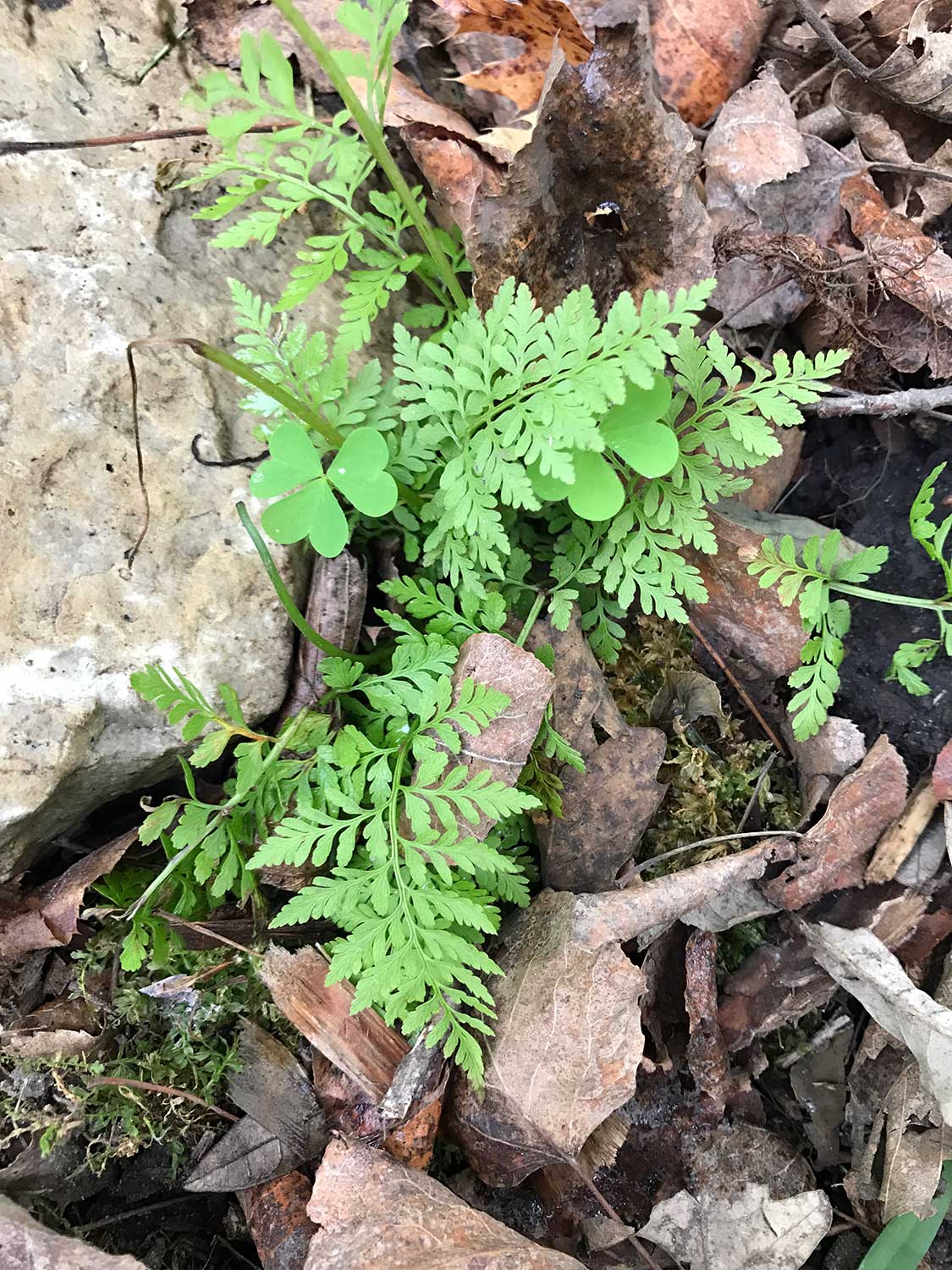
Fragile Fern – Cystopteris protrusa

Native To State: NO
Naturally Occurring: NO

Description

Appearance: Cystopteris protrusa is a delicate fern known for its finely divided fronds and fragile appearance.

Fronds: The fronds are finely divided and appear delicate.

Sori: It produces sori (spore clusters) on the undersides of the fronds.

Habitat: It is commonly found in moist woodlands and rocky slopes.

Distribution: Lowland fragile fern is native to North America.

Occurrence
Found on outcropping on fern walk

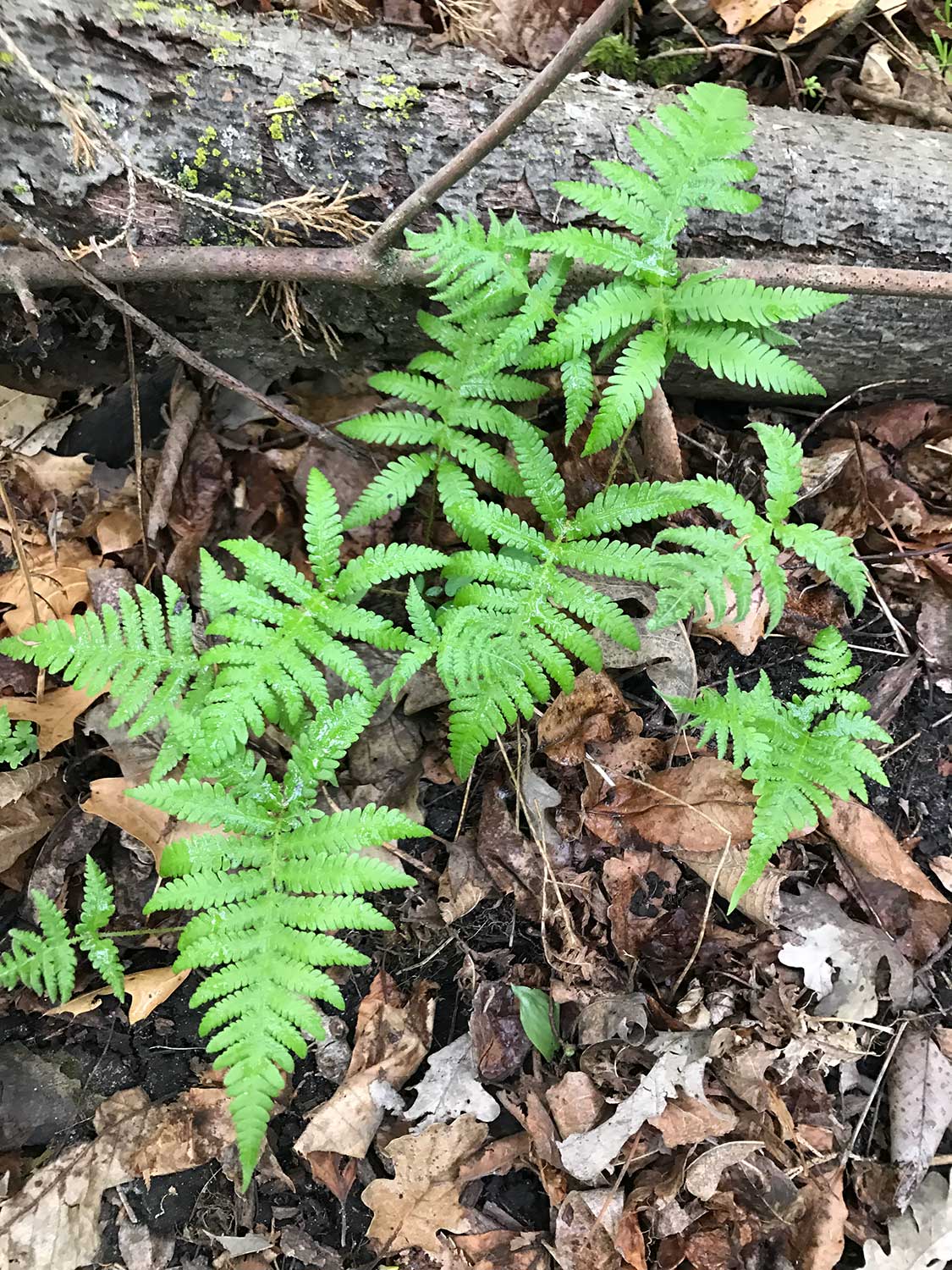
Narrow Beach Fern – Hegopteris hexagonoptera

Native To State: YES
Naturally Occurring: NO

Description

Appearance: Hexagonoptera hexagonoptera is a fern known for its fronds that are shaped like a hexagon.

Fronds: The fronds have a distinctive hexagonal shape.

Sori: It produces sori (spore clusters) on the undersides of the fronds.

Habitat: It is commonly found in moist woodlands.

Distribution: Hexagonoptera fern is native to North America.

Occurrence
Found along fern walk

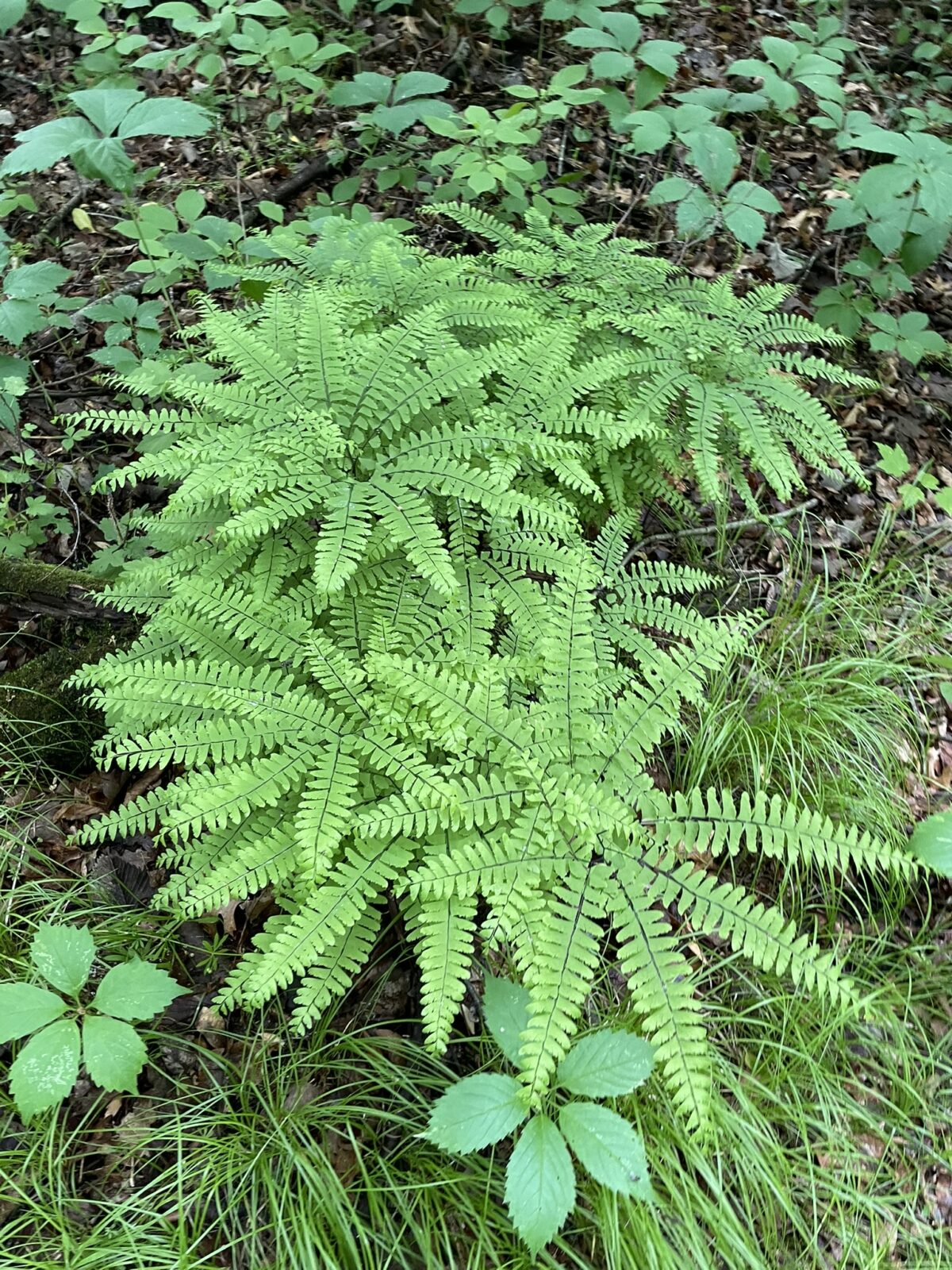
Maidenhair Fern – Adiantum pedatum

Native To State: YES
Naturally Occurring: NO

Description

Appearance: Adiantum pedatum is a delicate fern known for its fan-shaped fronds and wiry, black stems.

Fronds: The fronds are fan-shaped and composed of numerous small leaflets.

Sori: It produces sori (spore clusters) on the undersides of the fronds.

Habitat: It is commonly found in moist, shaded woodlands.

Distribution: Maidenhair fern is native to North America.

Occurrence
Found near the crick and along the fern walk

Common Polypody – Polypodium virginianum

Native To State: YES
Naturally Occurring: NO

Description

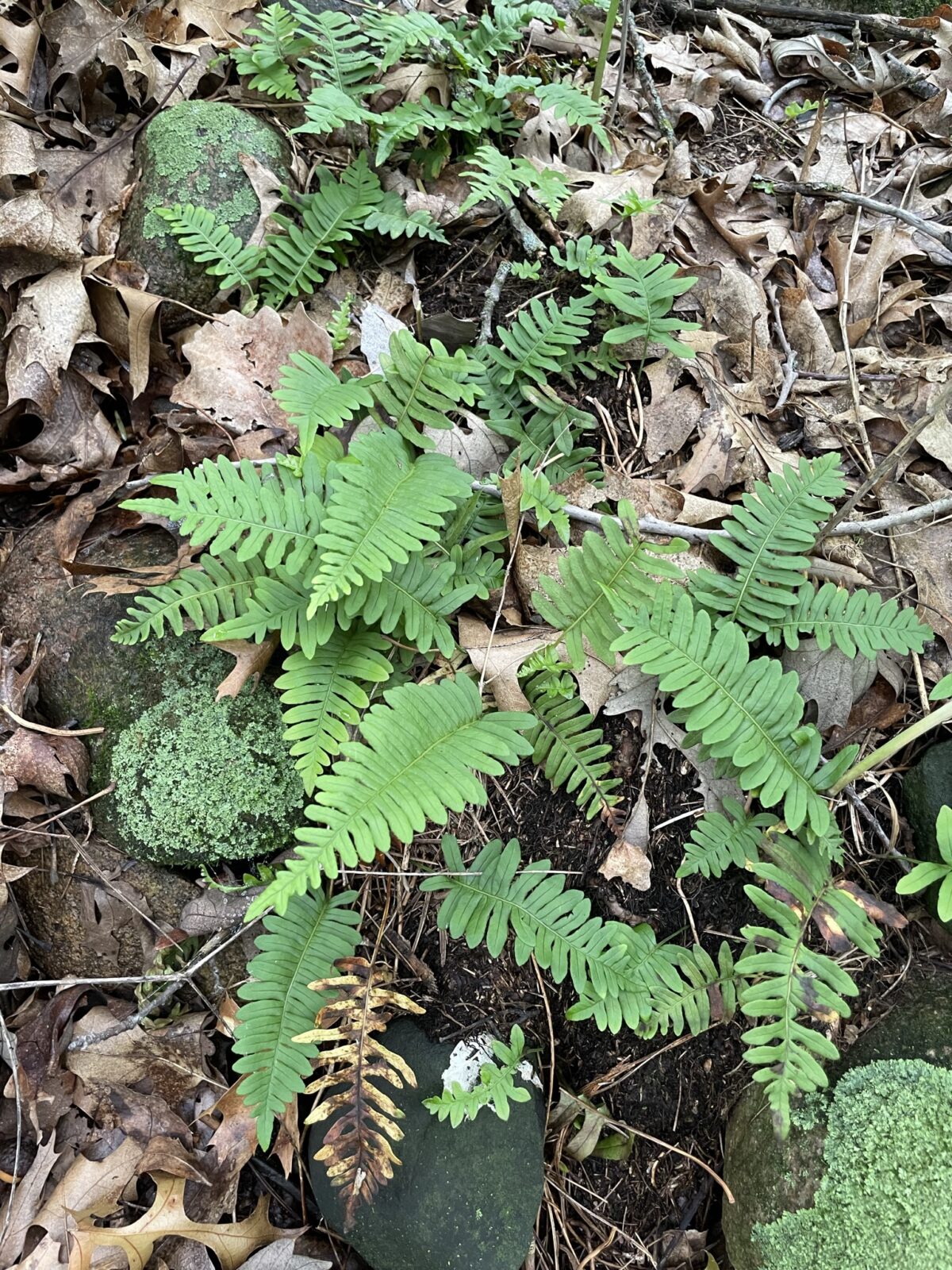
Appearance: Polypodium virginianum is a fern known for its evergreen fronds with spore clusters on the undersides.

Fronds: The fronds are evergreen and pinnately divided.

Sori: It produces sori (spore clusters) on the undersides of the fronds.

Habitat: It is commonly found on rocky outcrops and cliffs.

Distribution: Rock polypody is native to North America.

Occurrence
Found in the rock outcropping on the fern walk.

Cinnamon Fern – Osmundastrum cinnamomeum

Native To State: YES
Naturally Occurring: NO

Description

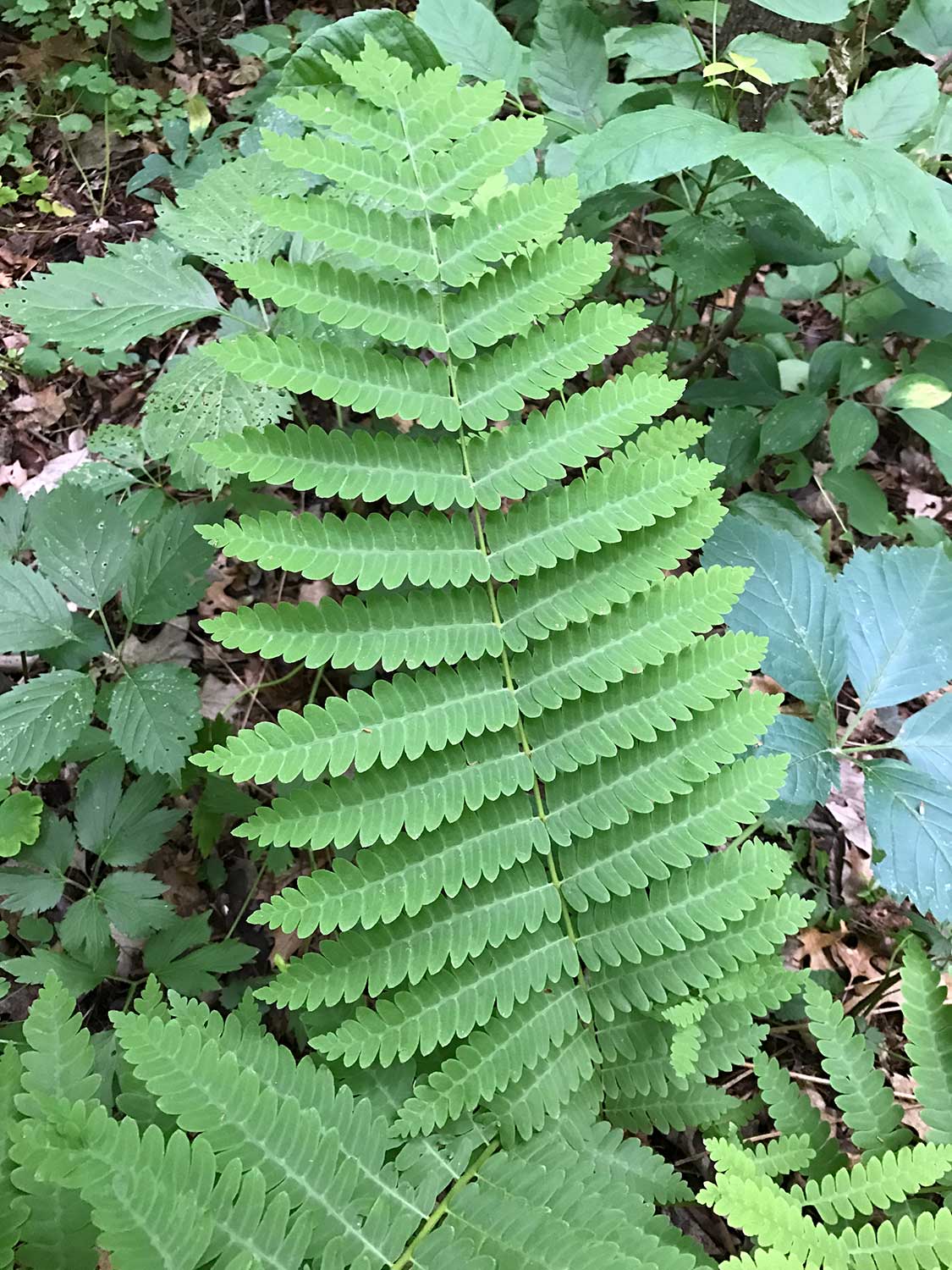
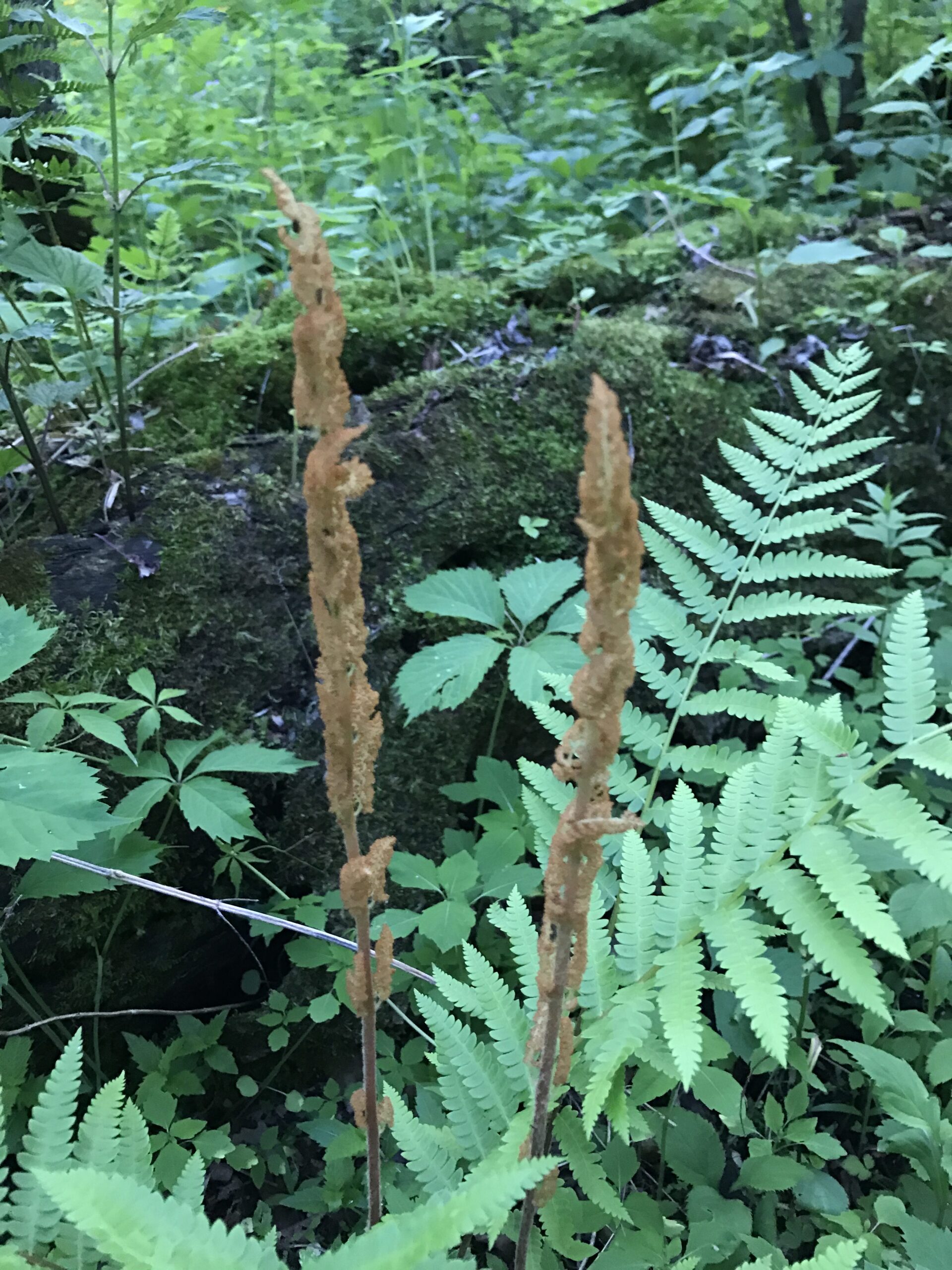
Appearance: Osmundastrum cinnamomeum is a large fern known for its upright, fertile fronds and distinctive cinnamon-colored spore-bearing structures.

Fronds: It has two types of fronds – sterile, green fronds and fertile, cinnamon-colored fronds.

Sori: The cinnamon-colored structures are fertile fronds bearing spores.

Habitat: It is commonly found in wetlands and along streams.

Distribution: Cinnamon fern is native to North America.

Occurrence
Several specimens found along fern walk as well as near creek and in the back 40 spring area.

Braun’s Holly Fern – Polystichum braunii

Native To State: YES
Naturally Occurring: NO

Description

Appearance: Polystichum braunii is a fern known for its evergreen fronds with spore clusters on the undersides.

Fronds: The fronds are evergreen, lance-shaped, and pinnately divided.

Sori: It produces sori (spore clusters) on the undersides of the fronds.

Habitat: It is commonly found in moist woodlands.

Distribution: Braun’s holly fern is native to North America.

Occurrence
Several specimens found along fern walk