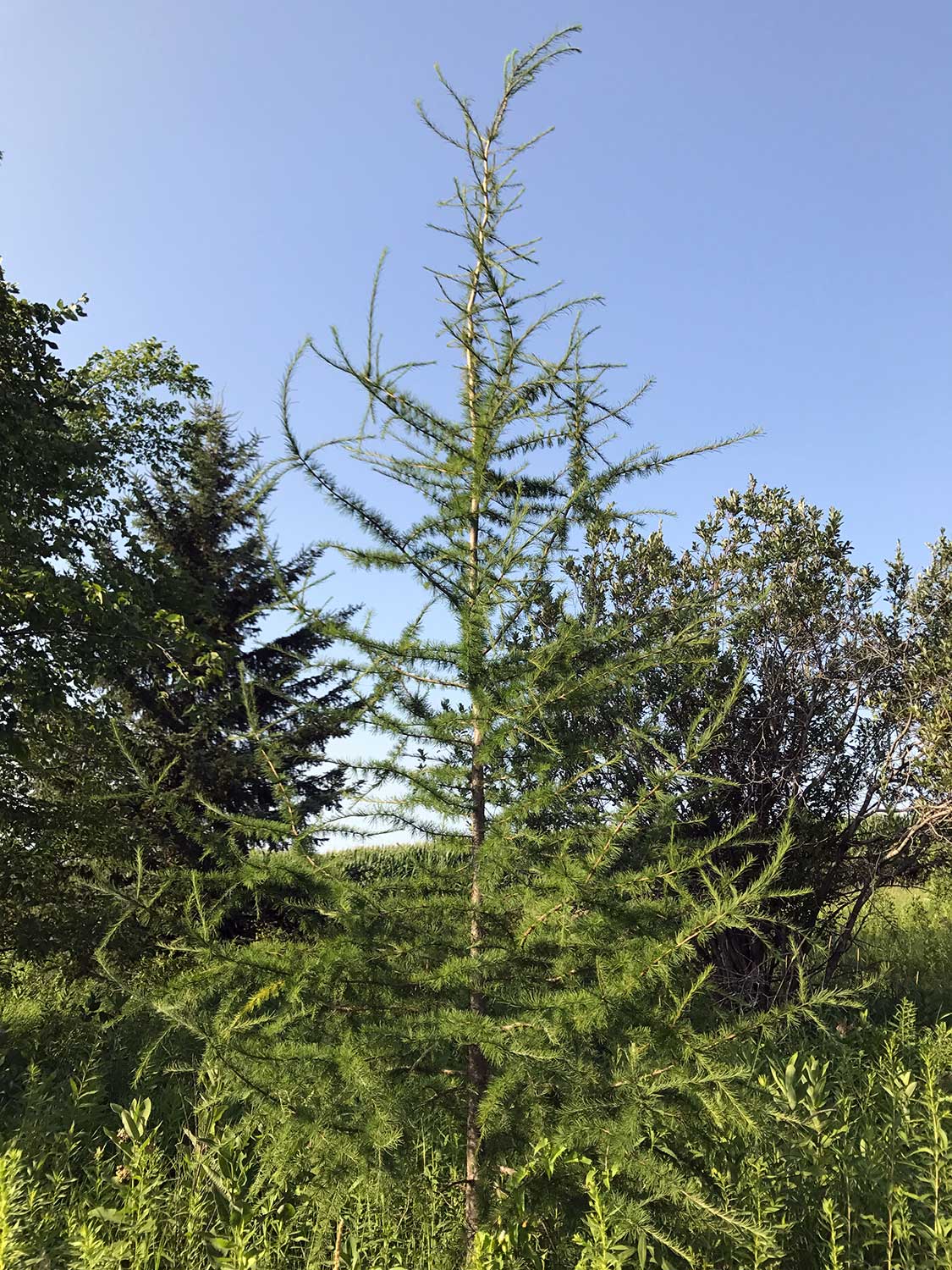
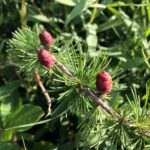
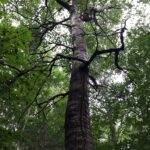
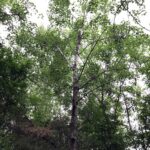
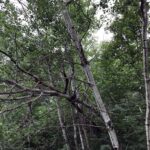
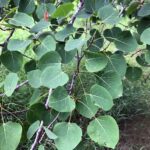
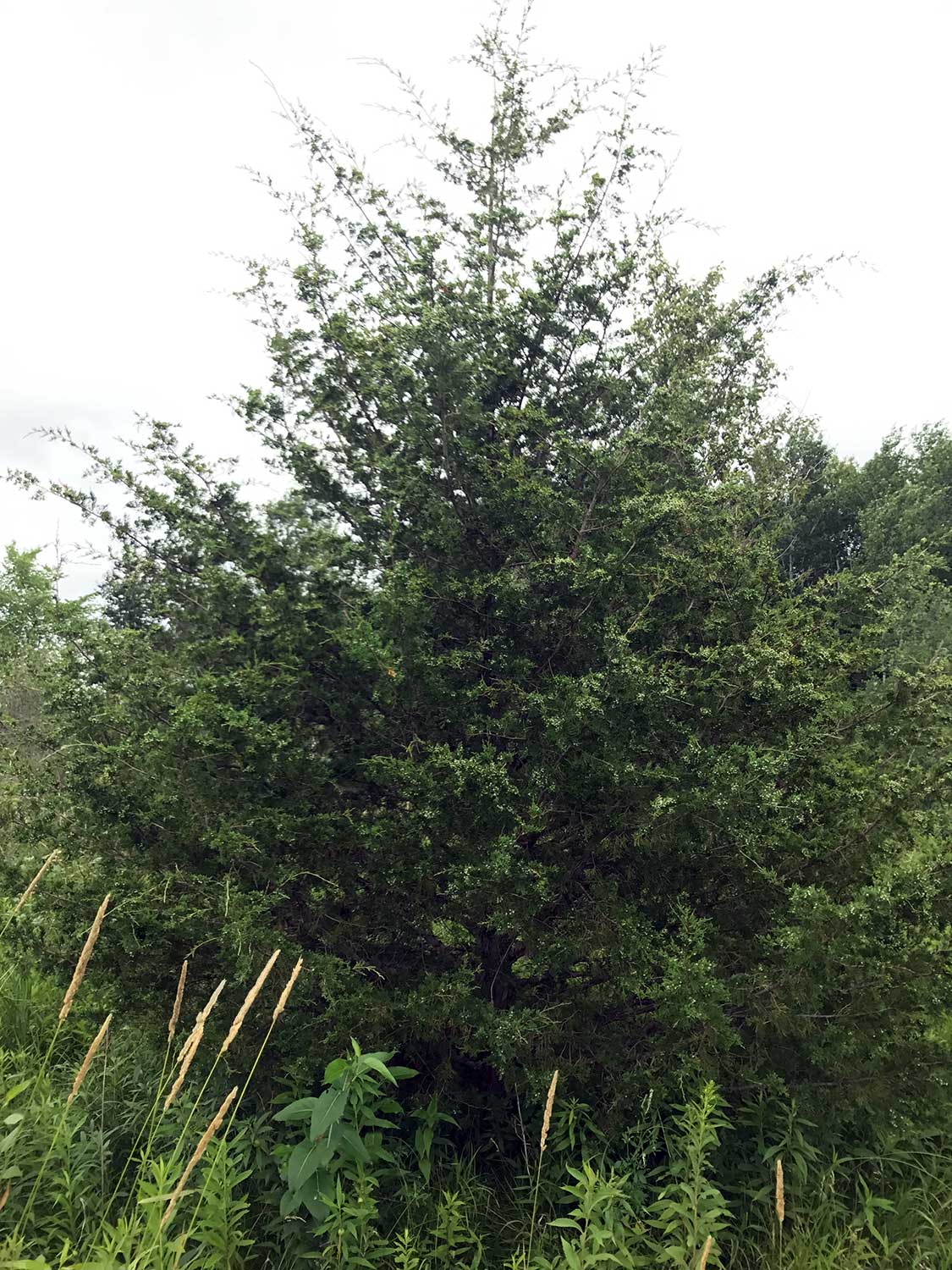
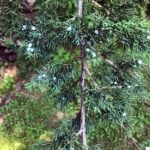
Eastern Larch – Larix laricina

Native To State: YES
Naturally Occurring: NO

Description

Appearance: Larix laricina is a deciduous coniferous tree known for its soft, needle-like leaves and small, woody cones.

Leaves: The leaves are needle-like, light green, and appear in clusters.

Cones: The cones are small and woody, typically less than an inch long.

Bark: The bark is grayish-brown and often scaly.

Habitat: It is commonly found in wetlands, including bogs and swamps.

Distribution: Tamarack is native to North America and northern Eurasia.

Occurrence
3 larger trees were planted in 1993, others planted in 2008 and in 2016

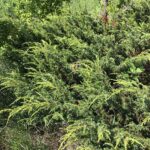
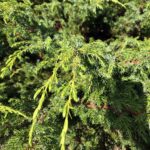
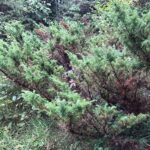
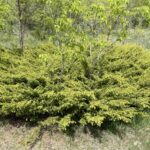
Common Juniper – Juniperus communis

Native To State: YES
Naturally Occurring: YES

Description

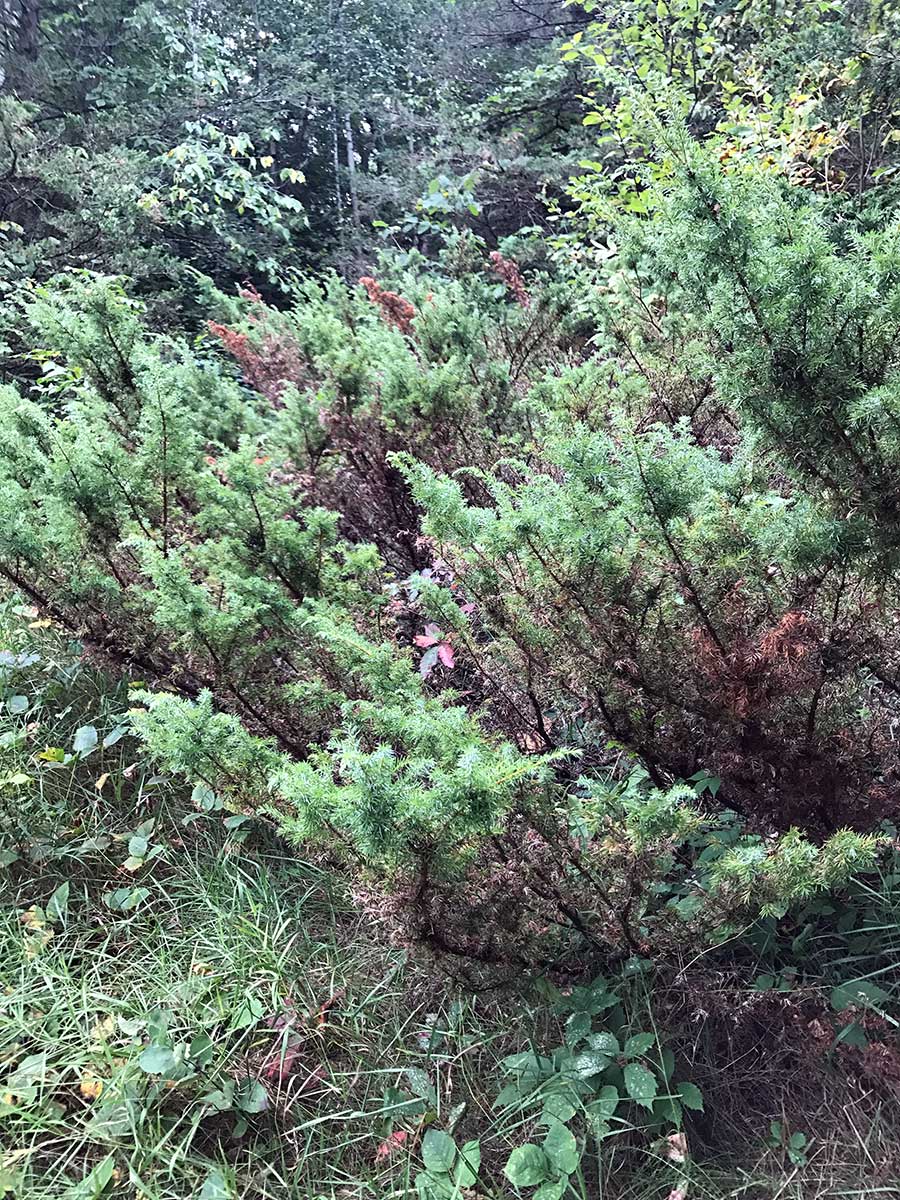
Appearance: Juniperus communis is an evergreen shrub or small tree known for its scale-like leaves and fleshy cones.

Leaves: The leaves are scale-like and closely appressed to the branches.

Cones: The plant produces small, fleshy cones that resemble berries and are often bluish-black.

Bark: The bark is reddish-brown and exfoliates in strips.

Habitat: It is commonly found in a variety of habitats, including open woodlands and rocky slopes.

Distribution: Common juniper has a wide distribution and is native to North America, Eurasia, and northern Africa.

Occurrence
Widespread throughout the property

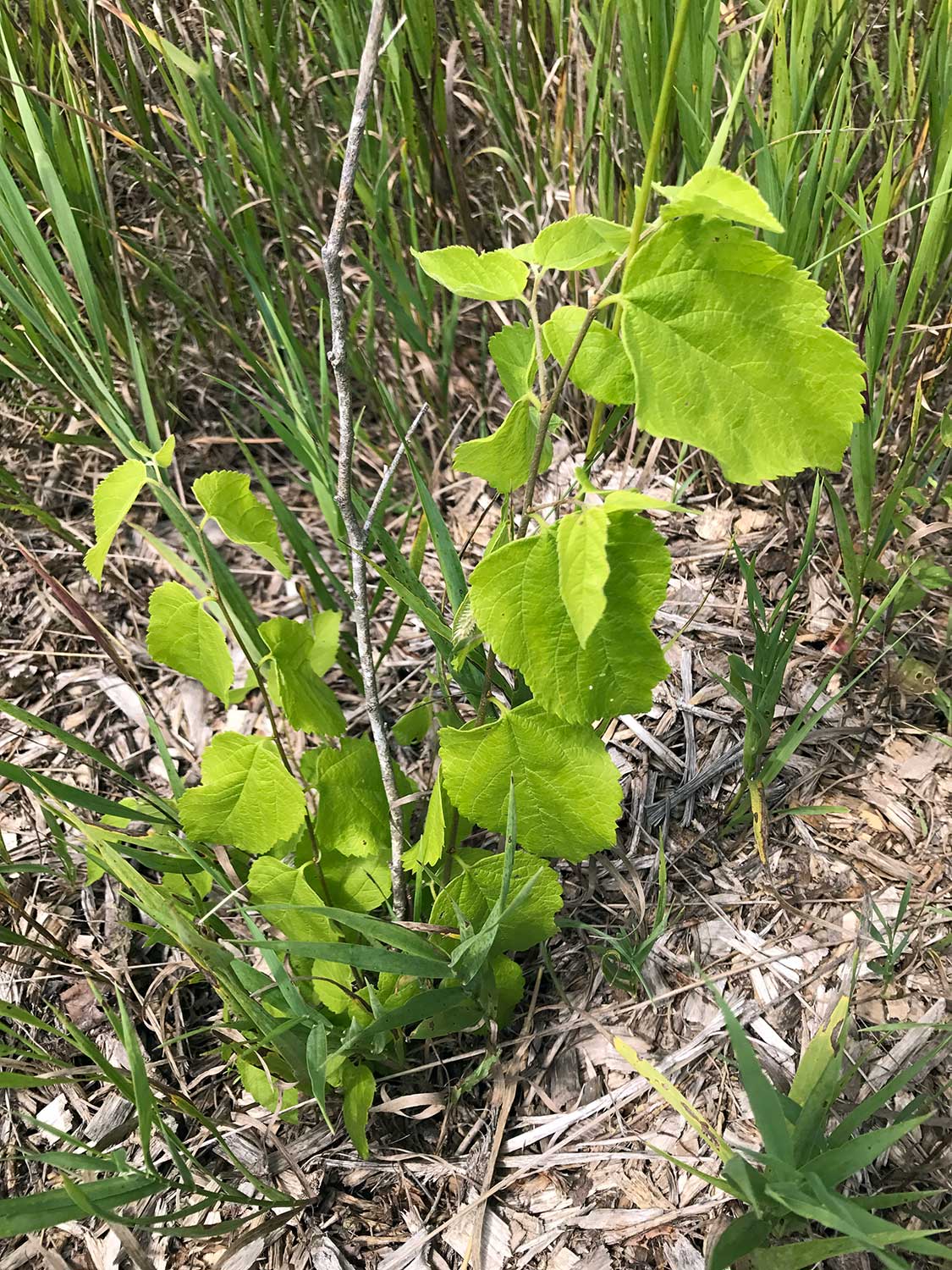
Hackberry – Celtis occidentalis

Native To State: YES
Naturally Occurring: NO

Description

Appearance: Celtis occidentalis is a deciduous tree known for its serrated leaves and small, berry-like fruits.

Leaves: The leaves are serrated, elliptical to lance-shaped, and alternate along the stem.

Fruits: The plant produces small, round, berry-like fruits that turn dark purple when ripe.

Habitat: It is commonly found in a variety of habitats, including woodlands and open areas.

Distribution: Common hackberry is native to North America.

Occurrence
Many seedlings planted in various places in 2016

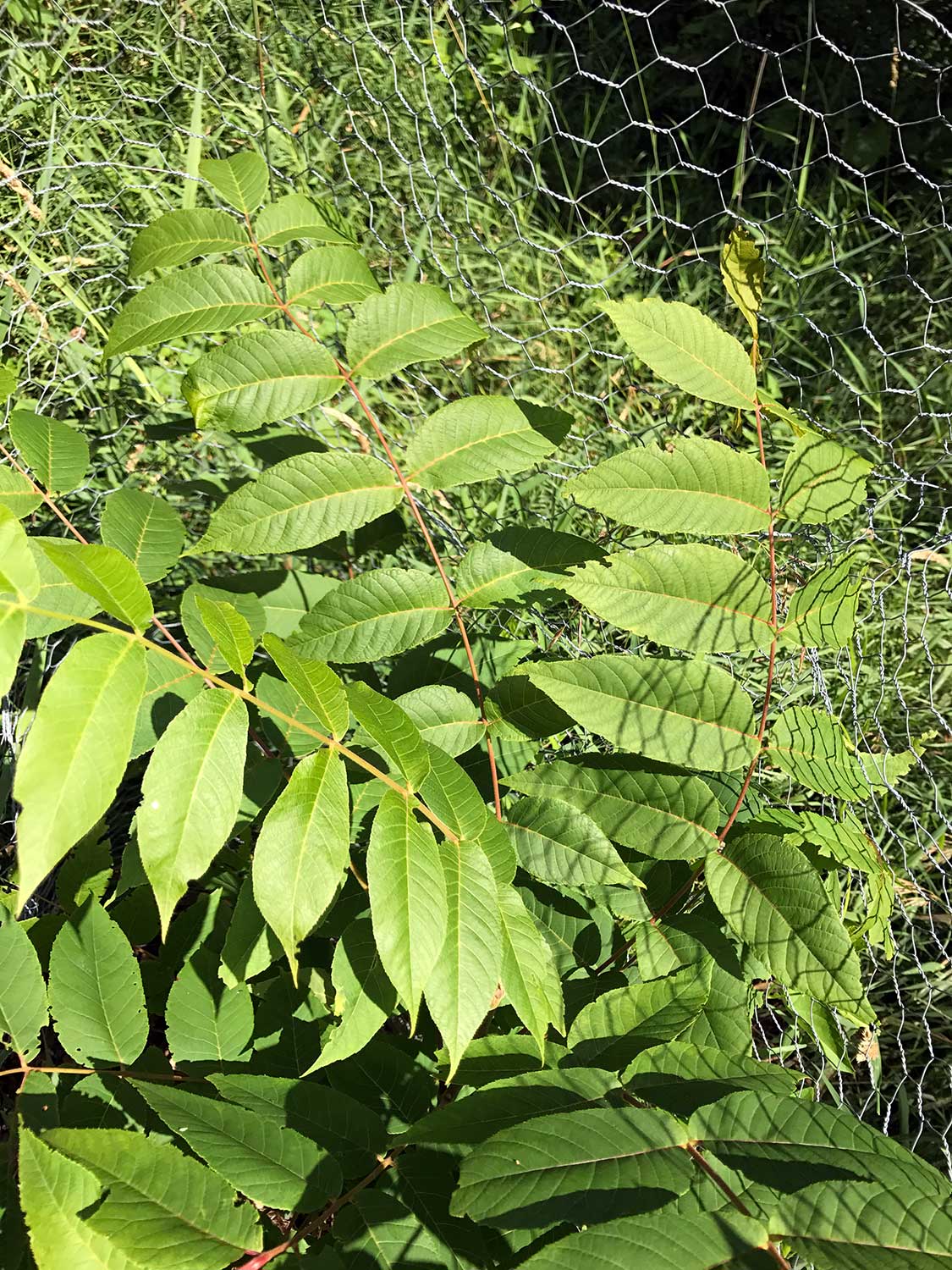
Black Walnut – Juglans nigra

Native To State: YES
Naturally Occurring: NO

Description

Appearance: Juglans nigra is a deciduous tree known for its compound leaves and large, edible nuts.

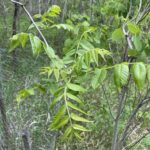
Leaves: The leaves are pinnately compound, with multiple leaflets arranged along a central stem.

Fruits: The plant produces large, round, brown nuts with a hard shell.

Habitat: It is commonly found in woodlands and along stream banks.

Distribution: Black walnut is native to eastern North America.

Occurrence
Many seedlings planted in various places in 2016

Eastern Cottonwood – Populus deltoides

Native To State: YES
Naturally Occurring: NO

Description

Appearance: Populus deltoides is a tall deciduous tree known for its triangular leaves and cottony seeds.

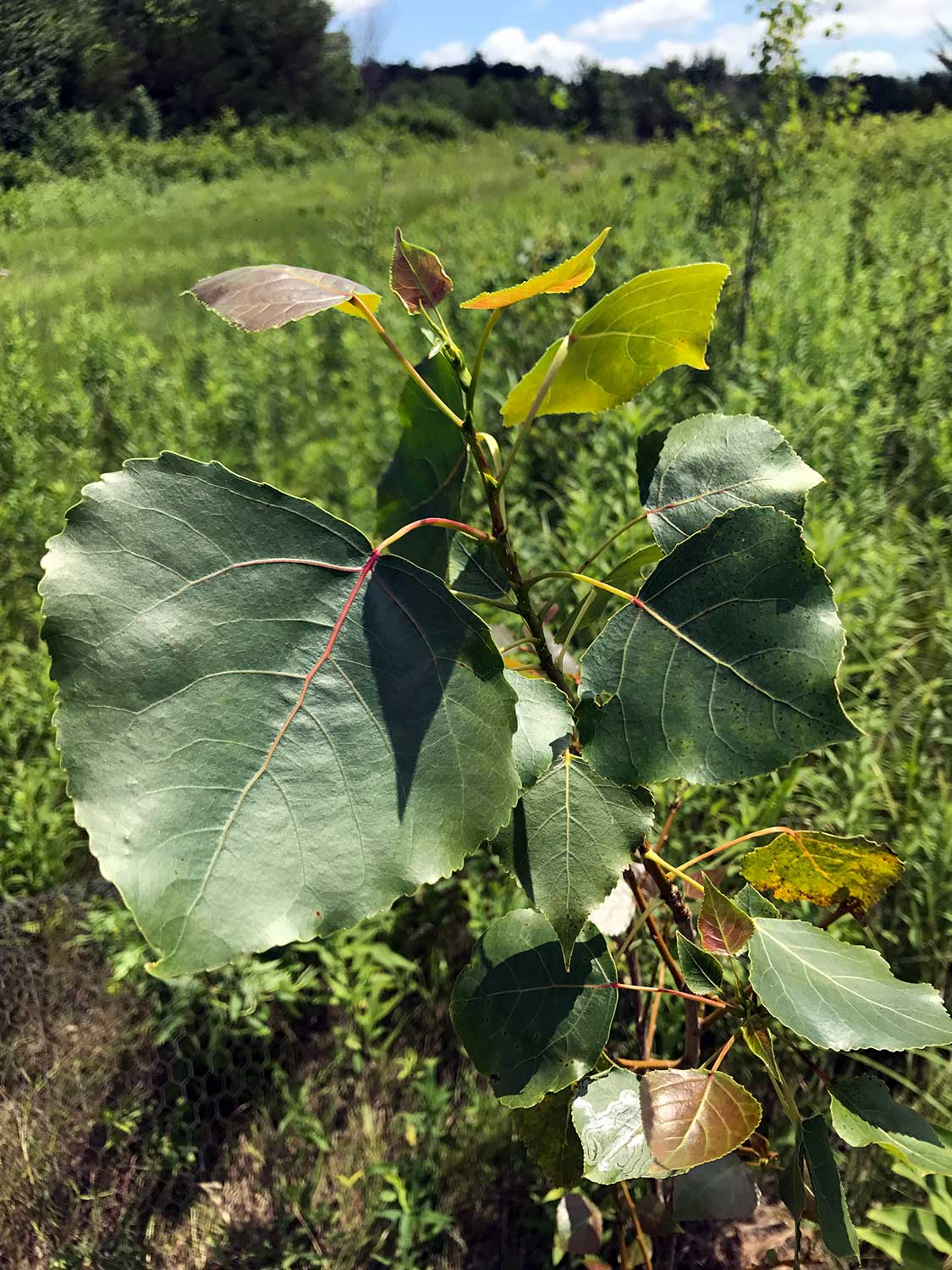
Leaves: The leaves are triangular or deltoid in shape, coarsely toothed, and often have a flattened petiole.

Flowers: The tree produces male and female flowers in separate catkins.

Fruits: The female catkins release cottony seeds that are dispersed by the wind.

Habitat: It is commonly found along riverbanks and in floodplains.

Distribution: Eastern cottonwood is native to North America.

Occurrence
One planted in north west corner along crick in 2018

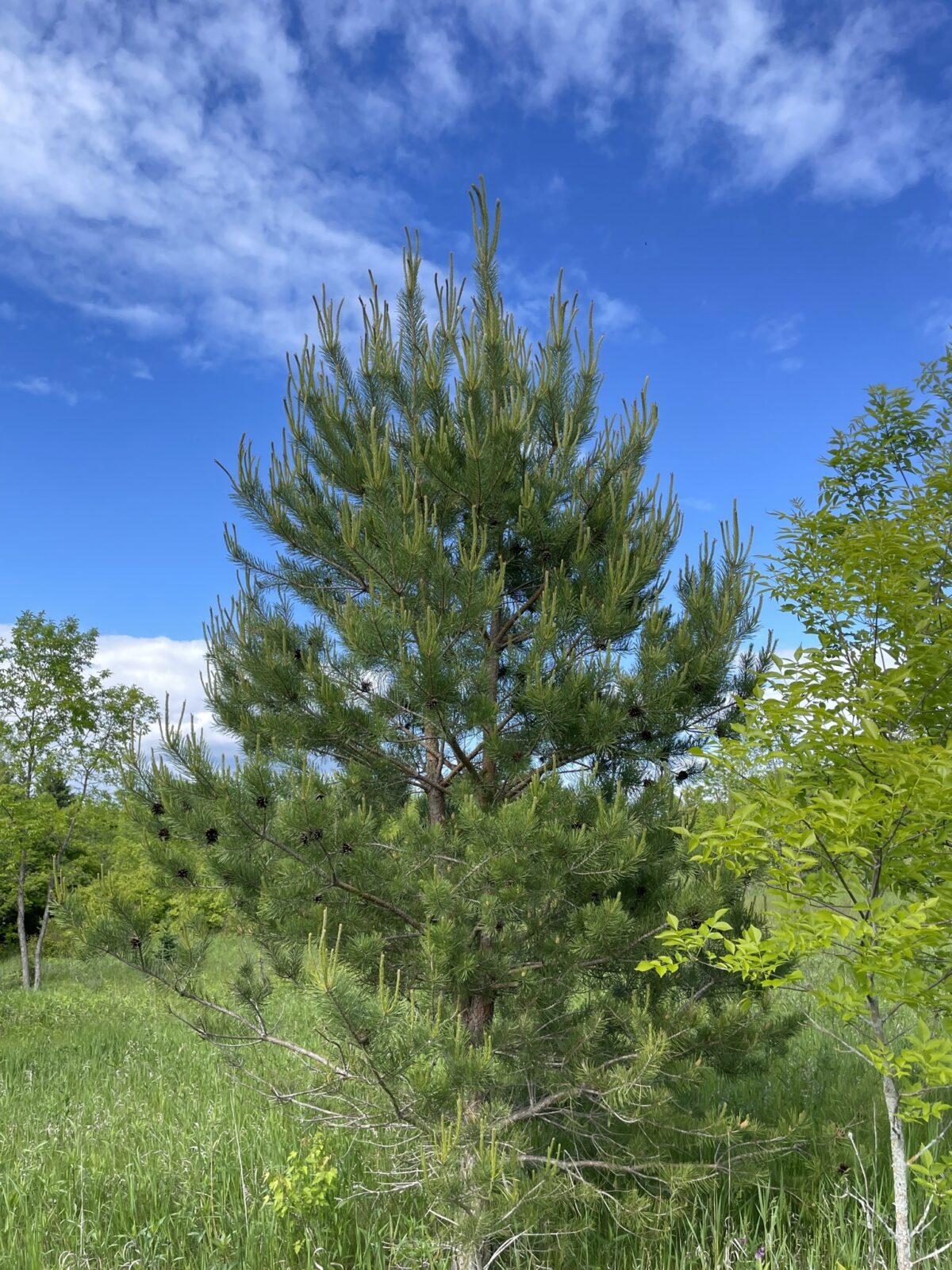
Scotch Pine – Pinus sylvestris

Native To State: NO
Naturally Occurring: NO

Description

Appearance: Pinus sylvestris is a coniferous tree known for its long needles and conical shape.

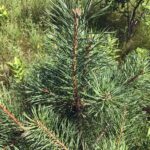
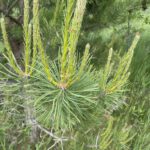
Leaves: The tree has long, slender needles that are typically in pairs and have a bluish-green color.

Cones: It produces cylindrical cones that are reddish-brown when mature.

Bark: The bark is orange-brown and becomes scaly with age.

Habitat: It is commonly found in a variety of habitats, including forests and open woodlands.

Distribution: Scots pine is native to Europe and Asia.

Occurrence
Multiple planted in former field area in 2016.

Austrian Pine – Pinus nigra

Native To State: NO
Naturally Occurring: NO

Description

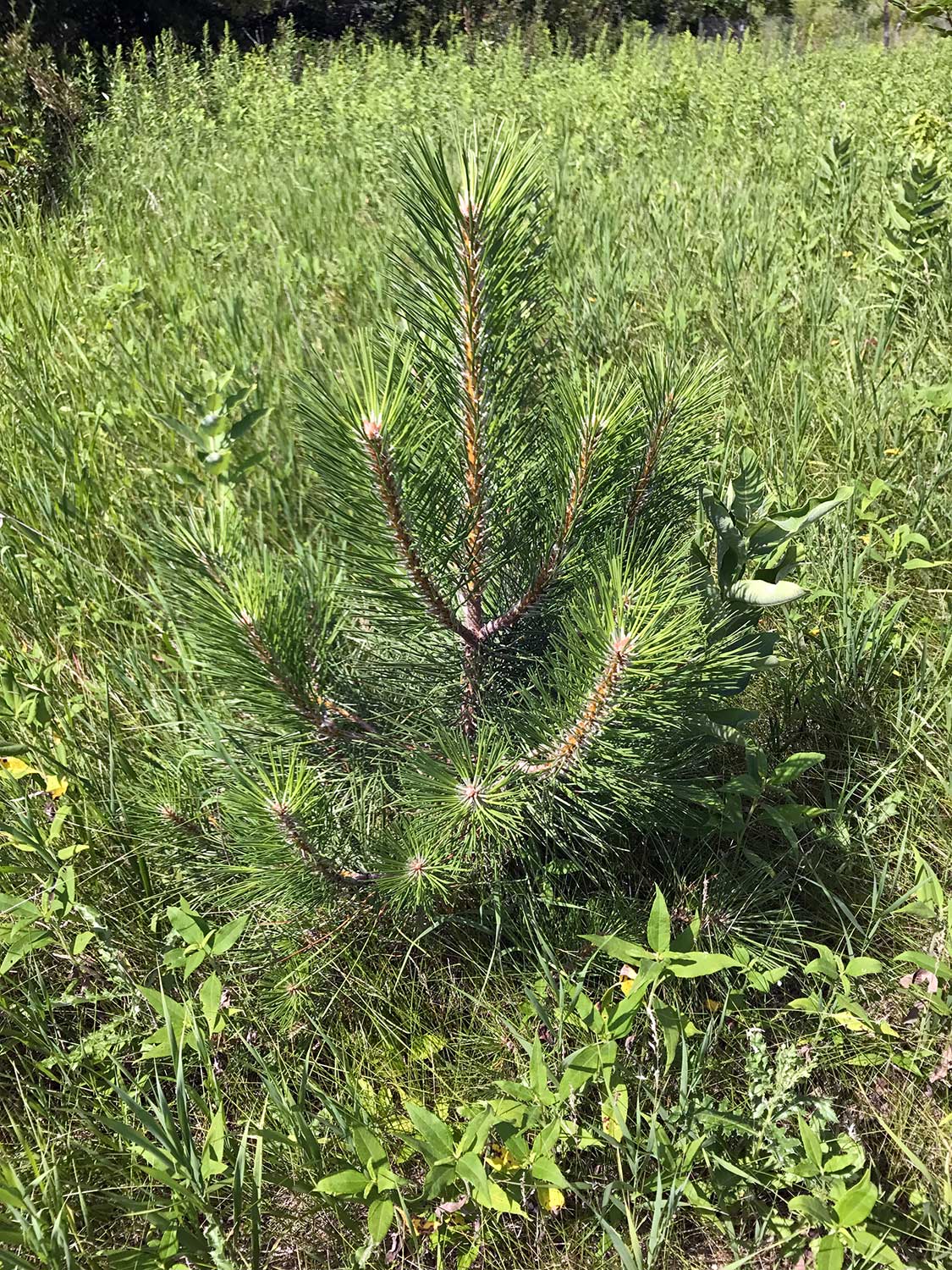
Appearance: Pinus nigra is a coniferous tree known for its dark, fissured bark and long needles.

Leaves: The tree has long, slender needles that are typically in pairs and have a dark green color.

Cones: It produces ovoid cones that are brown when mature.

Bark: The bark is dark brown to black and becomes deeply fissured with age.

Habitat: It is commonly found in a variety of habitats, including forests and rocky slopes.

Distribution: Black pine is native to Europe and Asia.

Occurrence
Multiple planted in former field area in 2016.

Balm of Gilead Poplar – Populus balsamifera

Native To State: YES
Naturally Occurring: YES

Description

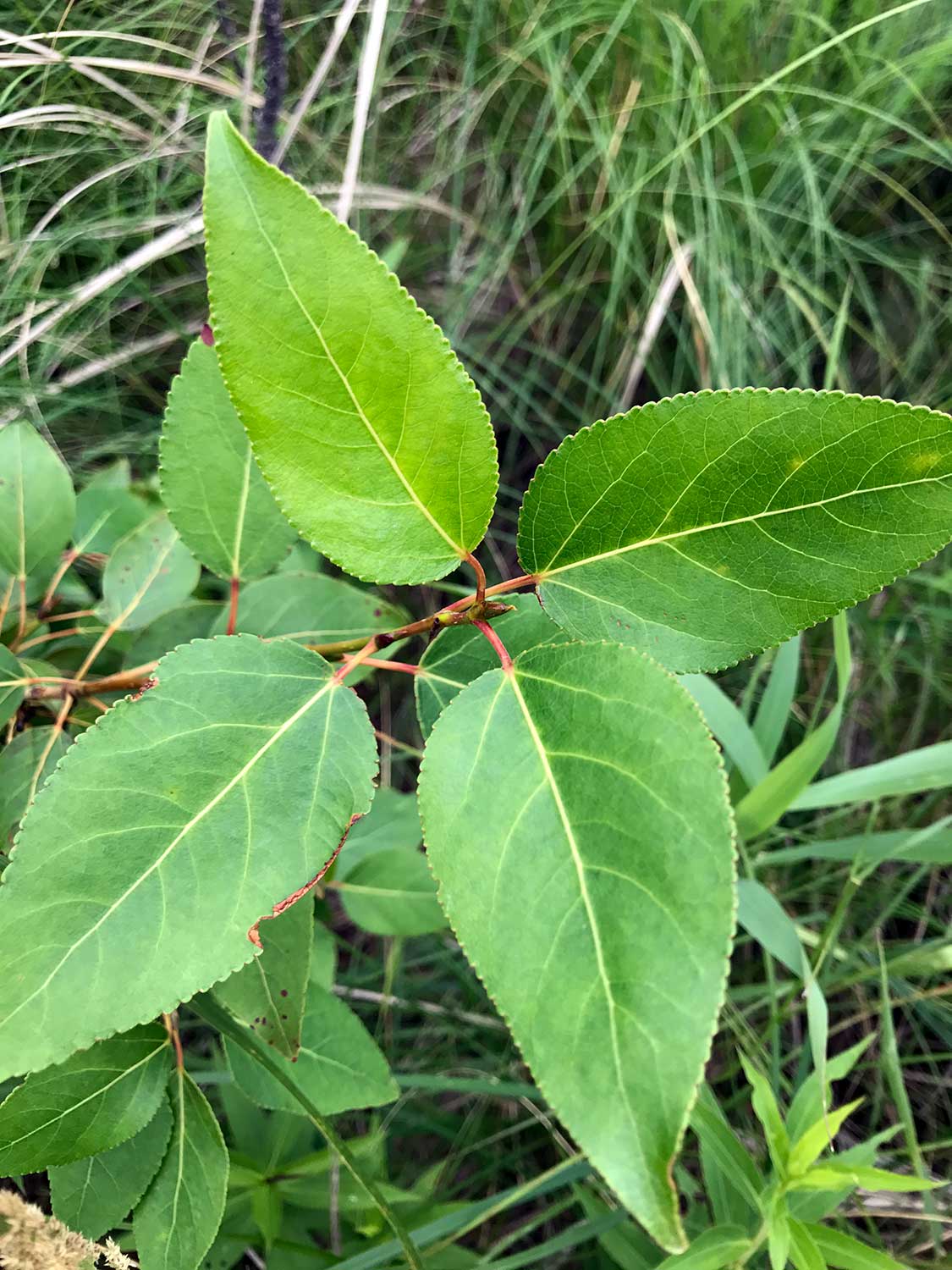
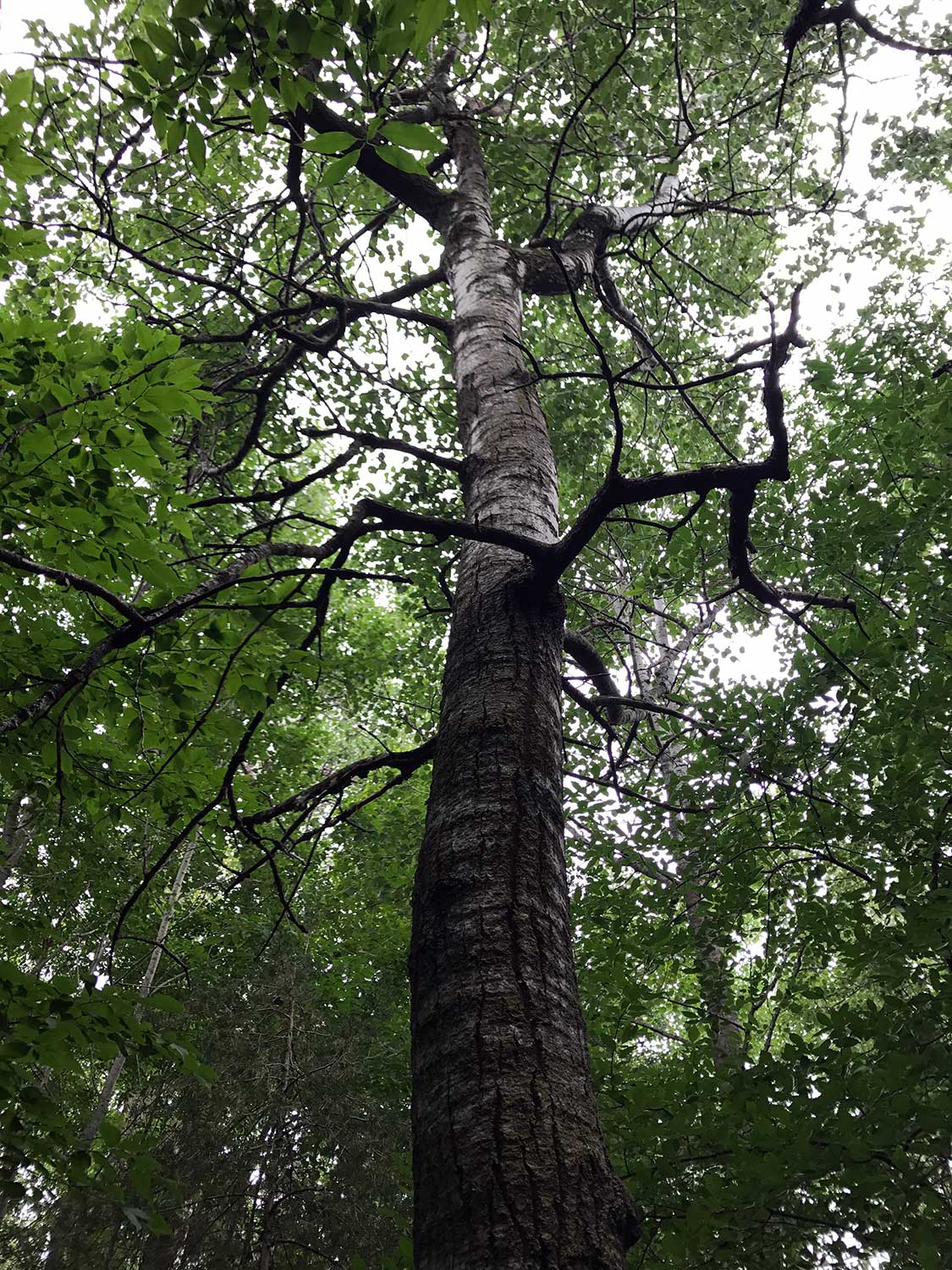
Populus balsamifera (Balsam Poplar or Balm of Gilead) is a deciduous tree belonging to the Salicaceae family. Here are some key identification characteristics:

Size and Shape: Balsam poplar is a medium to large-sized tree that typically reaches heights of 60 to 100 feet (18 to 30 meters). It has a straight, tall trunk and an irregular, open crown.

Leaves: The leaves of Populus balsamifera are large, broad, and ovate with serrated edges. They are dark green on the upper surface and paler beneath. The leaves emit a pleasant, balsam-like fragrance when crushed, giving the tree its name.

Bark: The bark of balsam poplar is smooth and greenish-brown when young, but as the tree ages, it develops into grayish-brown with shallow furrows and raised ridges.

Flowers: The tree produces inconspicuous flowers in the form of catkins. Male catkins are long and drooping, releasing pollen, while female catkins are shorter and erect, containing tiny seeds.

Buds: One of the distinguishing features of balsam poplar is its large, sticky, and resinous buds, which are coated with a gummy substance.

Habitat: Populus balsamifera is native to North America and can be found in various habitats, including wetlands, riverbanks, and floodplains. It has a preference for moist, well-drained soils.

Cultivation: Balsam poplar is valued for its rapid growth and adaptability to various growing conditions. It is often planted for shelterbelts, windbreaks, and erosion control.

Other Species: There are other species of poplar, such as Populus deltoides (Eastern cottonwood) and Populus tremuloides (quaking aspen), each with its unique characteristics.

Balsam poplar is known for its pleasant fragrance, attractive bark, and rapid growth, making it a popular choice for various planting and landscaping purposes. Its resinous buds and the aromatic compounds derived from them have also been used for medicinal and herbal purposes.

Occurrence
Found in several locations near wetter areas. Continually growing and regenerating populations exist naturally.

Quaking Aspen – Populus tremuloides

Native To State: YES
Naturally Occurring: YES

Description

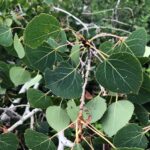
Populus tremuloides (Quaking Aspen or Trembling Aspen) is a deciduous tree belonging to the Salicaceae family. Here are some key identification characteristics:

Size and Shape: Quaking aspen is a medium-sized tree that typically reaches heights of 20 to 80 feet (6 to 24 meters). It has a slender, straight trunk and a narrow, conical or pyramidal shape when young, gradually becoming more rounded with age.

Leaves: The leaves of Populus tremuloides are small, round to heart-shaped, and have serrated edges. They are bright green on the upper surface and paler beneath. One of the distinctive features of this tree is the fluttering or “quaking” of its leaves in the slightest breeze due to their flattened petioles.

Bark: The bark of quaking aspen is smooth and grayish-white when young, but as the tree matures, it develops black furrows and white patches, giving it a unique appearance.

Flowers: The tree produces inconspicuous flowers in the form of catkins. Male catkins are long and drooping, releasing pollen, while female catkins are smaller and erect, containing tiny seeds.

Fall Color: During the autumn season, the leaves of quaking aspen turn vibrant shades of yellow, making it a striking sight in the fall landscape.

Habitat: Populus tremuloides is native to North America and can be found in a variety of habitats, including moist lowland areas, upland forests, and mountain slopes. It often forms extensive stands known as “aspen groves” through its ability to reproduce vegetatively through root suckers.

Cultivation: Quaking aspen is appreciated for its ornamental value, especially in naturalistic landscapes. It is also important for its ecological role, providing habitat for various wildlife species.

Other Species: There are other species of aspen, such as Populus grandidentata (bigtooth aspen) and Populus balsamifera (balsam poplar), each with its unique characteristics.

Quaking aspen is a remarkable tree with its distinctive fluttering leaves, attractive bark, and vibrant fall colors. Its ecological significance, coupled with its beauty, makes it a valued tree in many regions.

Occurance
Widespread throughout the wooded areas. Spreading into new areas, but also being eaten back by beavers.
Eastern Red Cedar – Juniperus virginiana

Native To State: YES
Naturally Occurring: YES

Description

Juniperus virginiana (Eastern Red Cedar or Virginia Juniper) is an evergreen coniferous tree belonging to the Cupressaceae family. Here are some key identification characteristics:

Size and Shape: Eastern red cedar is a medium-sized tree that typically reaches heights of 30 to 60 feet (9 to 18 meters). It has a narrow, columnar or pyramidal shape when young, gradually becoming more irregular and spreading with age.

Leaves: The leaves of Juniperus virginiana are scale-like, opposite or in whorls of three, and arranged in flattened sprays. They are green to bluish-green and have a distinctive resinous fragrance when crushed.

Fruit: The tree produces small, fleshy, berry-like cones that are about 0.25 to 0.5 inches (6 to 13 millimeters) in diameter. These cones initially appear green but mature to bluish-purple and may persist on the tree for several years.
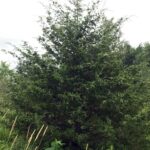
Bark: The bark of Eastern red cedar is reddish-brown and exfoliates in thin, fibrous strips, revealing a reddish inner layer. The exfoliating bark adds to the tree’s rustic appearance.

Habitat: Juniperus virginiana is native to eastern North America and can be found in a variety of habitats, including open woodlands, hillsides, and rocky areas. It is well-adapted to a range of soil conditions, including dry and poor soils.

Cultivation: Eastern red cedar is valued for its hardy nature and is often planted for erosion control, windbreaks, and wildlife habitat. It is also used in landscaping and as a Christmas tree.

Other Species: There are other juniper species, such as Juniperus scopulorum (Rocky Mountain juniper) and Juniperus chinensis (Chinese juniper), each with its unique characteristics.

Eastern red cedar is an ecologically important tree, providing food and shelter for various wildlife species. It is also used in traditional medicine and has cultural significance for certain indigenous communities.

Occurrence
Widespread in all areas of the property and in all stages of maturity.