Native To State: YES
Naturally Occurring: YES
Description
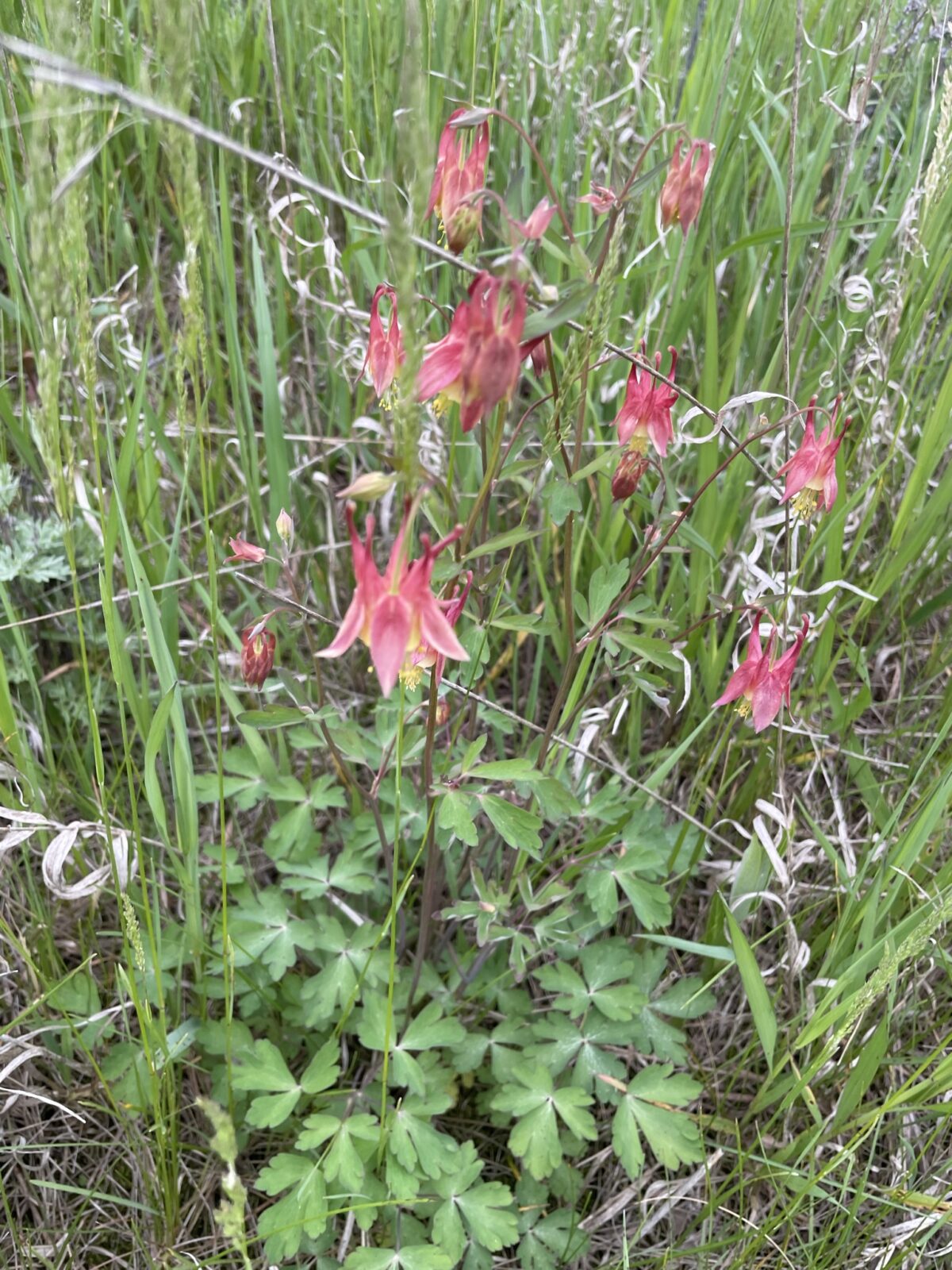
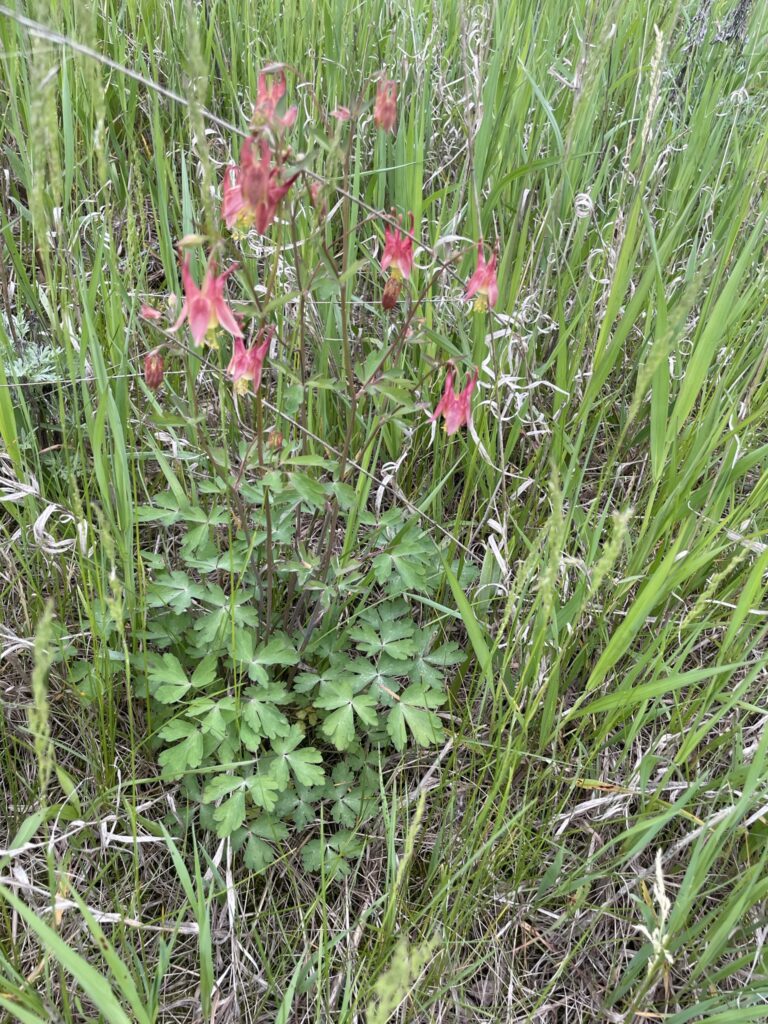
Distinctly shaped flowers – red with long tubes ending in bulbs filled with sweet nectar.
Distribution: North America.
Occurrence
Found throughout the property
Native To State: YES
Naturally Occurring: YES
Description
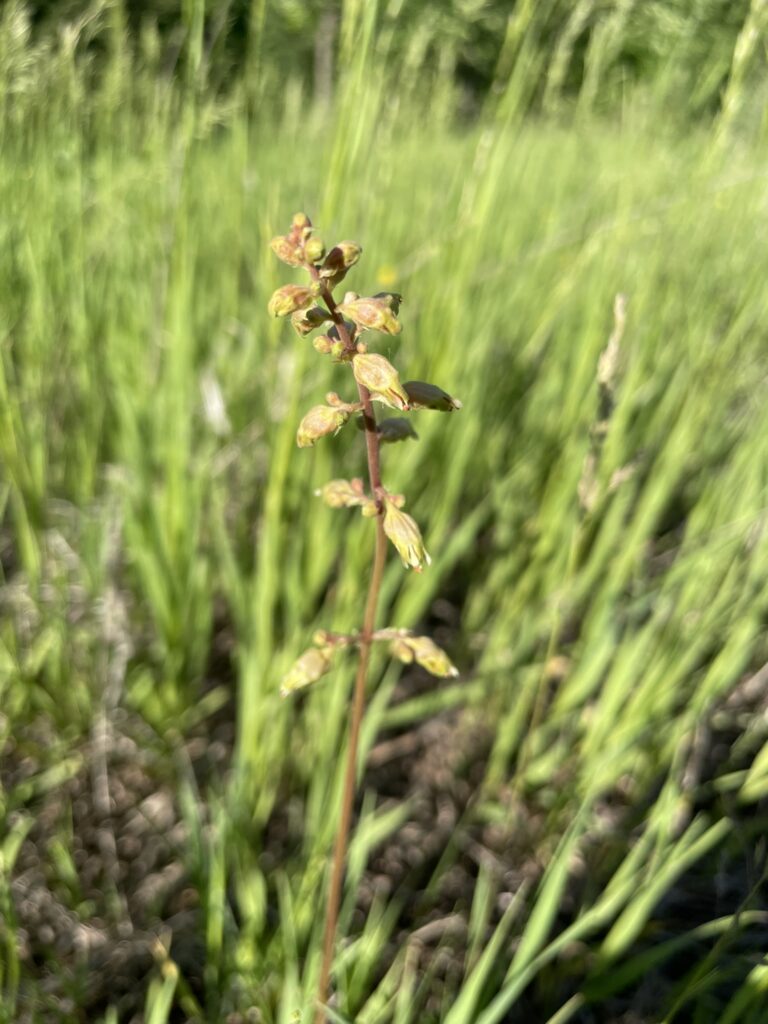
Distinctly shaped flowers – red with long tubes ending in bulbs filled with sweet nectar.
Distribution: North America.
Occurrence
Found throughout the property
Native To State: YES
Naturally Occurring: NO
Description
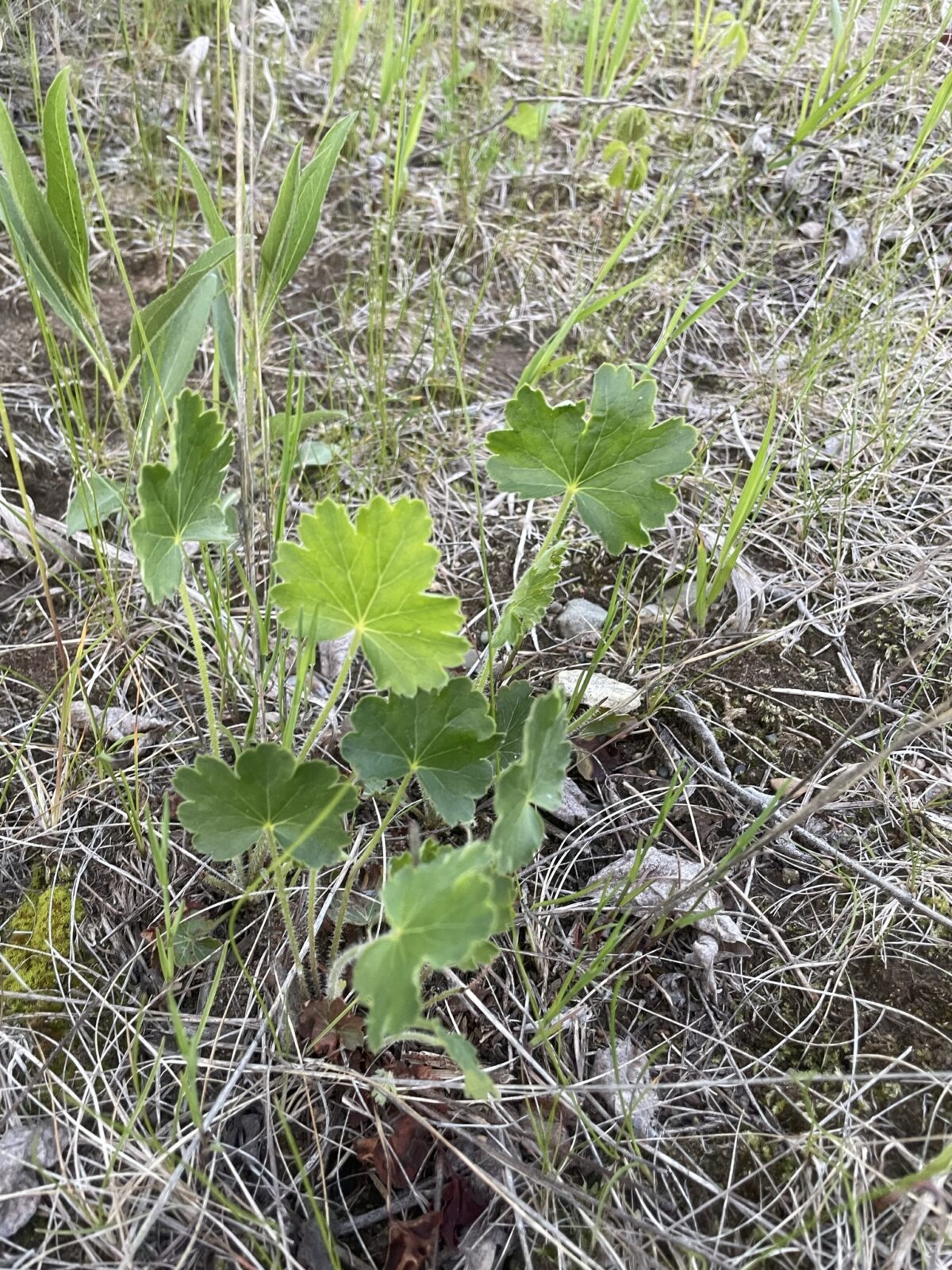
Rounded-lobed leaves arising basally on a single stalk.
Distribution: North America.
Occurrence
In two locations of the field where grass is thin.

Native To State: YES
Naturally Occurring: NO
Description
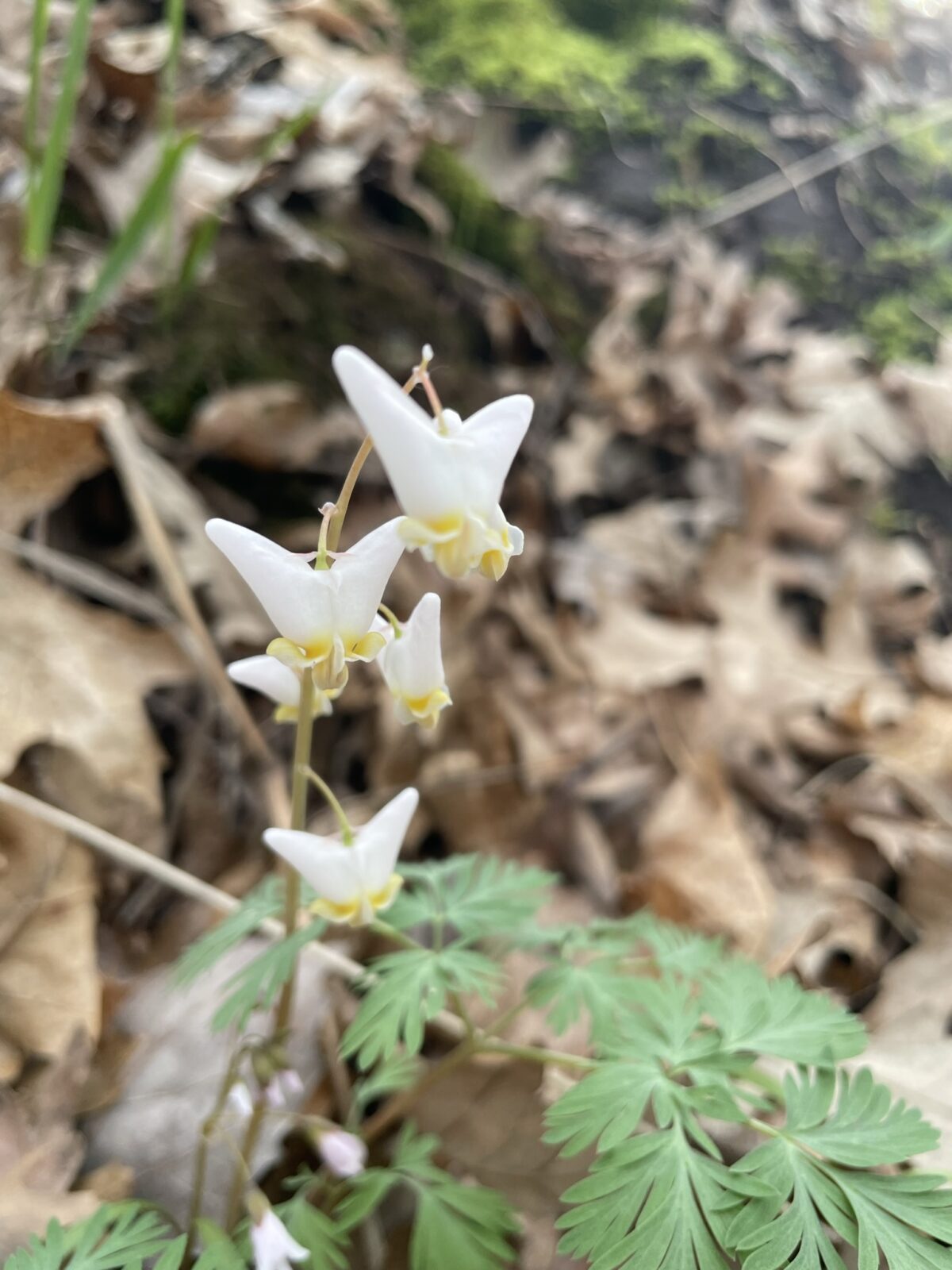
Ferny leaves with white flowers resembling upside-down pants
Distribution: North America.
Occurrence
In two locations of the field where grass is thin.
Native To State: YES
Naturally Occurring: NO
Description
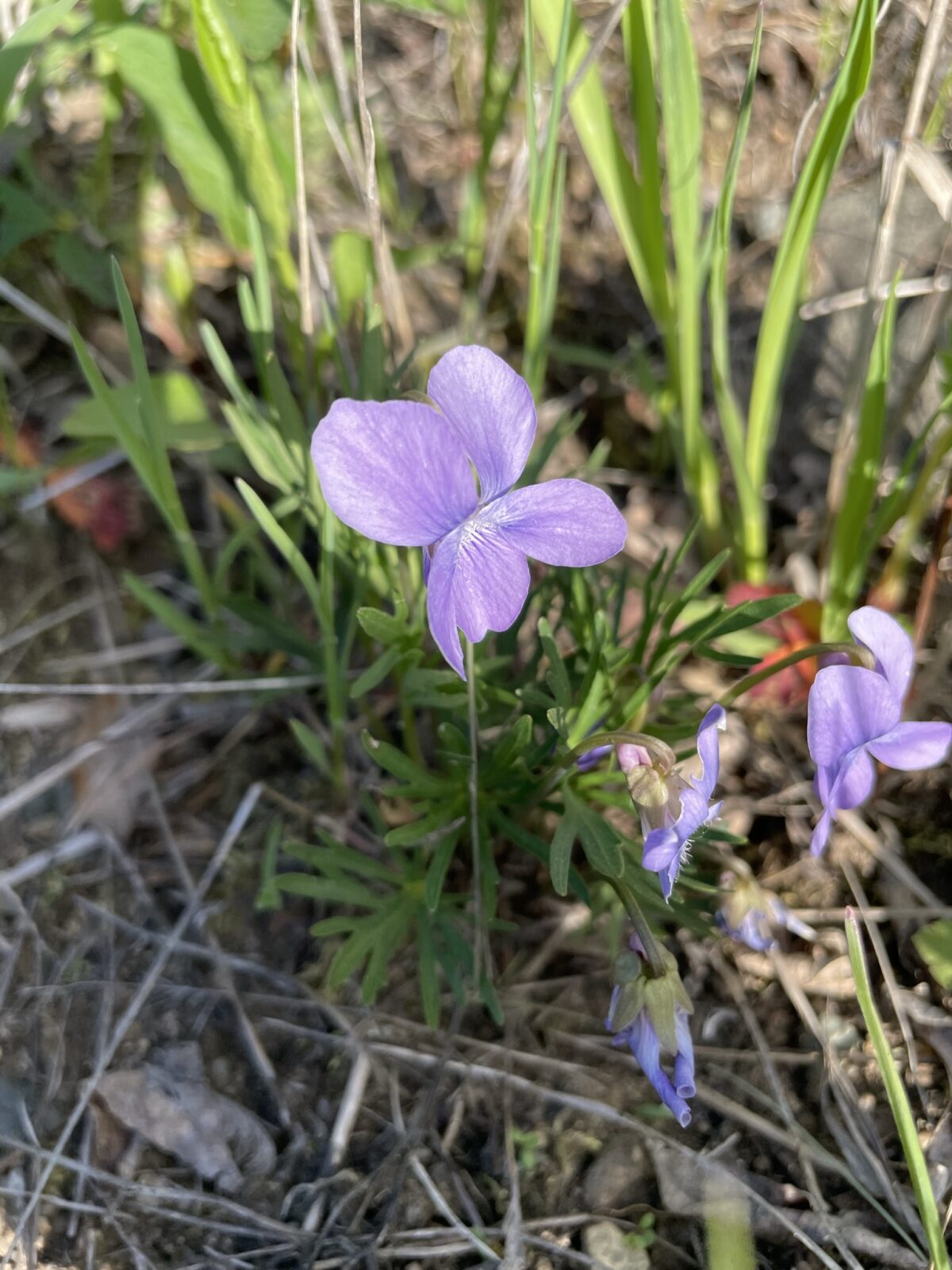
Purple violet flowers. Leaves are deeply lobed resembling a bird’s foot.
Distribution: North America.
Occurrence
Found in field area where the grass is thin.

Native To State: YES
Naturally Occurring: NO
Description
Ferny leaves with white flowers resembling upside-down pants
Distribution: North America.
Occurrence
In large brush island deer exclosure


Native To State: YES
Naturally Occurring: YES
Description
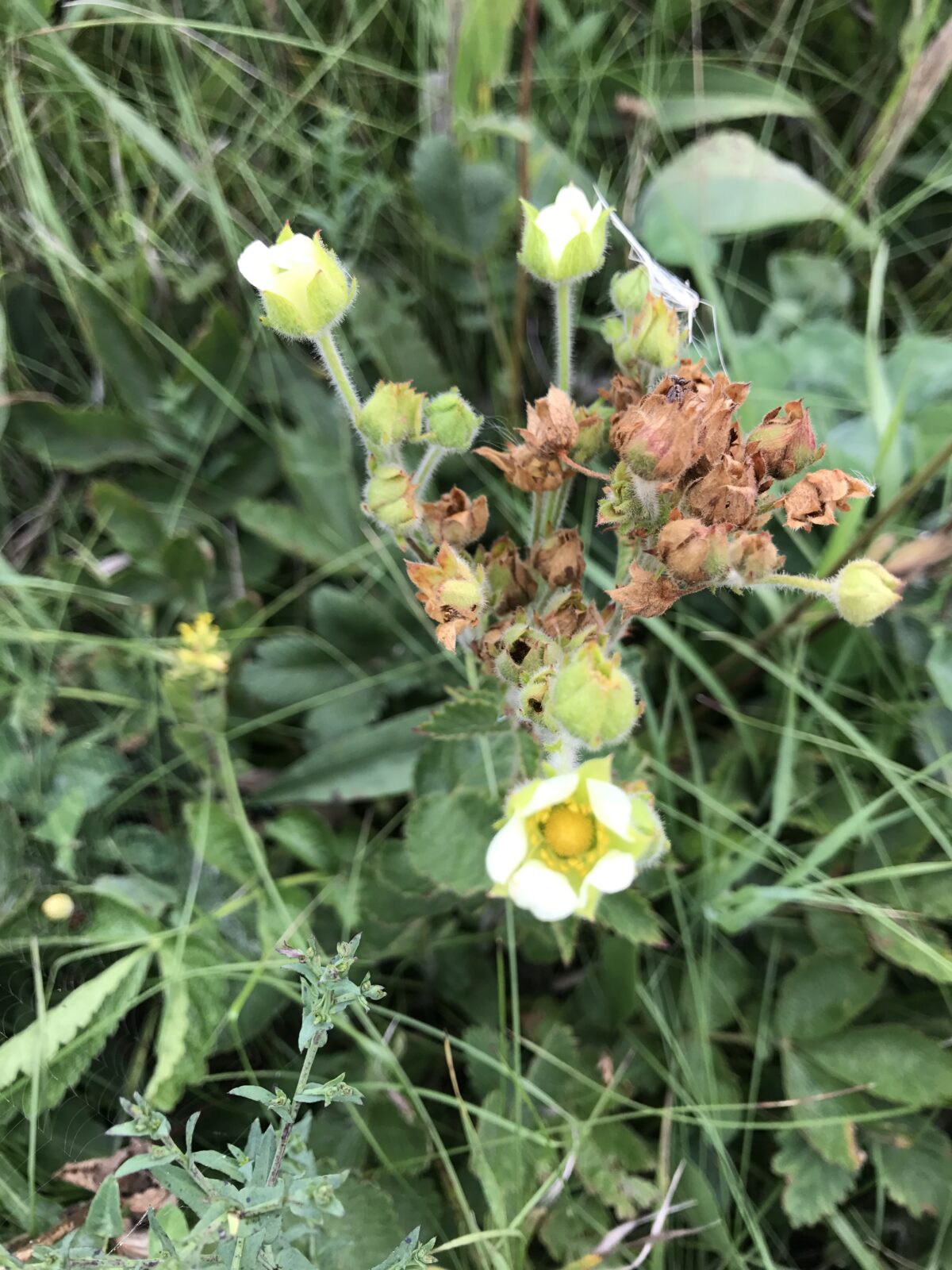
Appearance: Drymocallis arguta is a perennial herb known for its pinnately compound leaves and showy, yellow flowers.
Leaves: The leaves are pinnately compound with toothed leaflets.
Flowers: The plant produces bright yellow, five-petaled flowers with a prominent central boss of stamens.
Habitat: It is commonly found in open woodlands, meadows, and rocky slopes.
Distribution: Tall cinquefoil is native to North America.
Occurrence
Found in several places throughout the property

Native To State: YES
Naturally Occurring: NO
Description
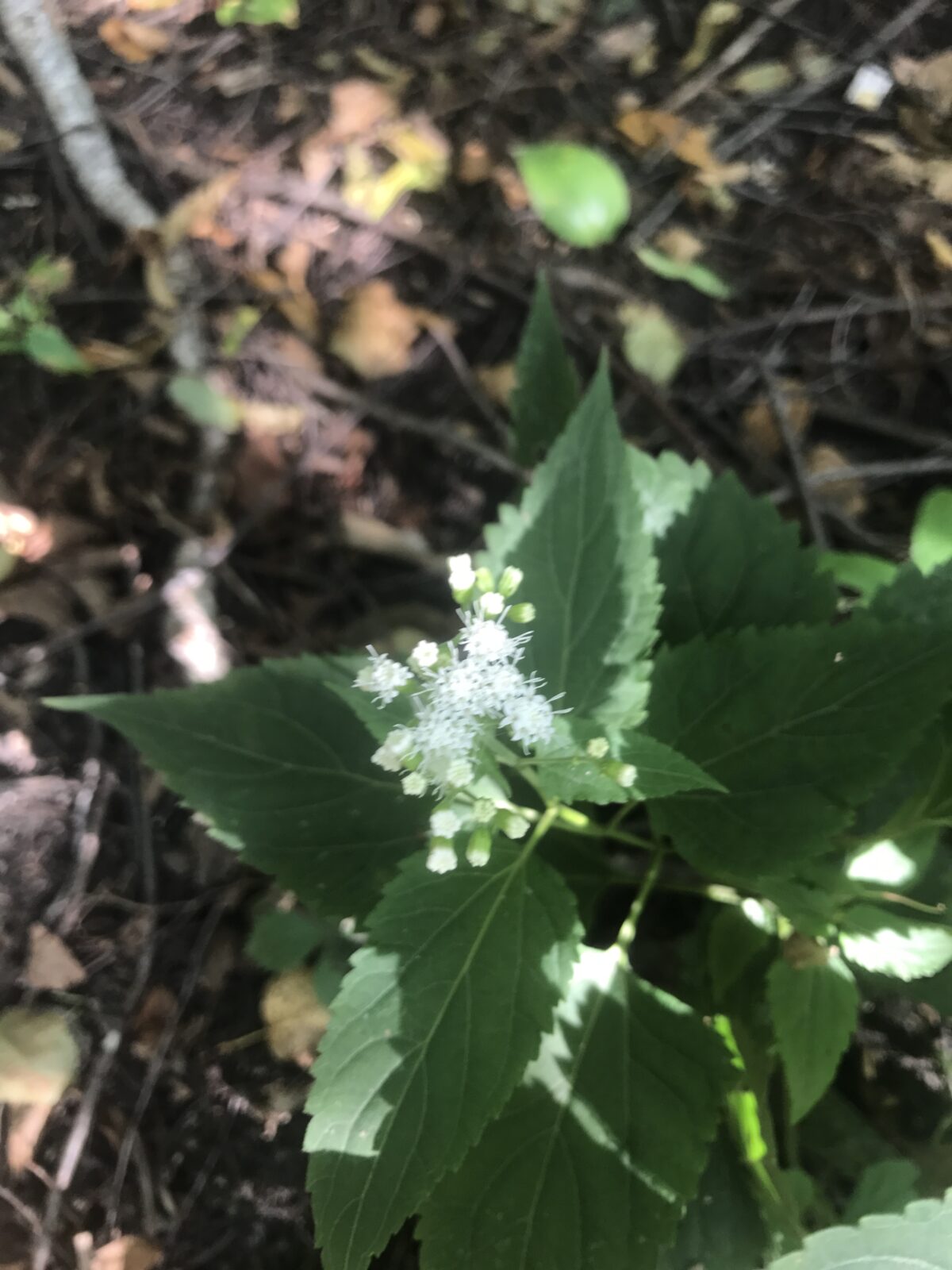
Appearance: Ageratina altissima is a herbaceous perennial known for its opposite leaves and clusters of small, white flowers.
Leaves: The leaves are opposite, serrated, and somewhat heart-shaped.
Flowers: The plant produces small, white, fuzzy flowers in dense clusters.
Habitat: It is commonly found in woodlands, particularly in shaded areas.
Distribution: White snakeroot is native to eastern North America.
Occurrence
Planted in various locations in the wooded areas



Native To State: NO
Naturally Occurring: NO
Description
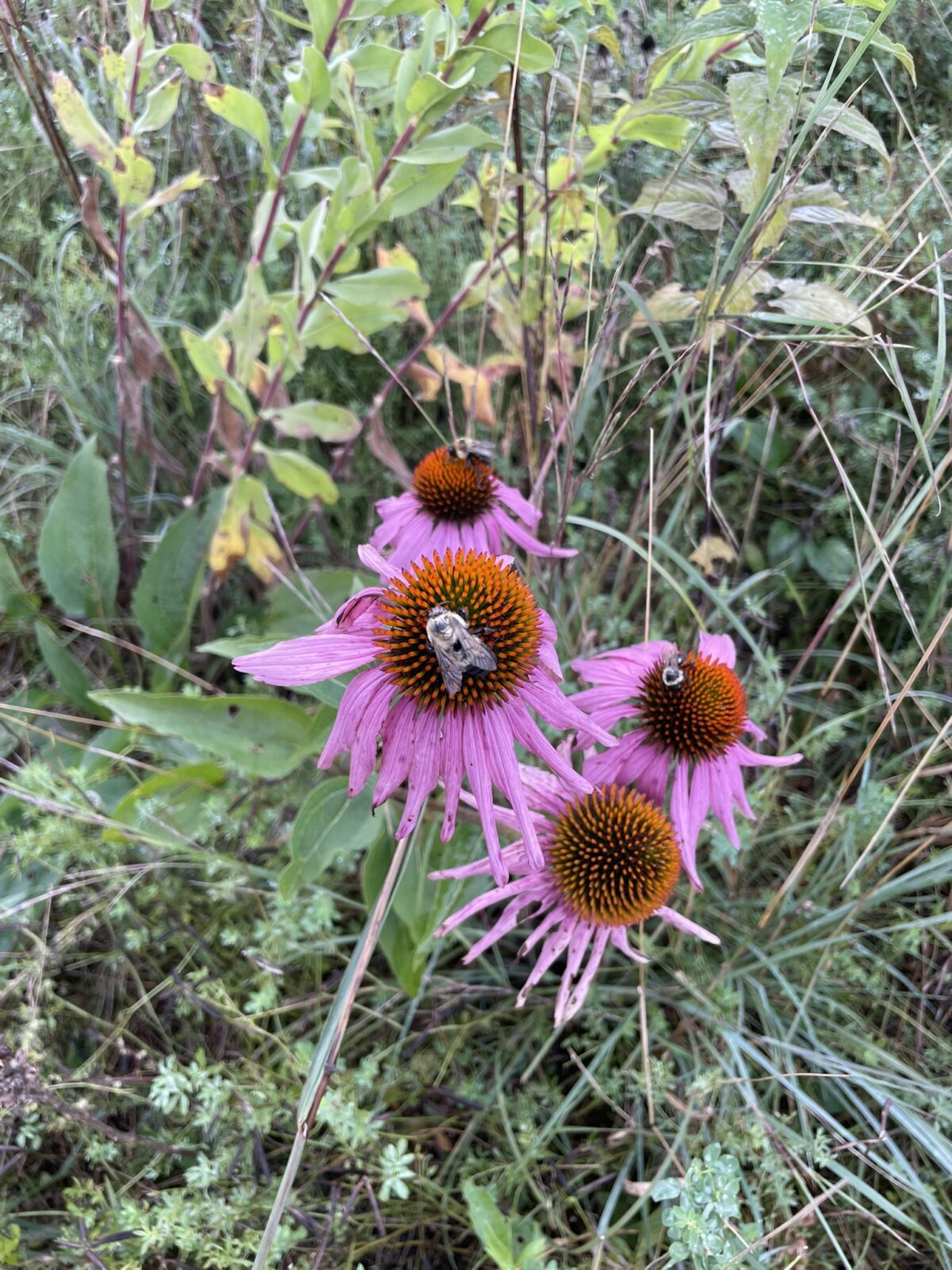
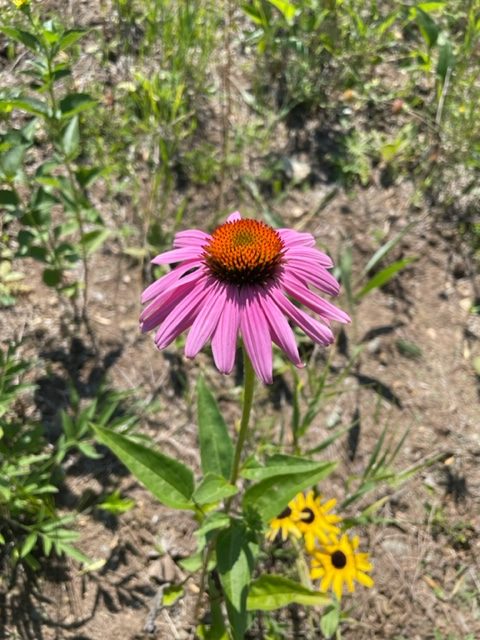
Echinacea purpurea (Purple Coneflower) is a perennial herbaceous plant belonging to the Asteraceae family. Here are some key identification characteristics:
Appearance: Purple coneflower is a robust herb with multiple stems that can reach heights of 2 to 5 feet (60 to 150 centimeters). The stems are typically unbranched and arise from a basal rosette of leaves.
Leaves: The leaves of Echinacea purpurea are lance-shaped and have toothed margins. They are arranged alternately along the stems.
Flowers: The plant produces striking daisy-like flowers with prominent spiky, reddish-brown central disks and ray florets that are purple to pink in color. The ray florets are drooping and have a slightly reflexed appearance, similar to those of Echinacea angustifolia.
Inflorescence: The flowers are held on top of the stems in solitary heads, each surrounded by a ring of green bracts.
Blooming Period: Purple coneflower blooms from mid-summer to early fall, attracting various pollinators like bees, butterflies, and birds to its nectar-rich flowers.
Habitat: This species is native to eastern North America and can be found in a variety of habitats, including prairies, meadows, and open woodlands. It prefers well-drained soils.
Distribution: Purple coneflower is found in regions ranging from eastern Canada to the central and eastern parts of the United States.
Conservation: While not considered a threatened species, preserving its natural habitats is essential for maintaining healthy populations of purple coneflower.
Other Species: Echinacea purpurea is part of the Echinacea genus, which includes other coneflower species with diverse characteristics.
Purple coneflower is celebrated for its vibrant and eye-catching flowers, making it a popular choice for gardens and landscapes. Its resilience, ease of cultivation, and potential medicinal properties have contributed to its widespread popularity as both an ornamental plant and a herbal remedy.
Occurrence
Seeded in prairie areas
Native To State: YES
Naturally Occurring: NO
Description
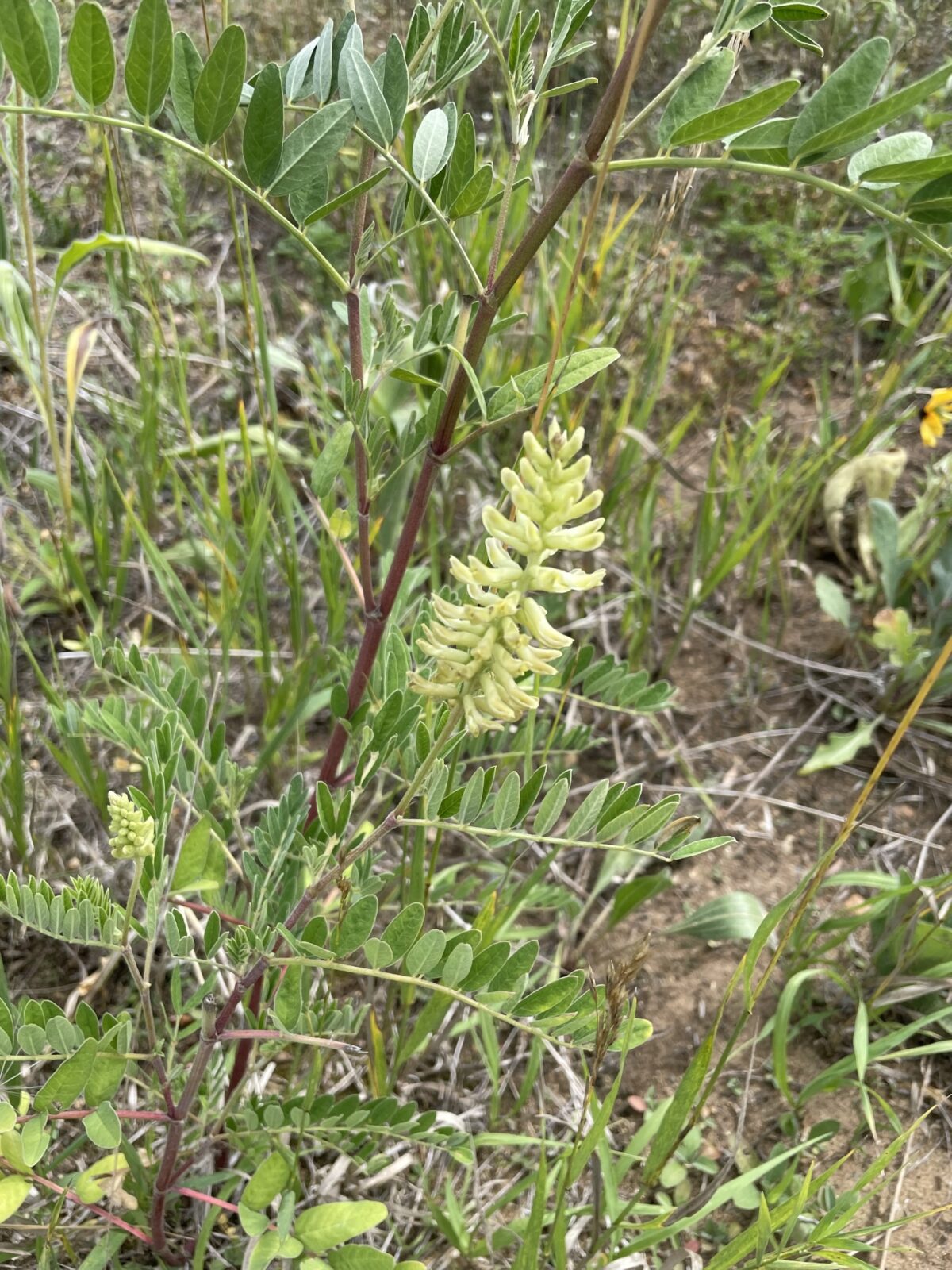
Astragalus canadensis (Canada Milkvetch) is a herbaceous perennial plant belonging to the Fabaceae family. Here are some key identification characteristics:
Appearance: Canada milkvetch is a herbaceous plant with a slender, erect stem that can grow up to 2 to 3 feet (60 to 90 centimeters) in height. The plant has a somewhat bushy or clump-forming habit.
Leaves: The leaves of Astragalus canadensis are compound and alternate, consisting of several small leaflets attached to a central stem (rachis). Each leaflet is narrow and lance-shaped with smooth margins.
Flowers: The plant produces showy, pea-like flowers that are arranged in dense racemes at the top of the stem. The flowers have a characteristic butterfly-like appearance, with five petals: a large banner (upper petal), two wings (side petals), and a keel (lower petal). The color of the flowers can range from pale pink to purple.
Inflorescence: The flowering racemes are held upright at the top of the stem and can be quite striking when in bloom.
Habitat: Canada milkvetch is native to North America and can be found in a variety of habitats, including prairies, meadows, and open woodlands. It prefers well-drained soils.
Distribution: The species is found in regions ranging from eastern Canada to the central and eastern parts of the United States.
Conservation: Canada milkvetch is not considered a threatened species, but preserving its natural habitats is important for maintaining healthy populations.
Other Species: Astragalus canadensis is part of the Astragalus genus, which includes other milkvetch species with diverse characteristics.
Canada milkvetch is admired for its showy flowers and attractive foliage, making it a valuable addition to native plant gardens and wildflower meadows. Its presence in natural landscapes adds to the biodiversity and beauty of open habitats.
Occurrence
Seeded in new prairie area.
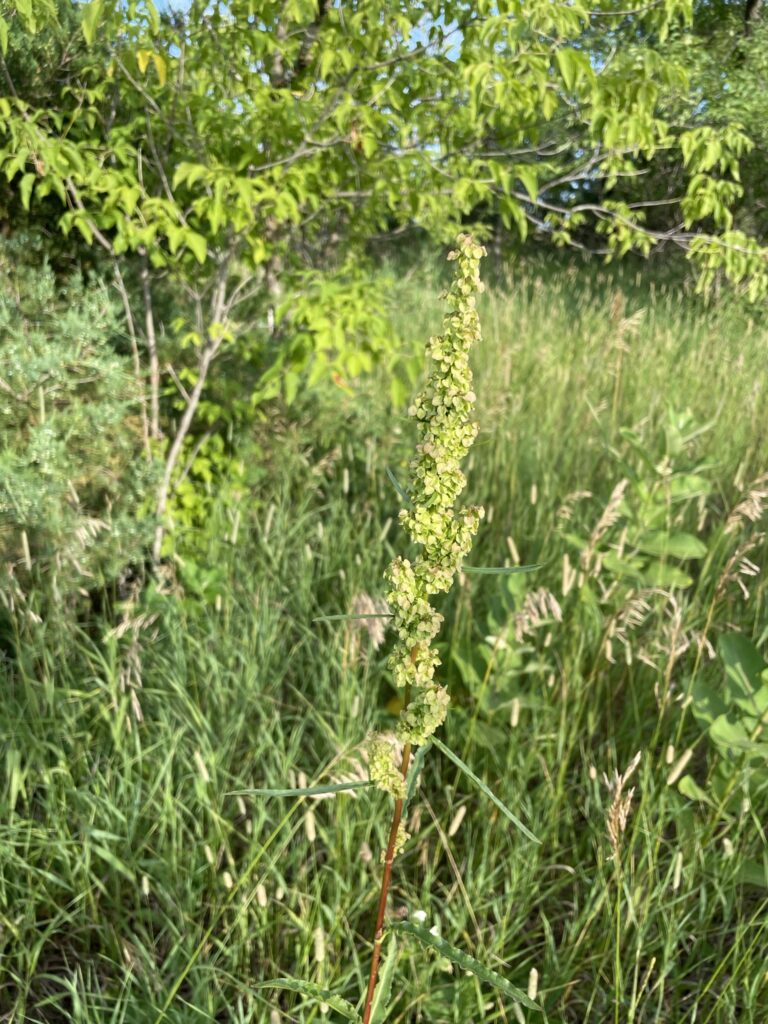
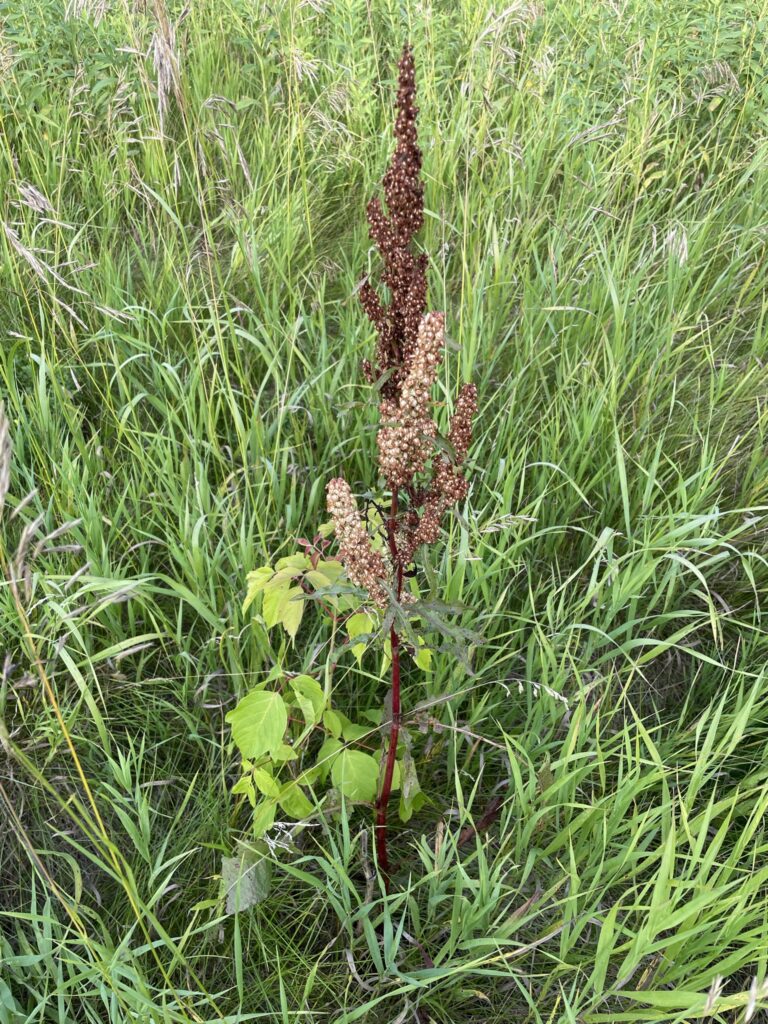
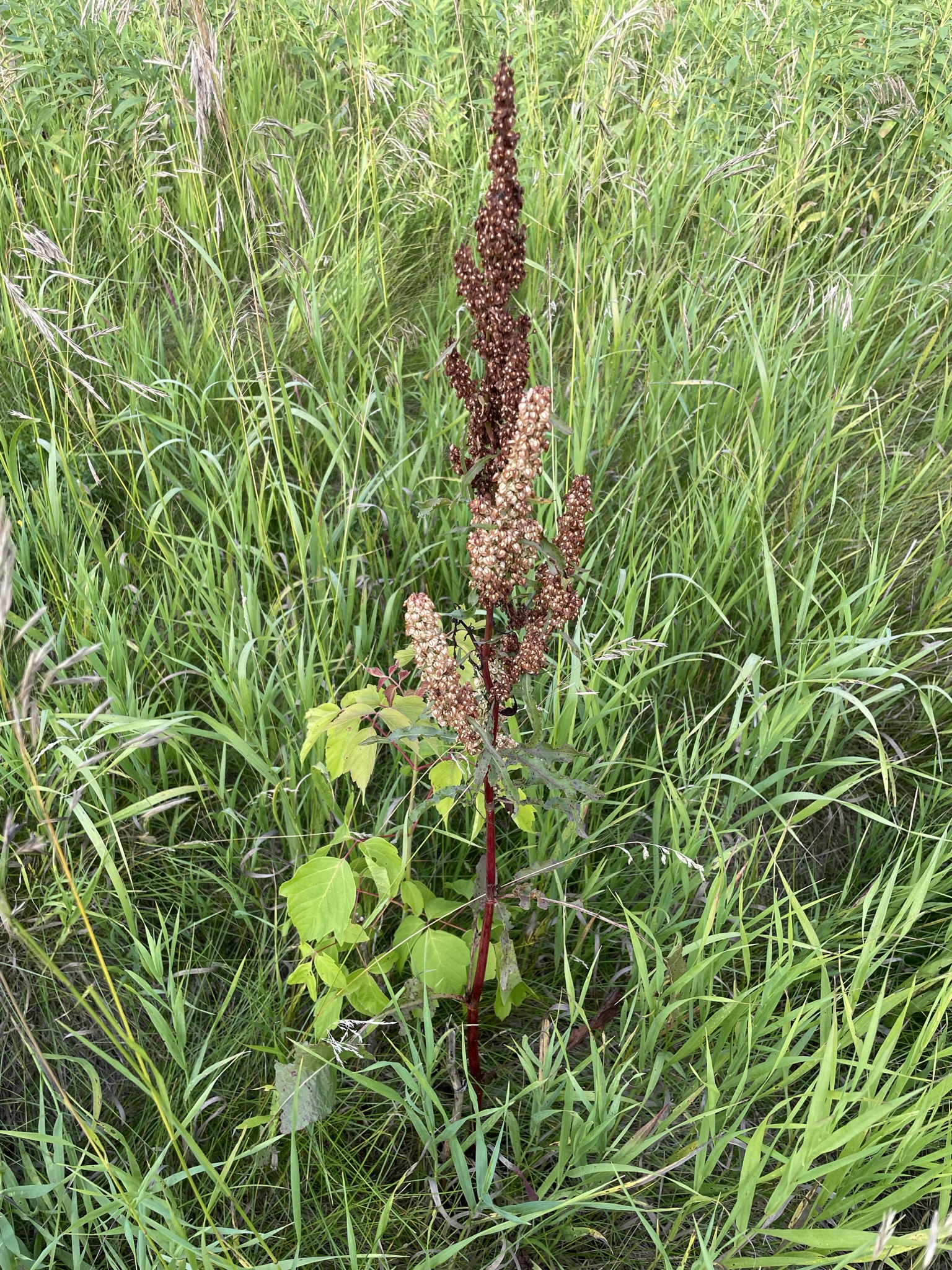
Native To State: NO
Naturally Occurring: YES
Description
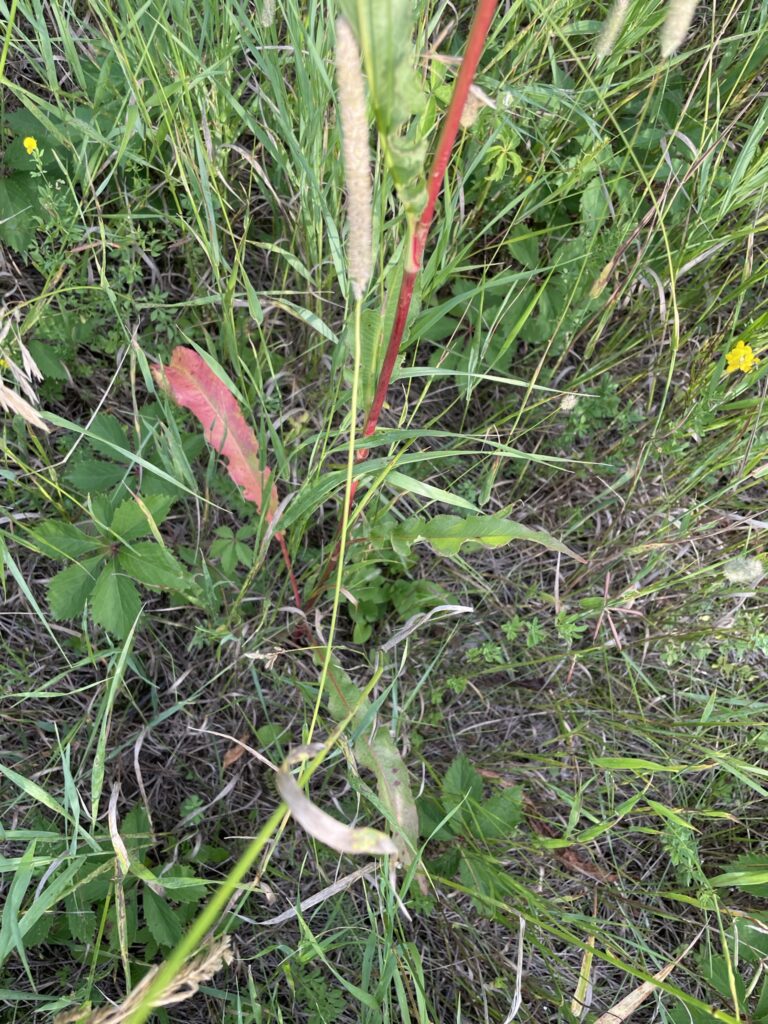
Appearance: Rumex crispus is a perennial herb known for its lance-shaped leaves and distinctive seed heads.
Leaves: The leaves are lance-shaped and often have wavy or curly margins.
Flowers: The plant produces inconspicuous greenish flowers that turn into seed heads with winged, triangular seeds.
Habitat: It is commonly found in disturbed areas, fields, and roadsides.
Distribution: Curly dock is native to Europe but has become naturalized in North America.
Occurance
Widespread in field areas