
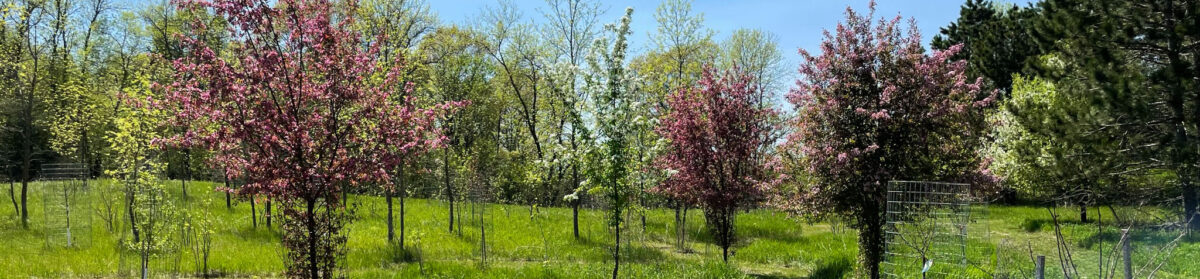
In 2021, I started preparing 4 acres of field to be converted into a prairie consisting of a high percentage of forbs. The site was predominantly brome grass with a limited amount of milkweed, goldenrod and a few other plants that were able to compete with the grass.
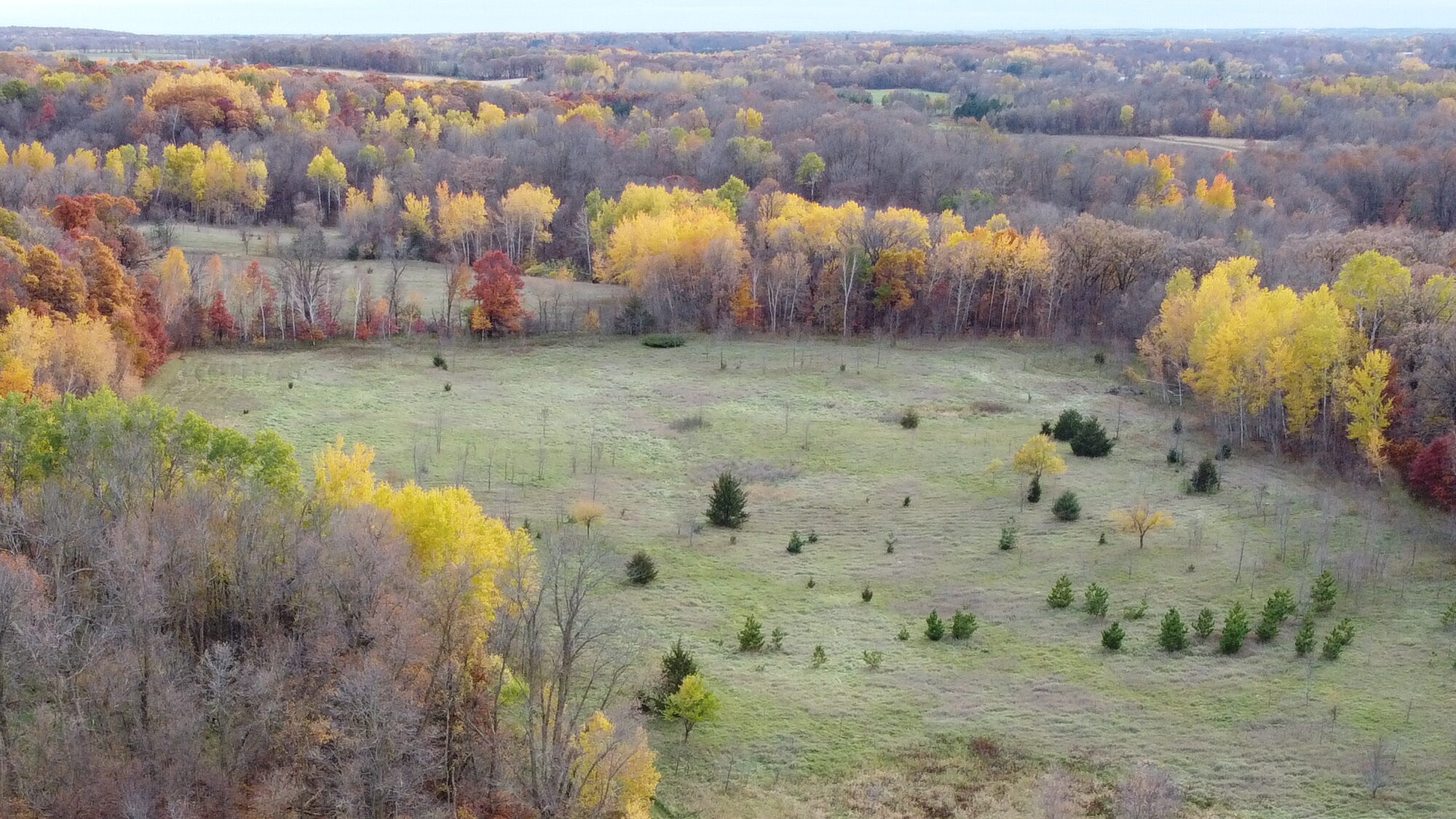
The first task was to break up the sod. Using a disc behind the tractor, the process began. The sod was tough and I added quite a bit of weight to the disc in order to cut through it.


I was only able to make one pass around in the fall of 2021 and was anxious to get started in the spring of 2022. In April, the ground proved a bit too soft and the tractor became stuck. By May, I was making good progress and in total went over the entire field with the disc 7 times.


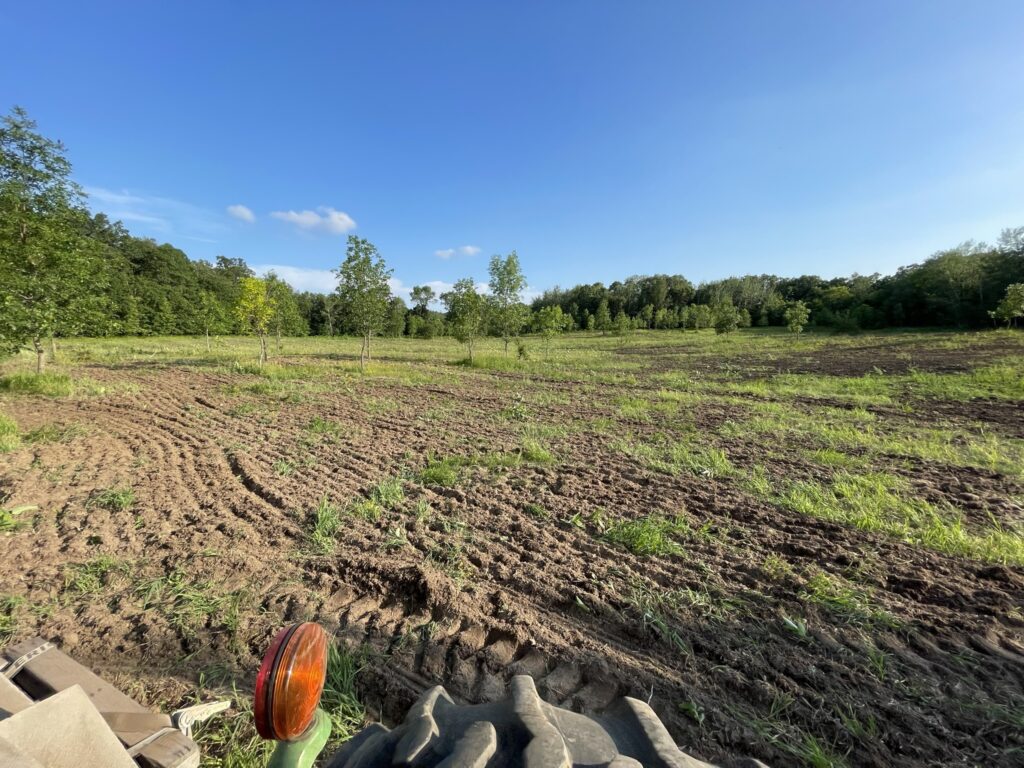
There were a few smaller Ash trees and some junipers, which we removed with a skid steer.


August 2022 After the final pass with the disc, a rotary tiller was used to break-up and smooth out any leftover clumps of sod and ridges created by the disc


After a few weeks, the weed seeds began to germinate. I then sprayed the emerging weeds with roundup.


September – October – time was given for the spray to take effect and the weeds to die down
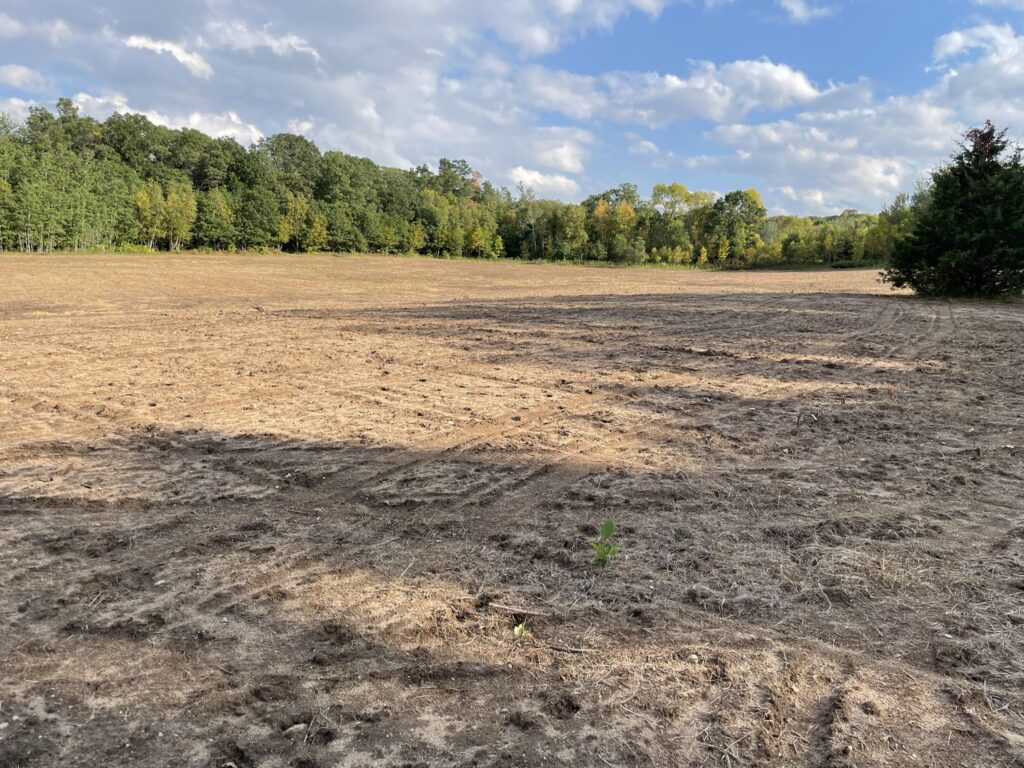
November – just prior to the winter, freezing and snow, broadcast seeding was done. The seed list can be seen here. I used sawdust to mark out the 4 acres into a grid of 16 smaller spaces. The seed mix was then split evenly into 16 buckets. This was very important in order to get a more even distribution and prevent over-seeding at the beginning and running out at the end.


The first snow fell shortly after the seeding
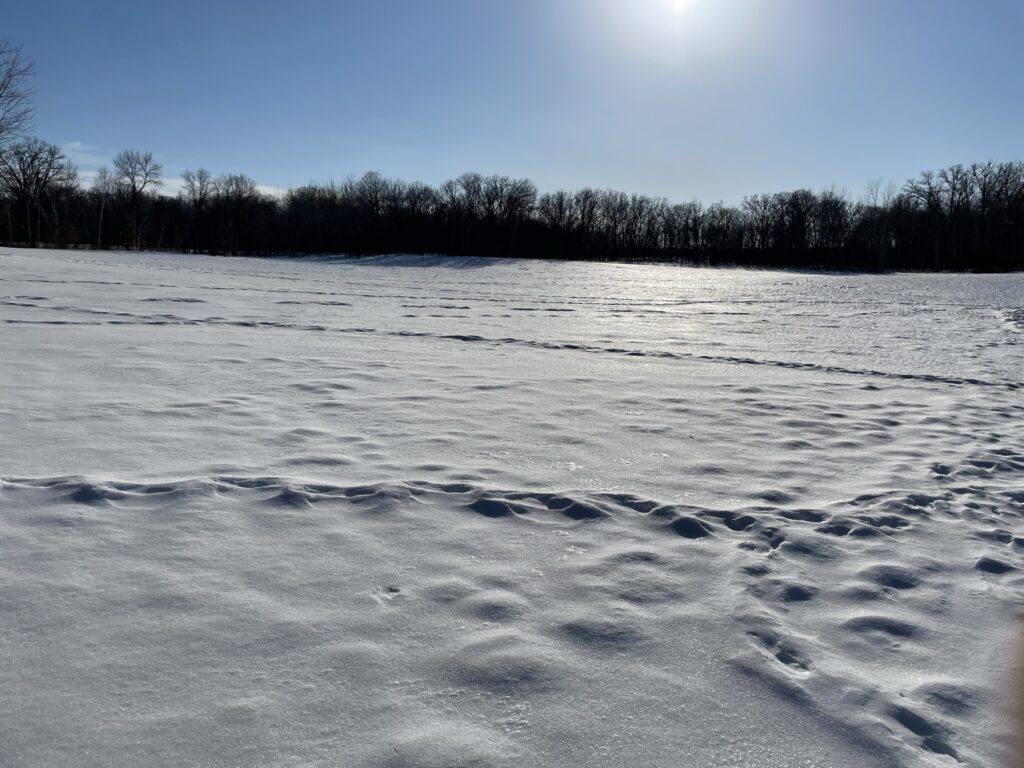
Spring of 2023 (1st year)
April 2023 the snow melted, by May germination began. Unfortunately, new weeds also germinated in spring.


June 2023 – Unfortunately, 2023 was an extreme drought year and far more weeds than prairie seeds germinated.


By July, the area was dominated by Hoary Alyssum, the weed which thrives in disturbed soils. To prevent it from shading the prairie seeds and to reduce the amount of weed seeds, mowing was done.


The entire area was mowed a total of 3 times over the course of the summer of 2023. Evidence of plants seeded began to show. This included Lupines, Rocky Mountain Bee Plant, Sweet Everlasting, Monarda, Mexican Hat, Coreopsis, etc.


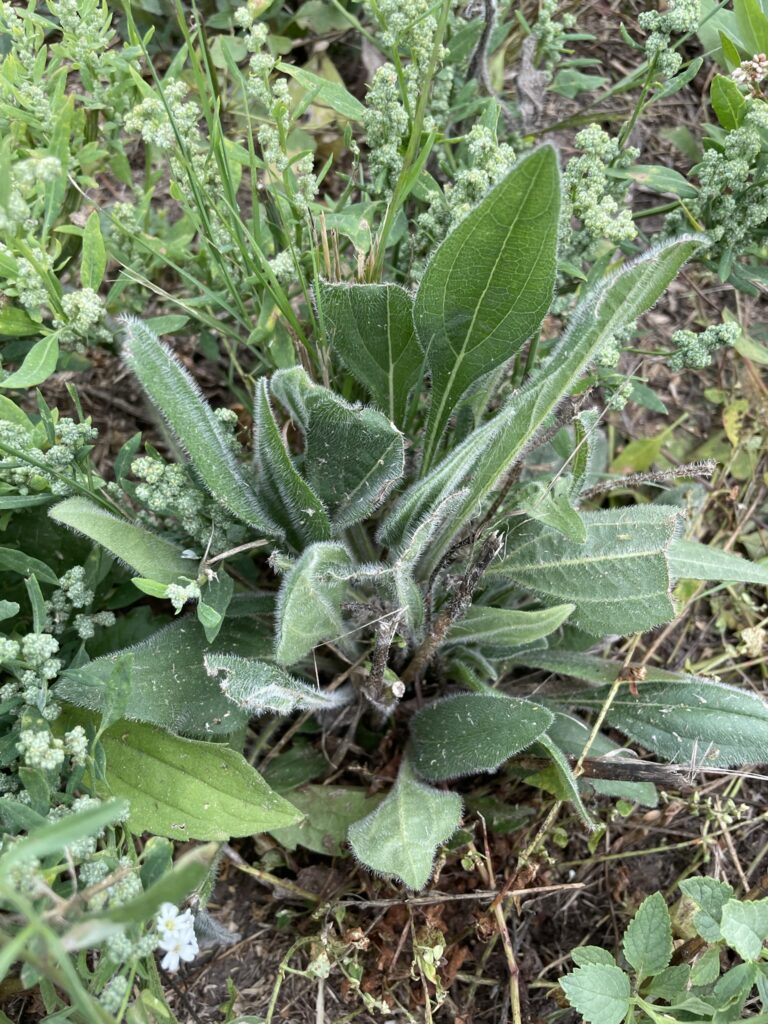
At the end of 2023, there was still a large number of weeds with the prairie plants trying to emerge between them. To combat the effects of the drought and with a fair amount of open ground between the plants, I re-seeded the area with 50% of the original mix in the fall in hopes of making up for the dry year.


Spring of 2024 (2nd year)
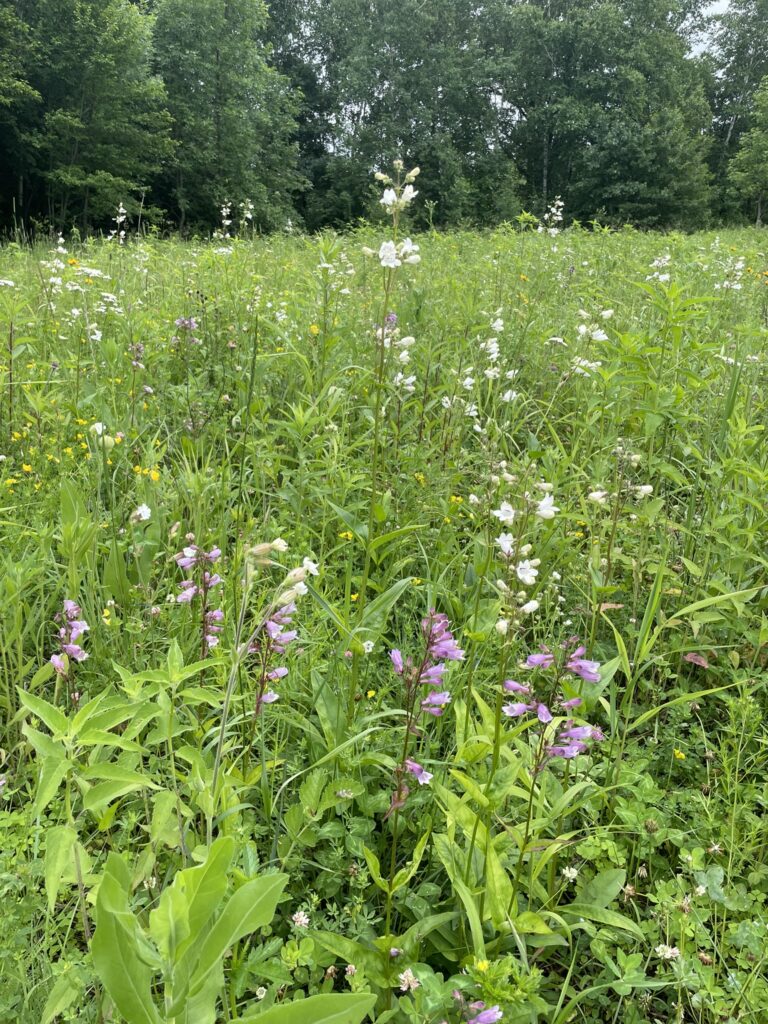
In Spring of 2024 the weeds continue to dominate. While the Hoary Alyssum had diminished greatly, red clover has taken over. Some prairie plants are showing up which were not found in the first year, such as the Penstemons


Hopefully, going forward the weeds will continue to be surpassed by the prairie plants. The extreme drought of the first year planting put the project at a disadvantage.


The thistles and Mullen came in strong in the second year having gained a foothold in the extremely dry first year. The entire prairie was mowed to prevent them from going to seed and reduce the choking effect. While the desirable prairie species are visible on inspection, the dense weed cover is certainly no helping.
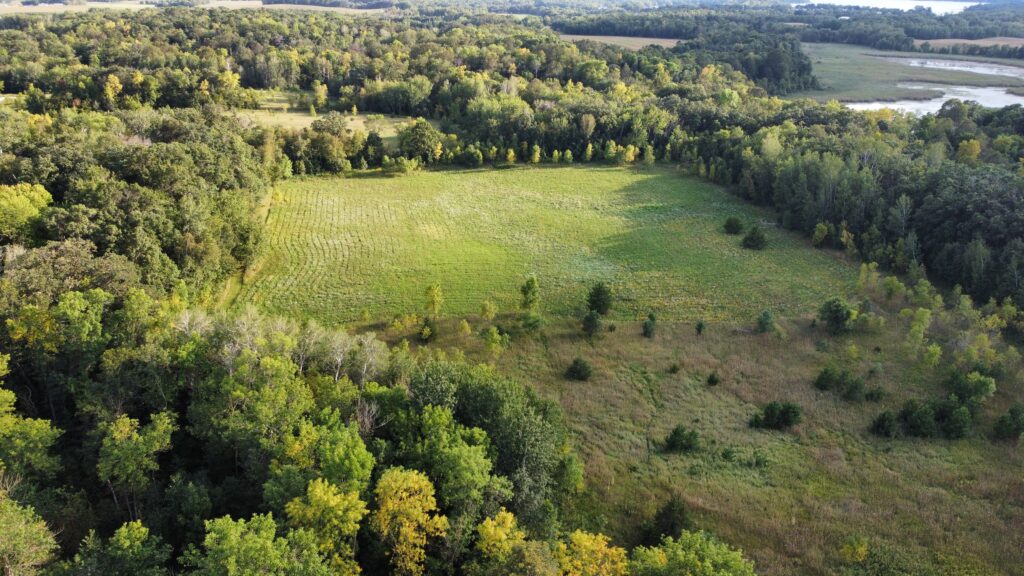
More prairie plants are becoming visible amid the weeds. The predominant weed of the first summer – Hoary Alyssum – is only sparsely present. There were concentrated areas of plumeless thistle, absinth wormwood, and Mullen, which the mowing helped with. More troubling is the thick occurrence of both Red Clover and Bird’s Foot Trefoil. Hopefully, these will diminish in the same way the Hoary Alyssum did.
The second year mowing helped tremendously and more desirable plants are appearing:


Despite the high number of weeds, it is beginning to look more like a proper prairie in places.
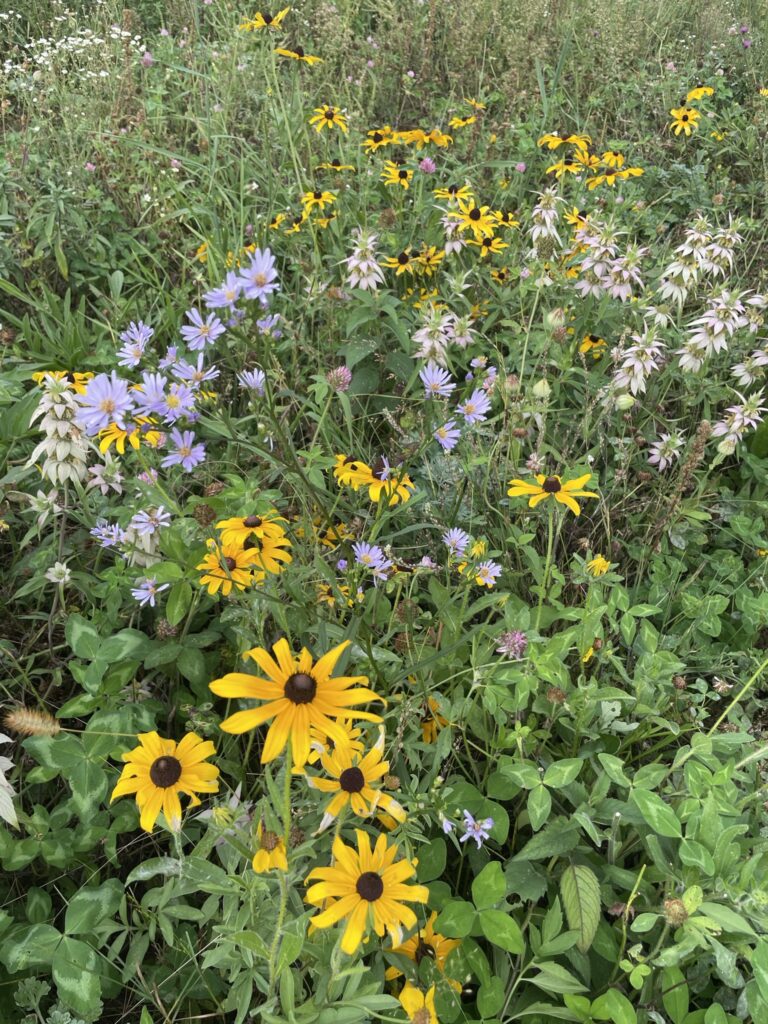
More species:


Nearing the end of September, many plants were still in bloom, while established plants in other places are finished. This is due to the mid-season mowing. The weather is providing a late summer, which hopefully will continue long enough for the seeds to ripen from these late flowers.
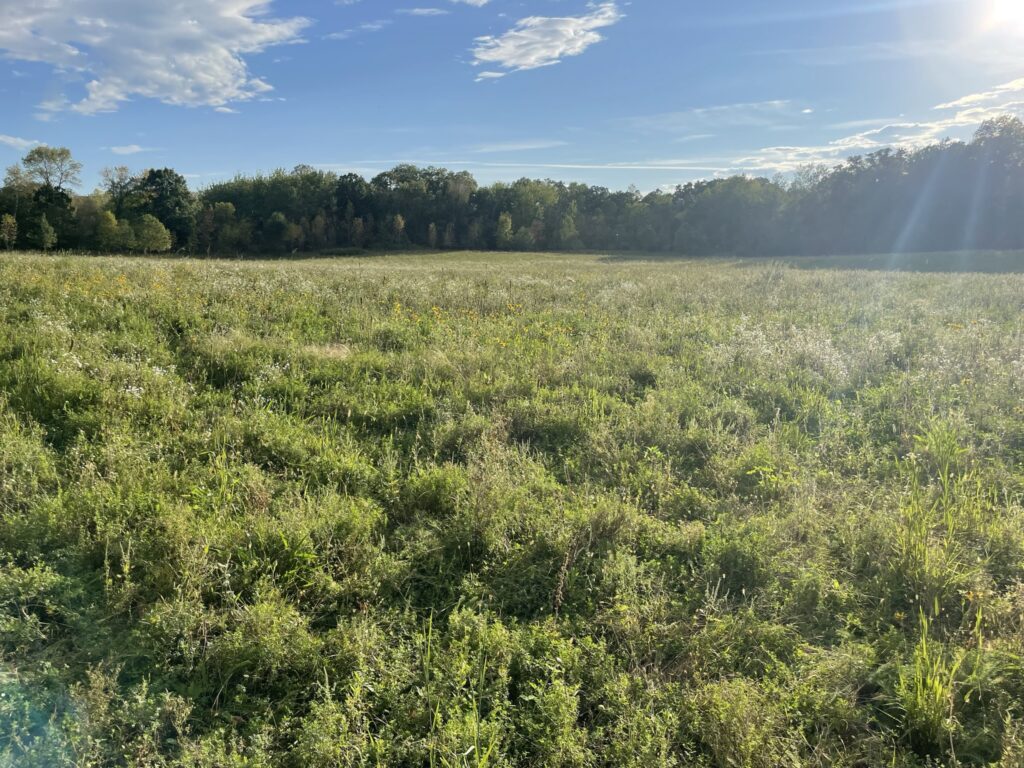
Some spot-weeding is planned. An area that is dominated by wormwood is big enough to be a problem, but small enough to be hand-weeded.
Spring of 2025 (3rd year)
In the spring of the third year, there is already a considerable increase in the amount of plants showing up than the first two years. Pentstemons, Lupines, and Golden Alexanders are all early to bloom. Other later blooming plants appearing, include, Compass Plants, cone flowers, monarda, coreopsis, and more.
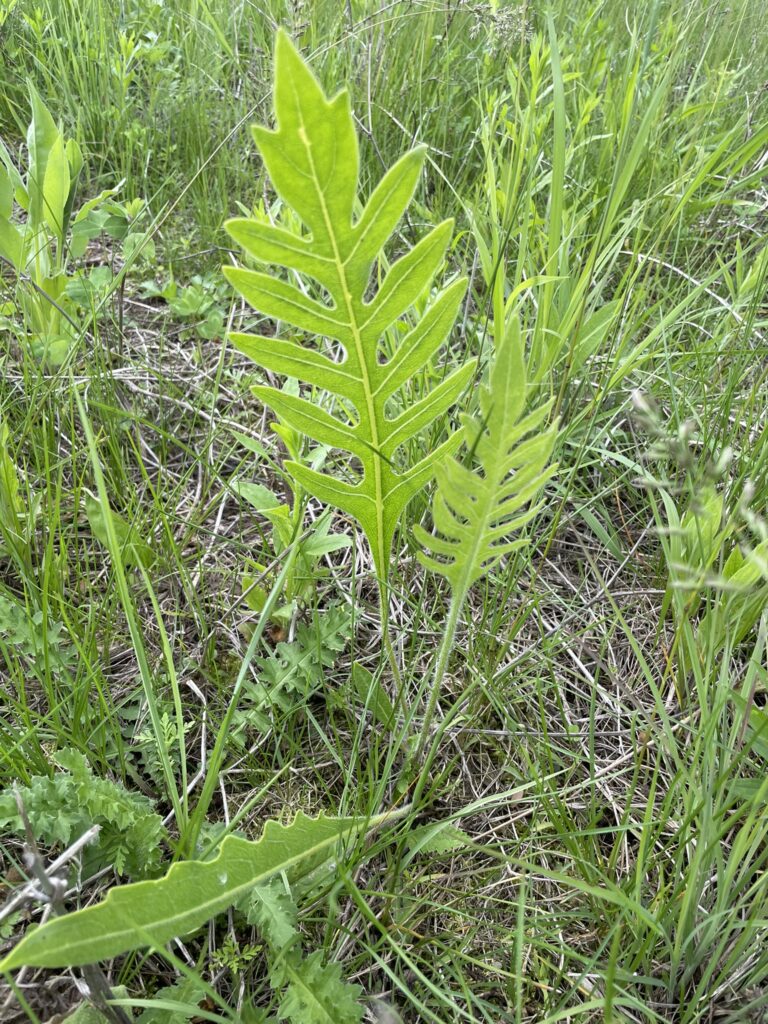
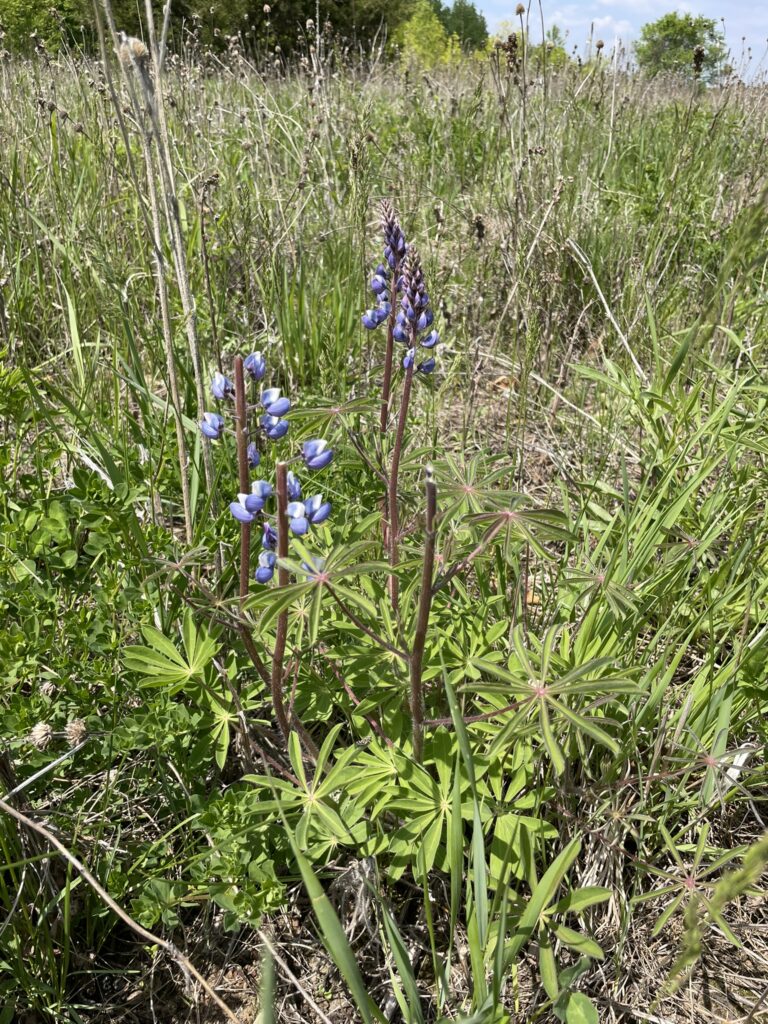

June 2025
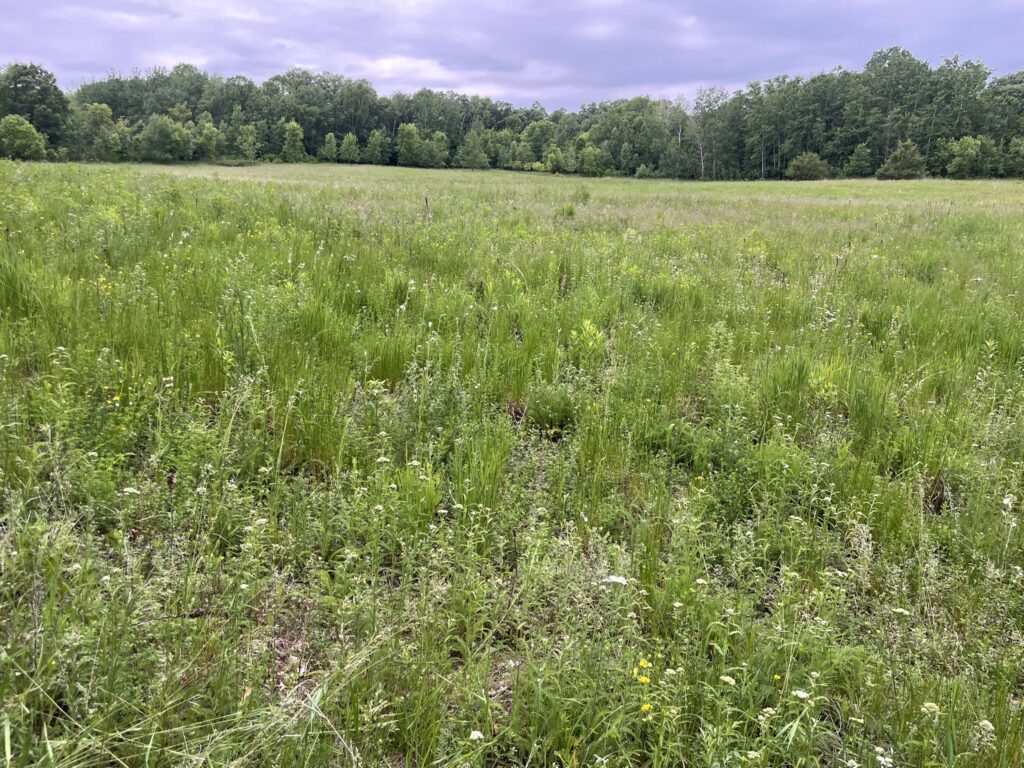
Overview from June 16, 2025

I have been able to identify more species almost on a daily basis as the growing season progresses. Out of the 131 species seeded, over 50 have been confirmed. There are certainly going to be more than 1/3 occurring, but I am very strict about counting a species and having full confirmation that it is growing and usually don’t count any that are not blooming.


Canada Milkvetch, Eastern Coneflower, and Mexican Hat, Hoary Vervain, Blue Hyssop, and Liatris
There are an additional 11 species that have come in on their own that are desirable prairie plants, but ones that I did not seed. These all occur elsewhere on the property which is why I didn’t seed them. However, these are welcome additions either way. So far, the naturally occurring species are:
Swamp Milkweed
Boneset
White Sage
Hedge Nettle
Common Milkweed
Common Yarrow
Annual Fleabane
Sulpher Cinquefoil
Figwort
American Vetch


Some naturally occurring desirables
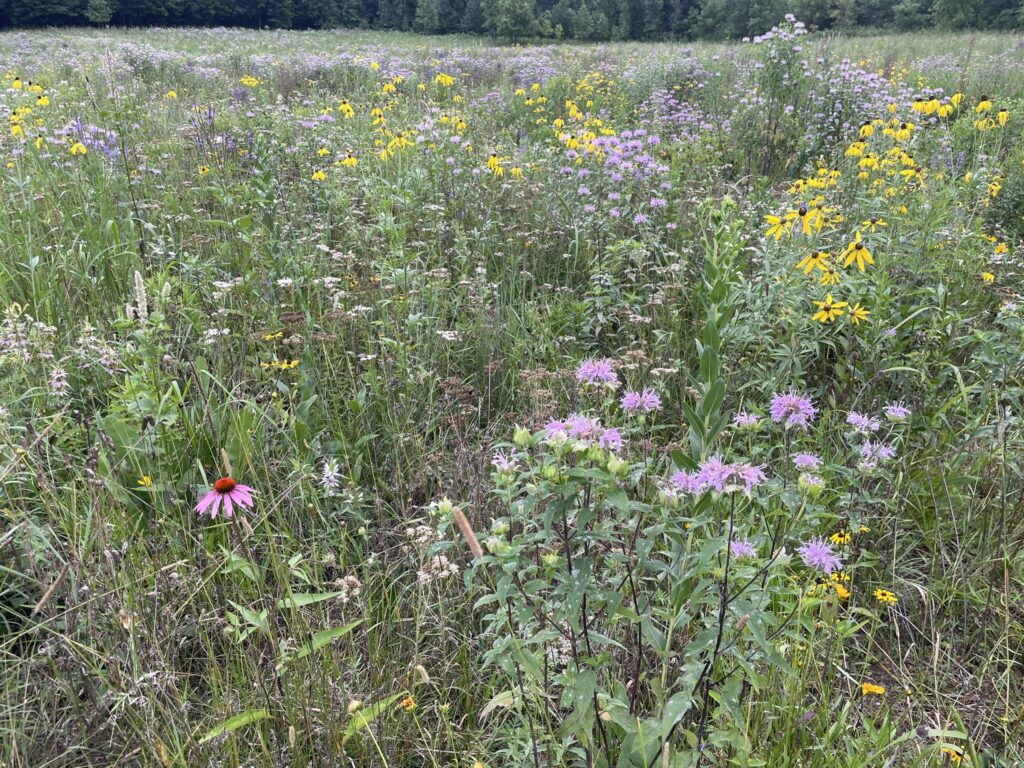
A picture from August 4, 2025 shows multiple species in full bloom. The prairie is really coming into it’s own now and is very colorful.
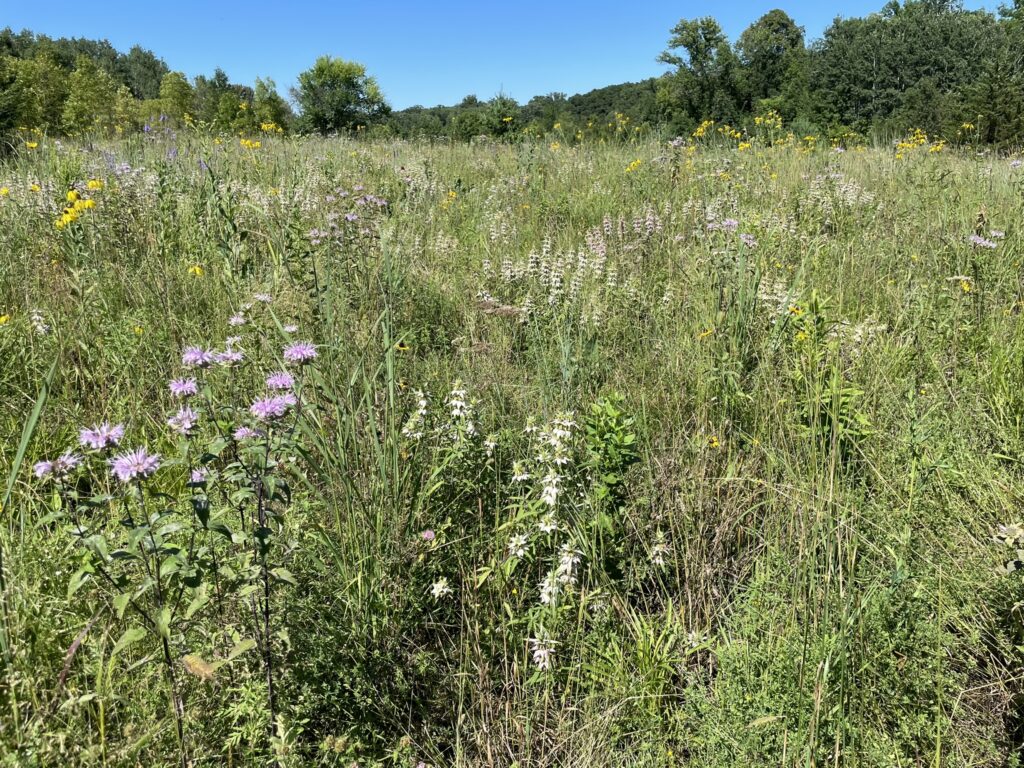
On the drier hill tops with poor soil, different species dominate. The Spotted Beebalm does particularly well here.
At this stage, the weeds have been largely brought under control. Thistles have been cut and treated with a only an occasional surviving plant. In the wet year of 2025, it has been easy to pull the Mullein spikes when encountered. Mullein was a dominant weed in 2024. A fair amount of ragweed has filled in open areas, but it will come under control on it’s own. It is a native that does well in disturbed soils, but will fade away as the perennial prairie plants dominate. It pulls easily and I will pull them haphazardly when visiting the prairie.
The final weed control method is manually pulling the wormwood. This is possible thanks to the wet year. A large patch of wormwood established itself in one of the low spots. While pulling is very effective as it eliminates the plants completely with no concern about over spraying an herbicide. However, the roots occasionally mix with a desirable plant and these can get pulled up with the wormwood. Once this patch is cleared, this species will also be under control.
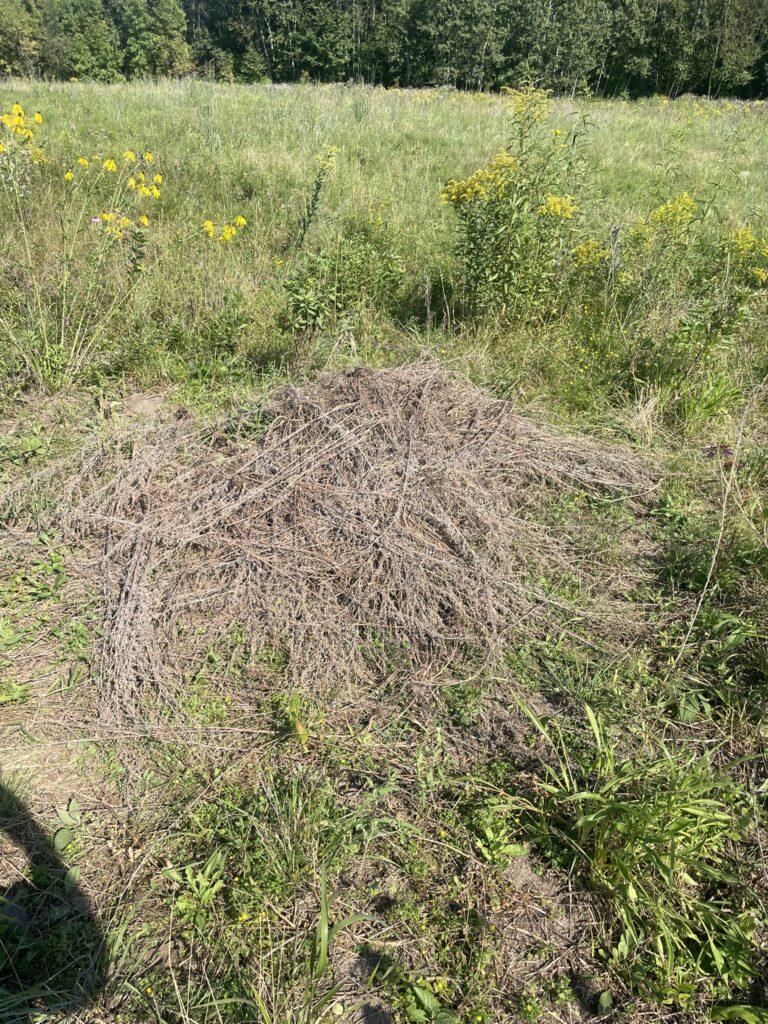
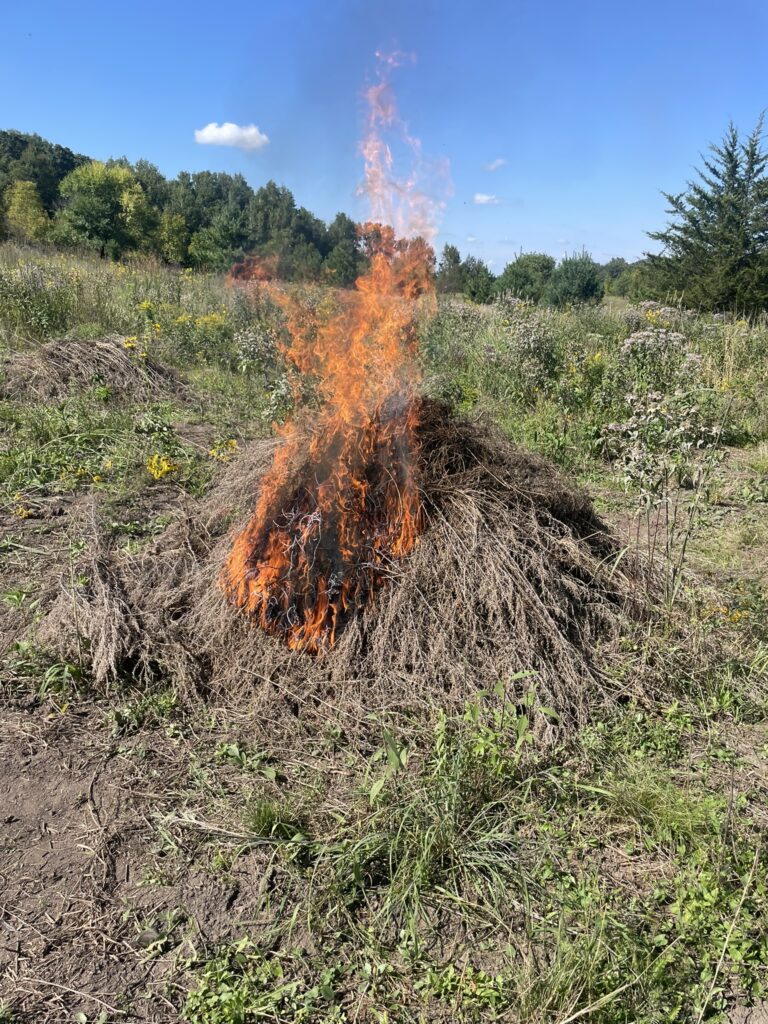
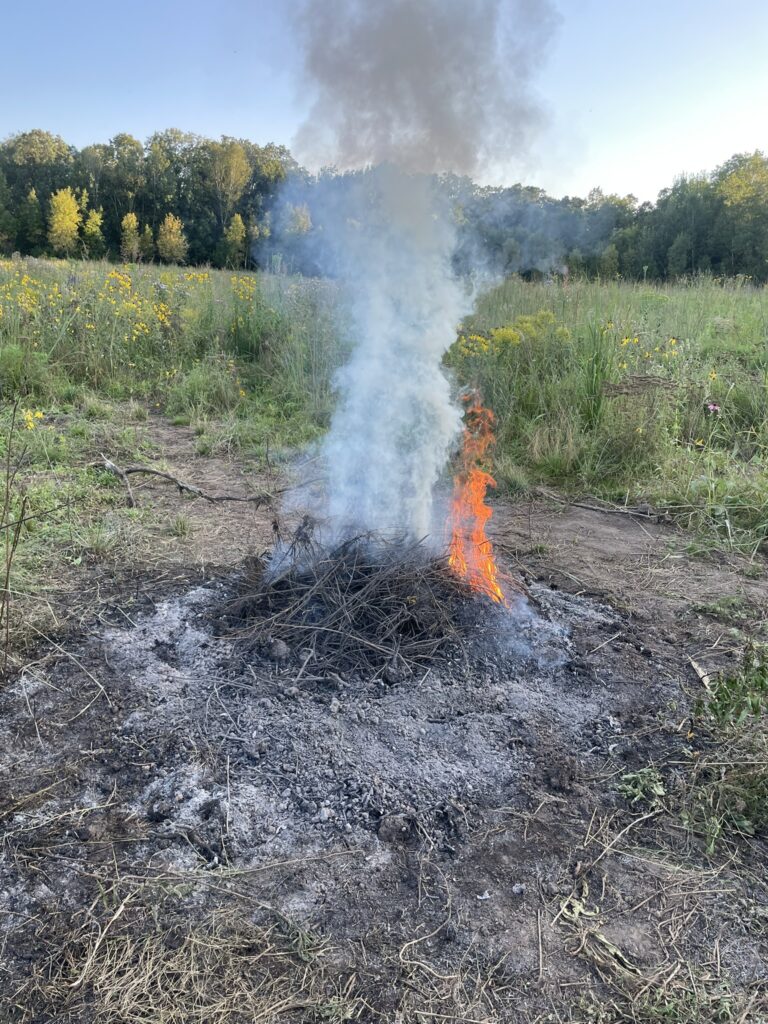
Above you can see one of the piles of wormwood which has dried. Center is the largest pile. In the thickest part of the wormwood patch, there was little vegetation underneath. Add to that, pulling the roots out and trampling back-and-forth to do it, and there ended up being a fairly barren patch of soil. As can be seen, I burned the pile which worked exceedingly well. The smaller surrounding piles were carried over and dropped onto this fire. The picture on the right is the final flare up after stirring up the ashes. Once this has had a few days to cool down, I will spread the ashes with a garden rake. Finally, in the spring, I’ll sow some additional seeds to supplement the seed which will naturally be falling from the surrounding plants.
At this point, the weeds are under control and only spot treatment will be required. This will include some targeted herbicide application as well as individually pulling. Wormwood and mullein are easy to pull while the occasional thistle will get at touch of poison. In either case, this will not require great effort as the weeds are only scattered sparsely through the prairie.

Further into the first season without mowing, there are even more species showing up.


Above are pictured Sweet Black-eyed Susan, Ironweed, and False Aster.


A couple views from down in the prairie – showing multiple species together.
Some fog settled in on the evening of September 9, 2025:


Blue Sage, Downy Sunflower, and Tall Coreopsis

At the end of September, the prairie is winding down. Still, there are some species which are in full bloom at this time:


Hairy False Golden Aster, Heath Aster, New England Aster
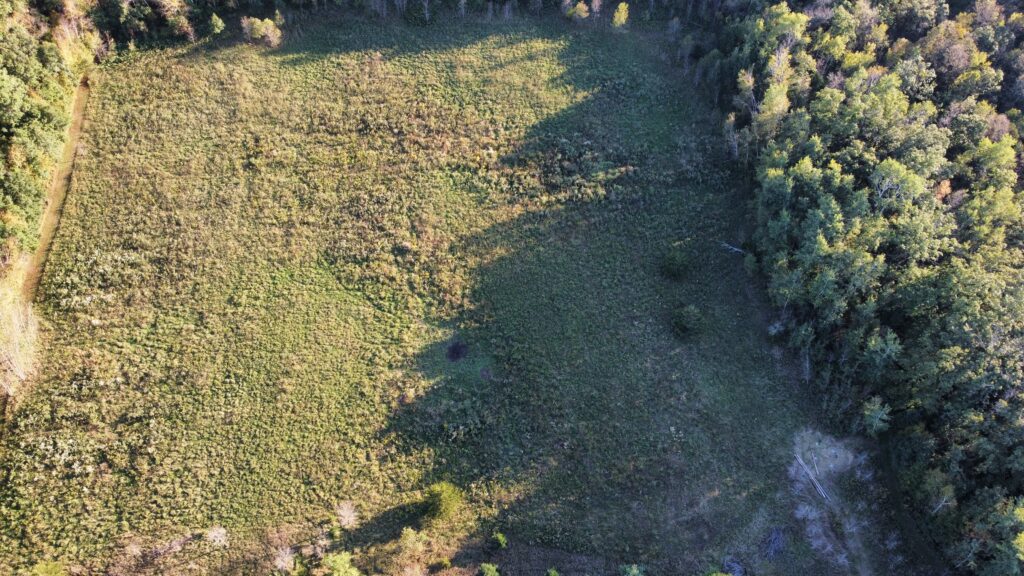
At this time, a viewing shelter was constructed, which is detailed on this page.

At the end of October, 2025, very few flowers are found and the various seed heads become a point of interest. The fall season has been well underway and soon, all will be at rest for the 4th winter since seeding.
Spring of 2026 (4th year)
It is recommended to burn the prairie after two full growing seasons have passed. Again, due to the extremely dry first year, my schedule was delayed. Thus, in the spring of 2026, the prairie was burned for the first time.
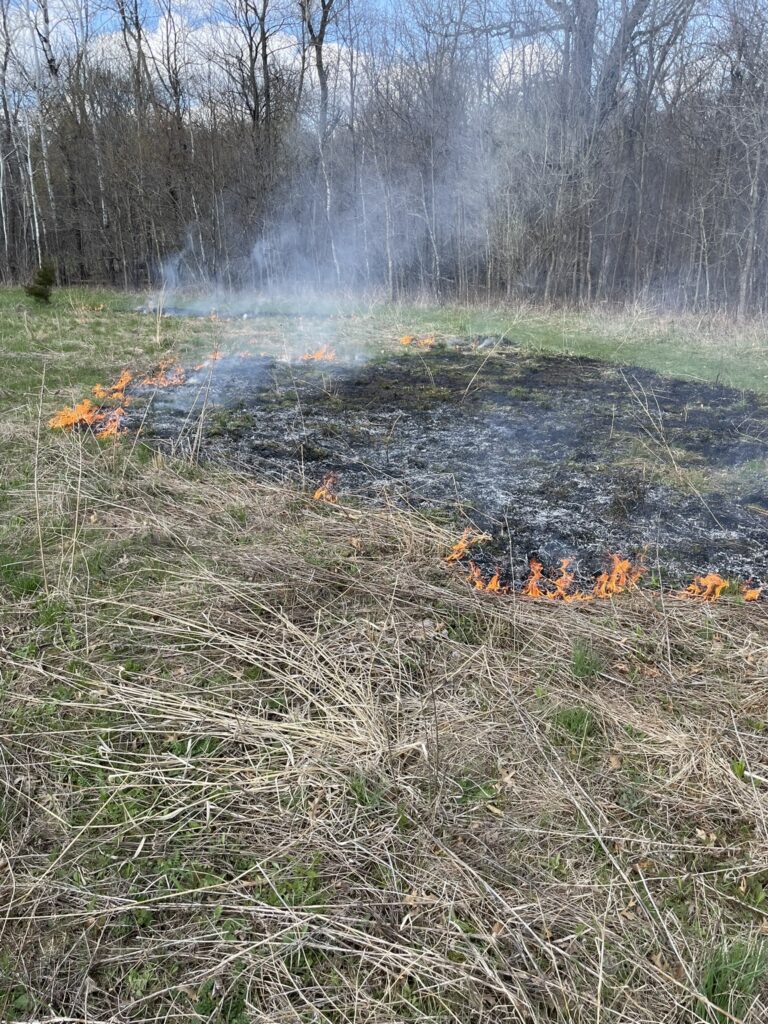
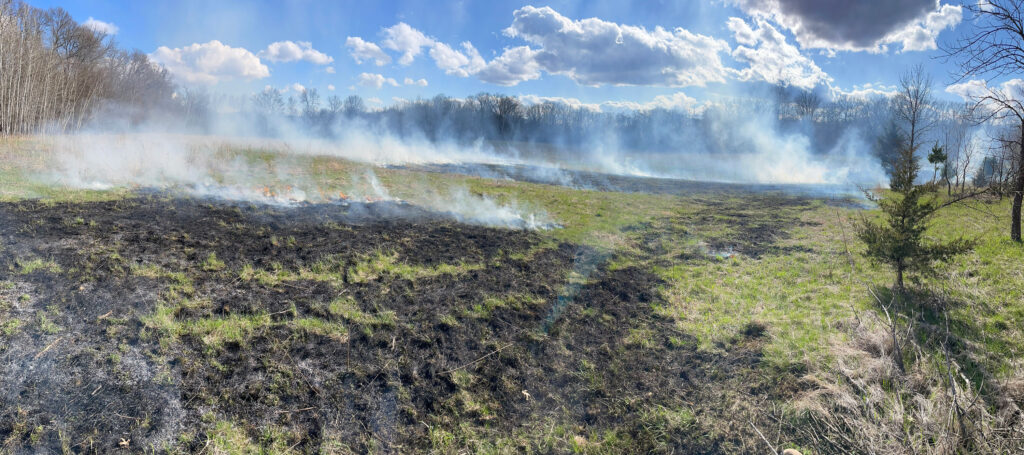
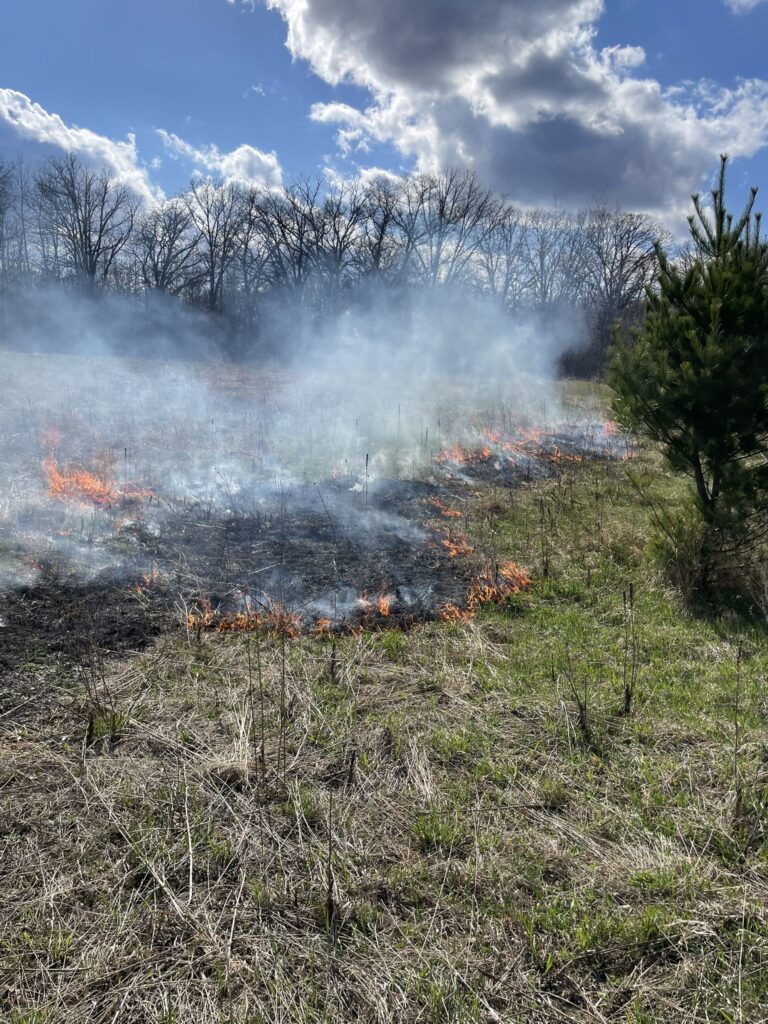
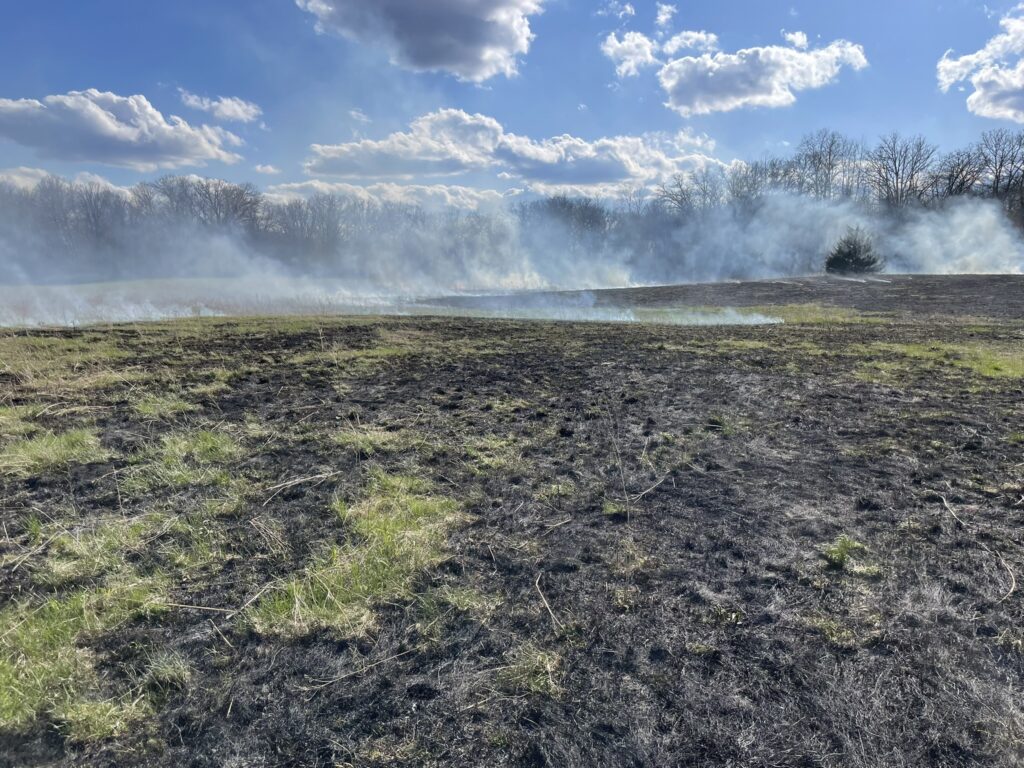
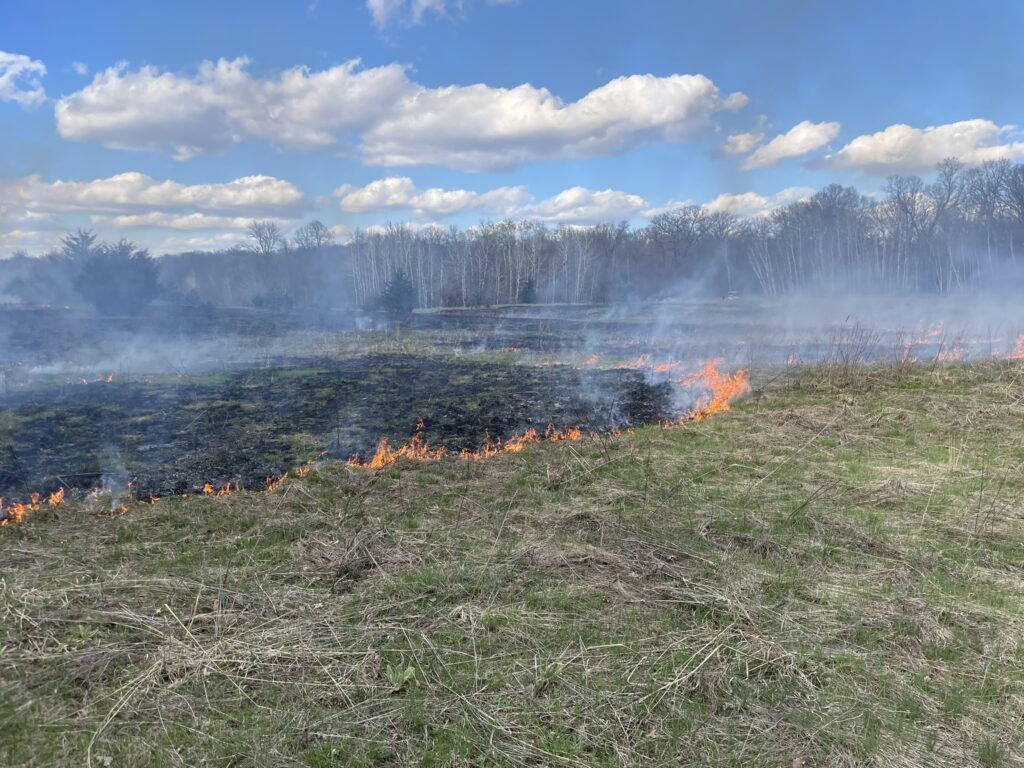
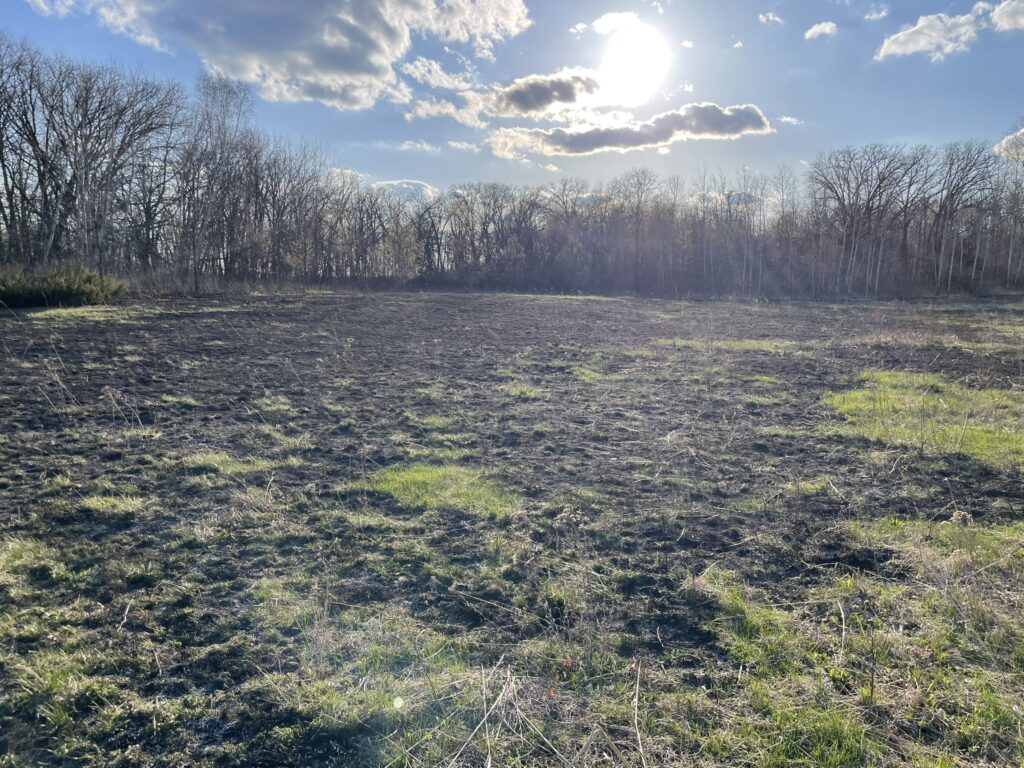
Burning at certain times of year depend on the goal of the burn. For reducing the build up of previous year plant stems, the burn can be done at any time. While this was part of the goal here, a late April burn was chosen to limit the growth of unwante cool-season grasses. These grasses start growing ahead of the prairie desirables, and so the fire will burn off this new growth. While it doesn’t kill these grasses, it does disadvantage them and will greatly reduce their seed production. Because of the presence of the green growth, the burn is slower and generates a good deal more smoke. As you can see below, the burn also was not complete:
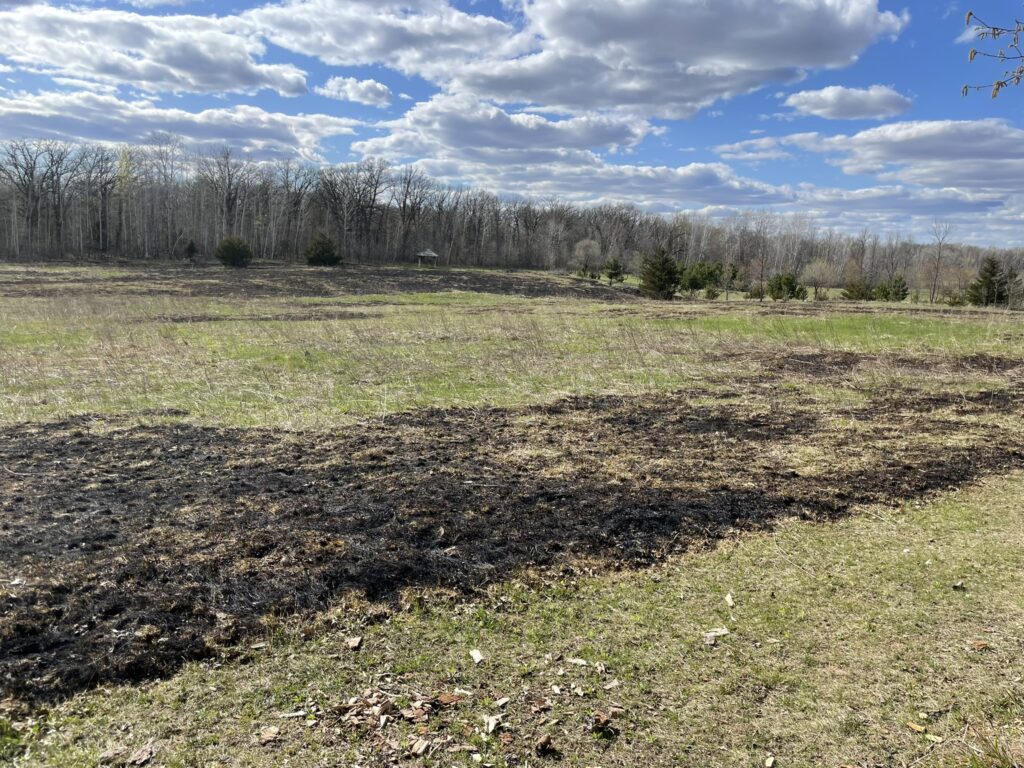
This incomplete burn, however, is actually desirable as well. There are insects that will be killed off in a burn. By leaving some areas unburned, these survive. In the following year, these areas can be burned and the previously burned areas can be left unburned. So rather than burning the entire area in a year, a partial burning over multiple years will accomplish the same goal while preserving sensitive plants and animals.
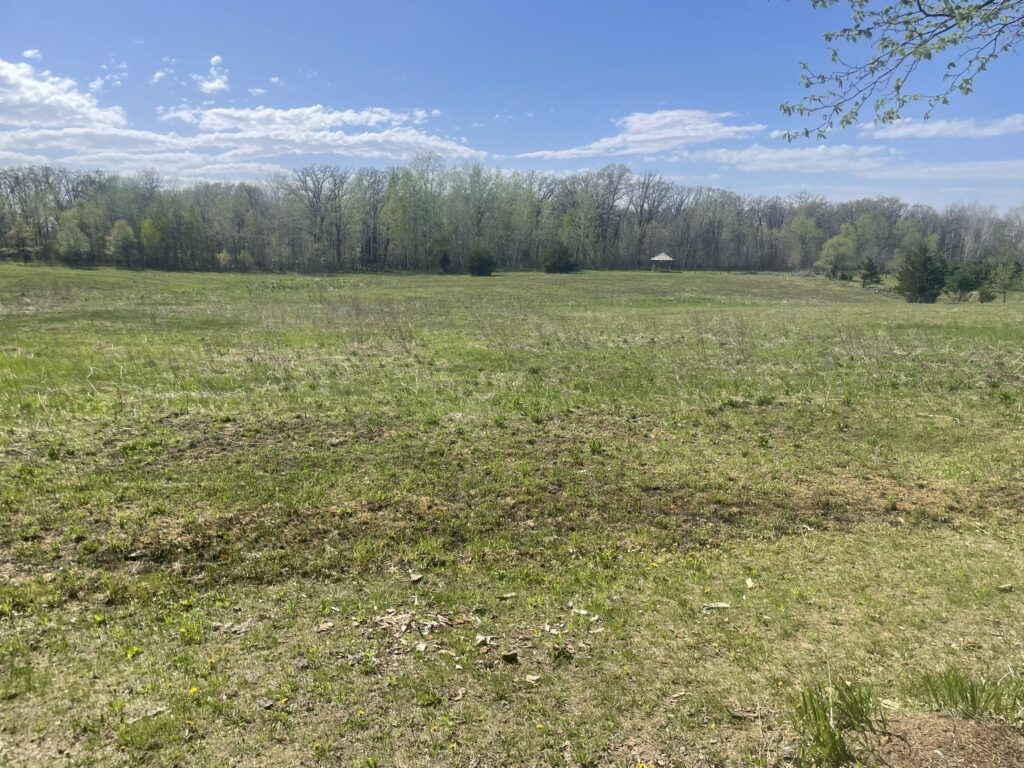
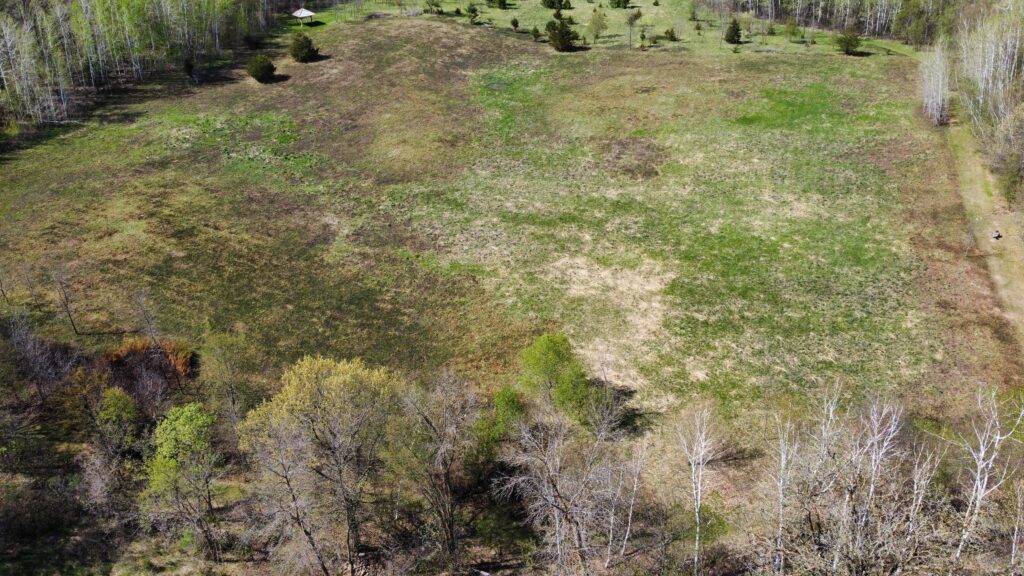
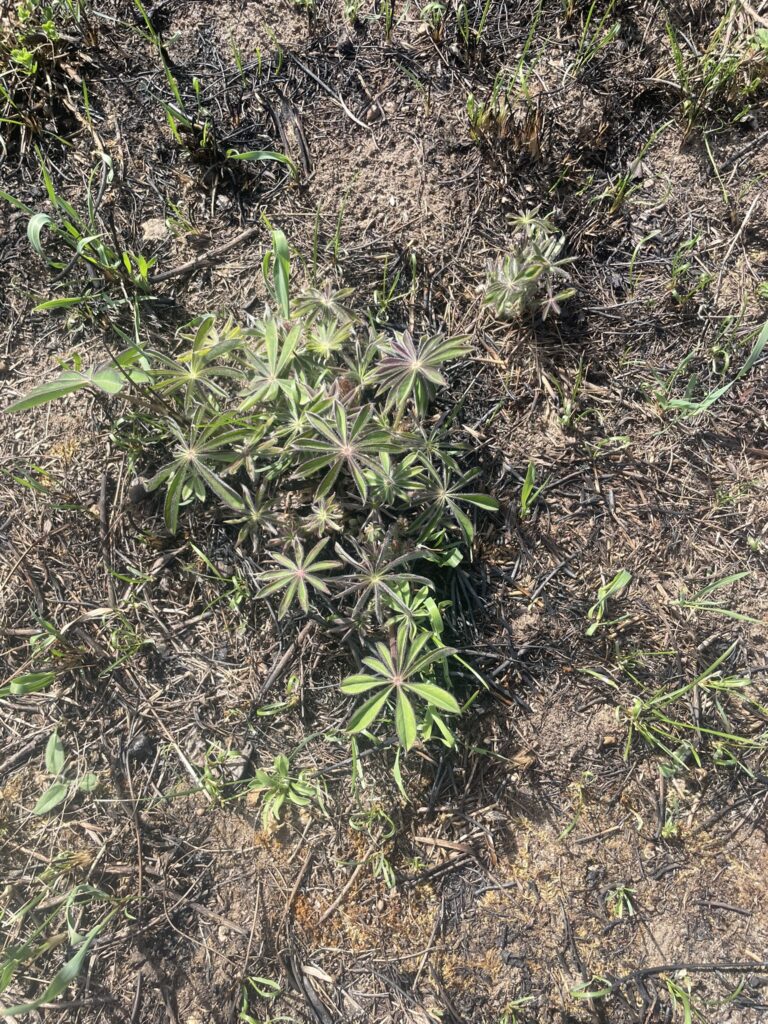
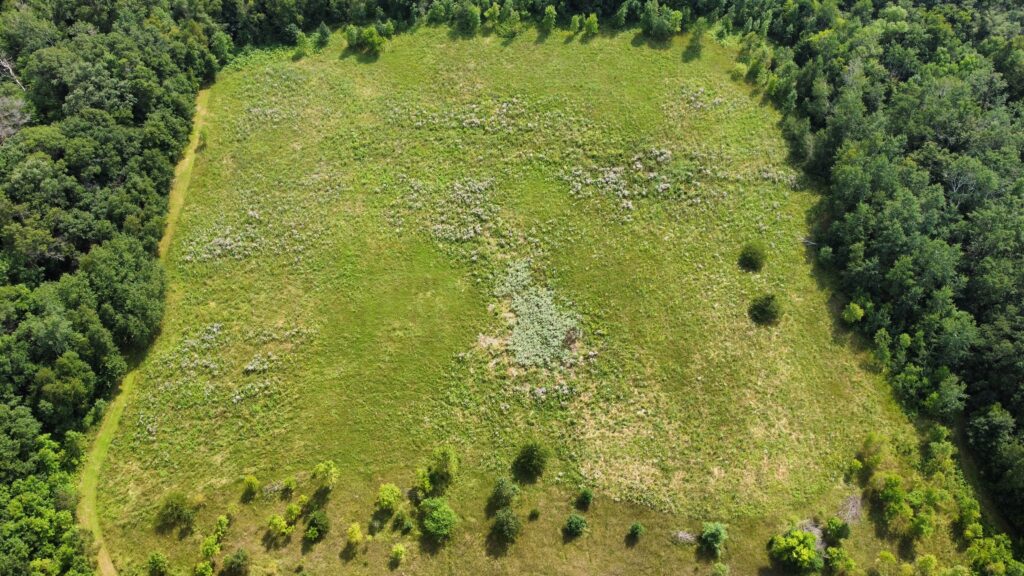
Above, three weeks after the burn, you can see the plants are quickly emerging. In the areal image, you can clearly see the parts which burned and which areas didn’t. Meanwhile, a Lupine in part of the area that burned is growing well without fighting through the previous years growth.
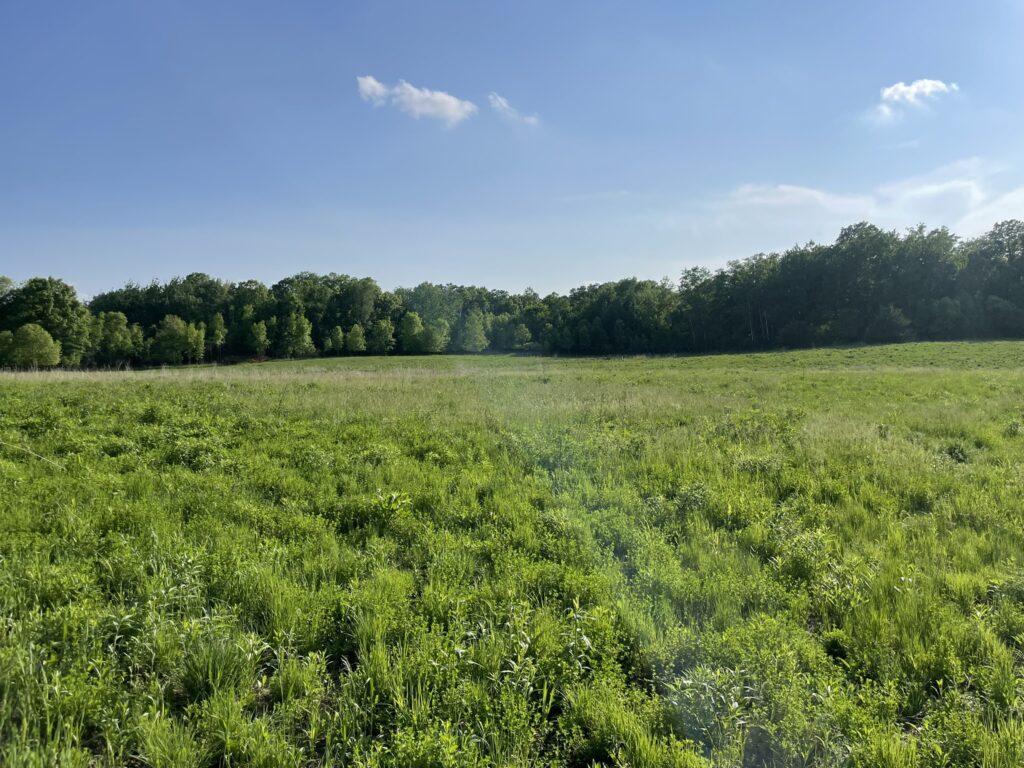
By the first of June, there was no evidence of the burn as the prairie plants were filling in quickly.
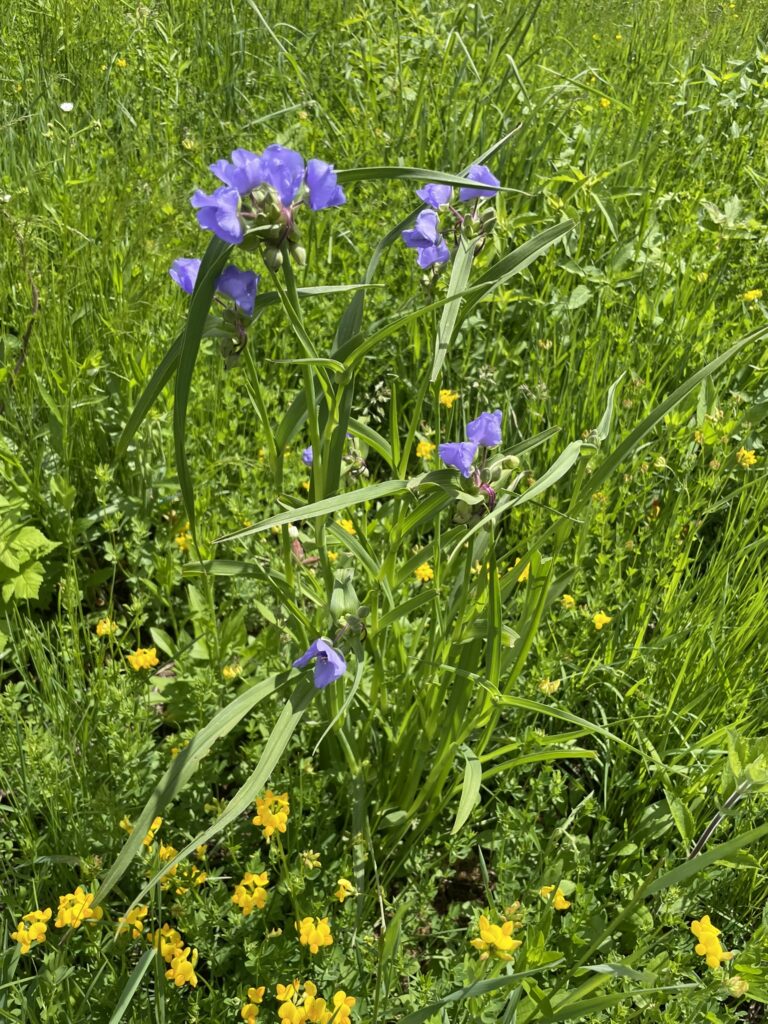
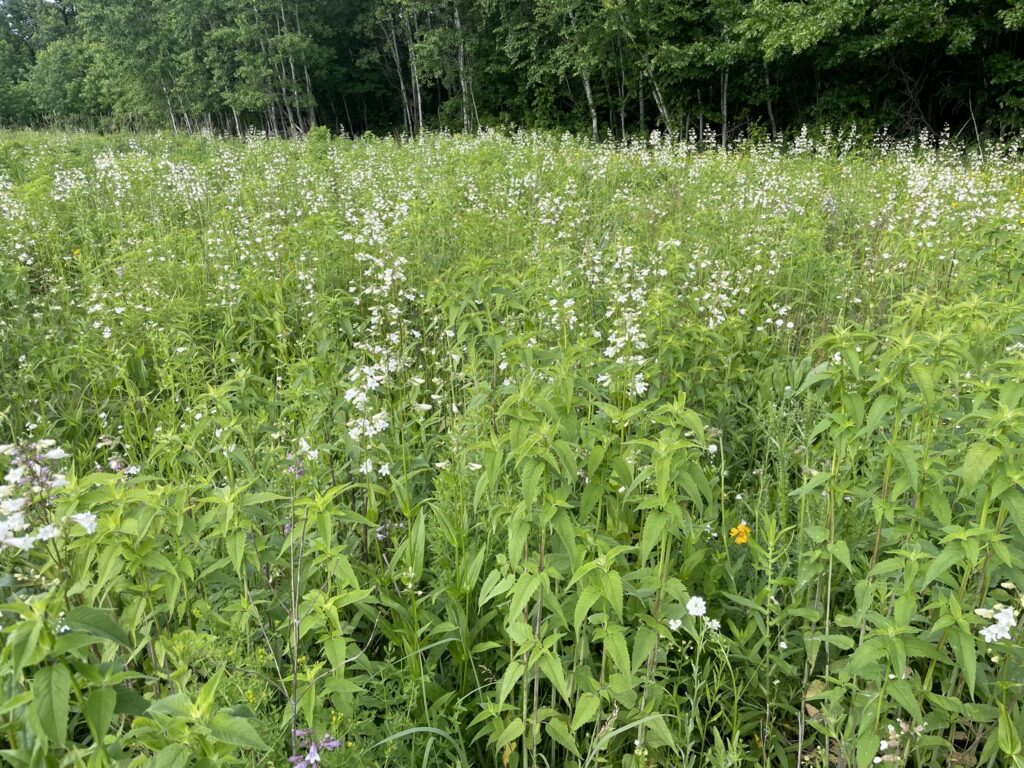
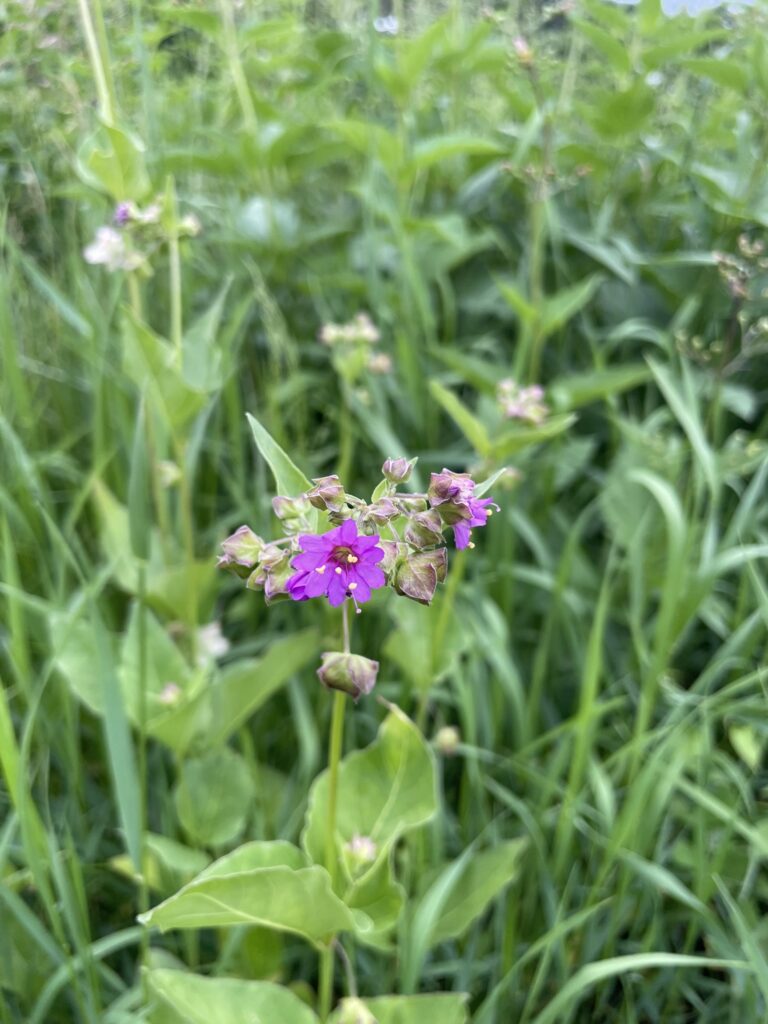
Above: Ohio Spiderwort, lots of Penstemons, Wild Four O Clock
Overview from June 22, 2026
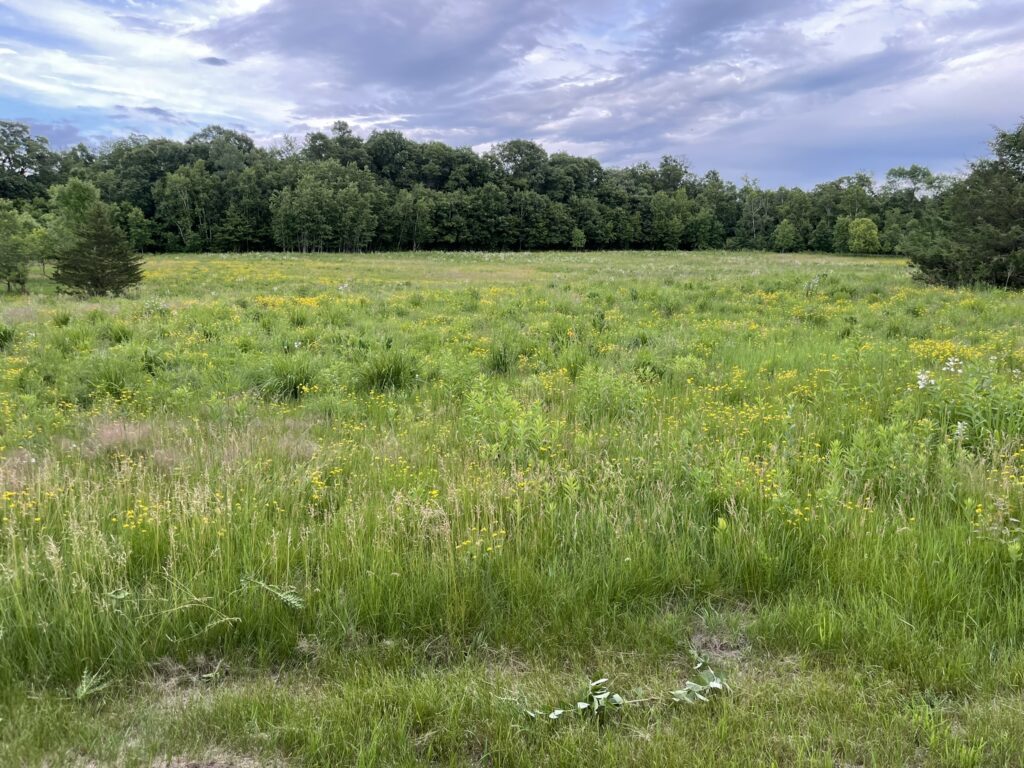
Note, the large amount of yellow in the pictures above and below. This is mostly the invasive Bird’s Foot Trefoil. While it was prevalent from the first year, it seemed to especially benefit from the burn. I noticed that in the patches that didn’t burn burn, there not much of this.
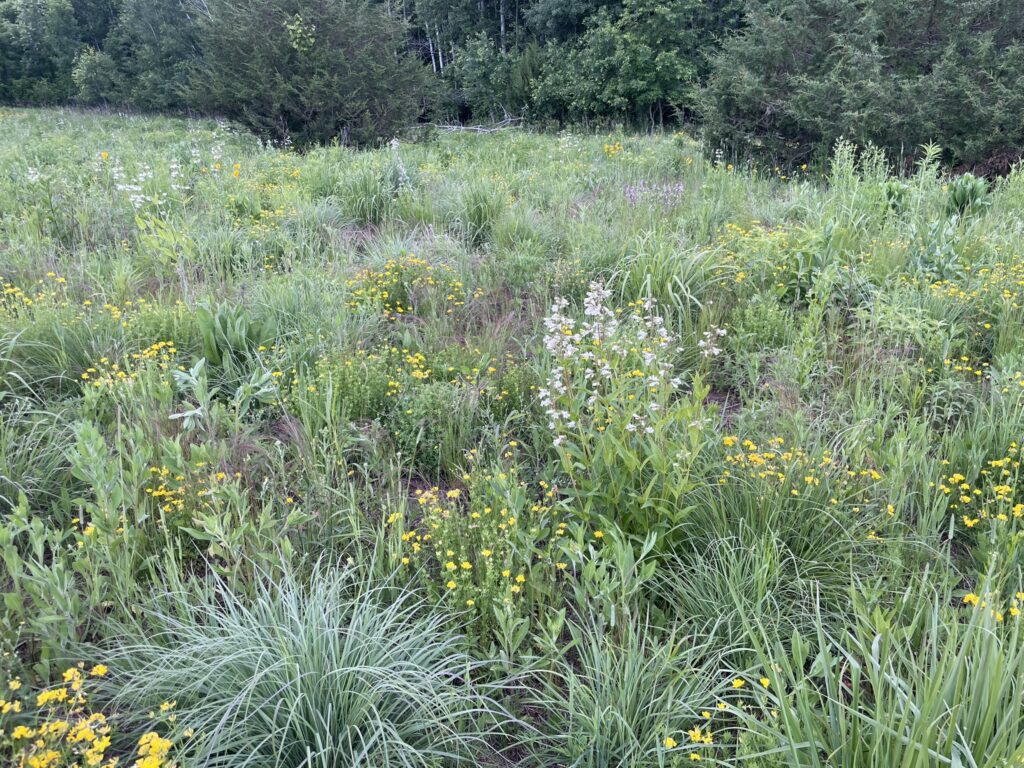
It seems with each year, there is a new set of weeds that dominates. In 2026, there was a tremendous number of plumeless thistles throughout the prairie, with some very concentrated areas. While there were a certain amount of thistles in each of the previous years, I was was shocked to see how many showed up this year.
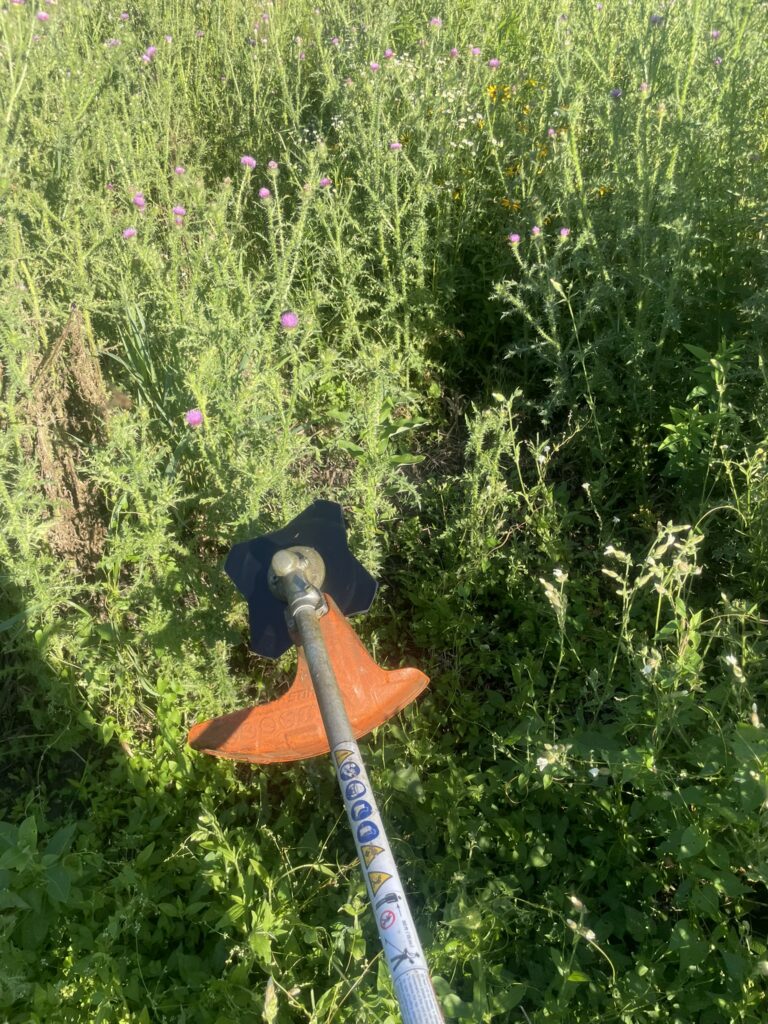
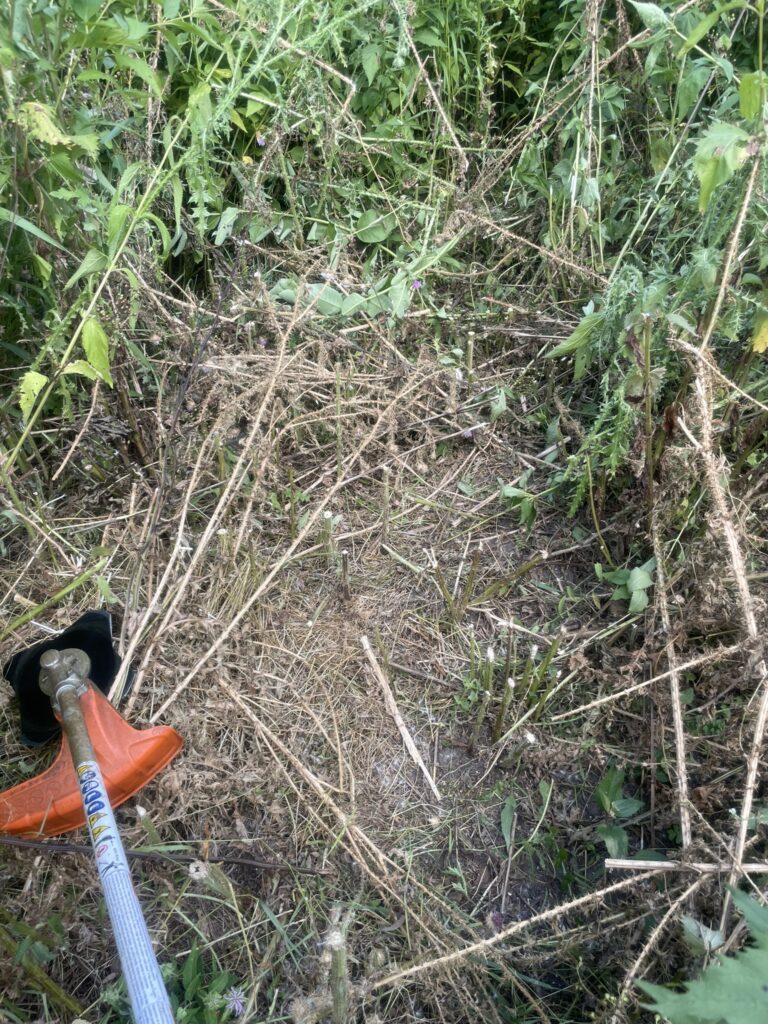
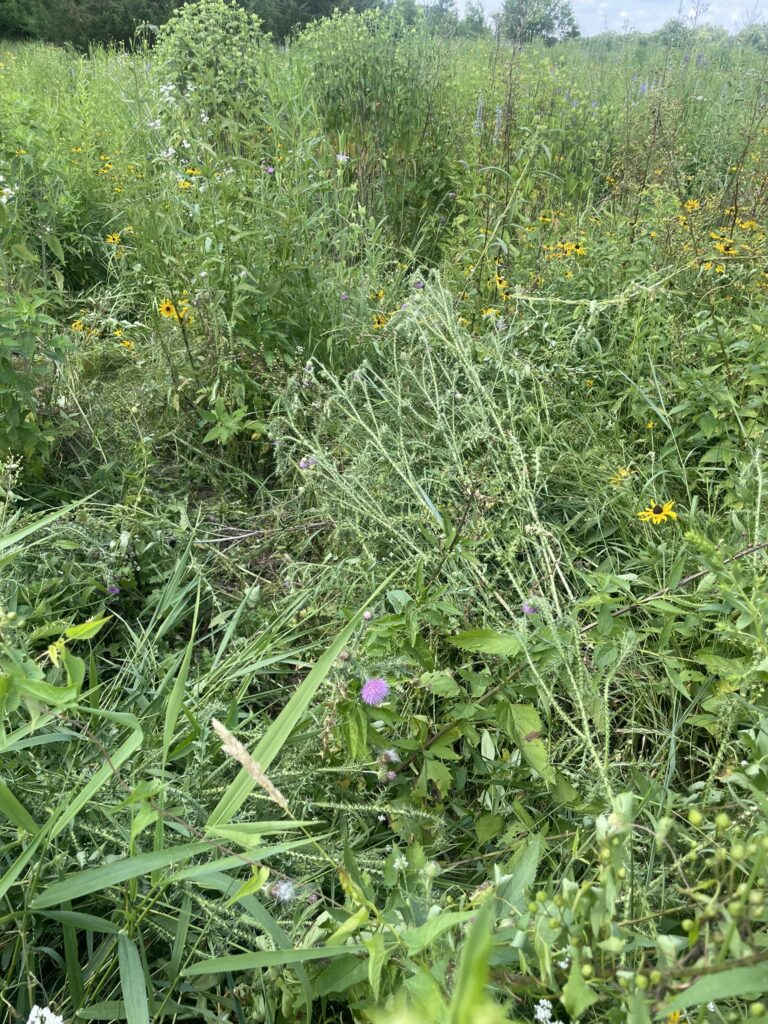
Using a small squirt bottle, I was able to target the thistles previously. This year, they were too many to keep up with. Using a blade attachment on the weed trimmer, I went through and cut down every thistle I could find. In some areas, the individual thistles were easy to pick out, but in the thicker stands, I couldn’t help but cut the desirable plants along with them. Thus, it was essentially a targeted mowing.
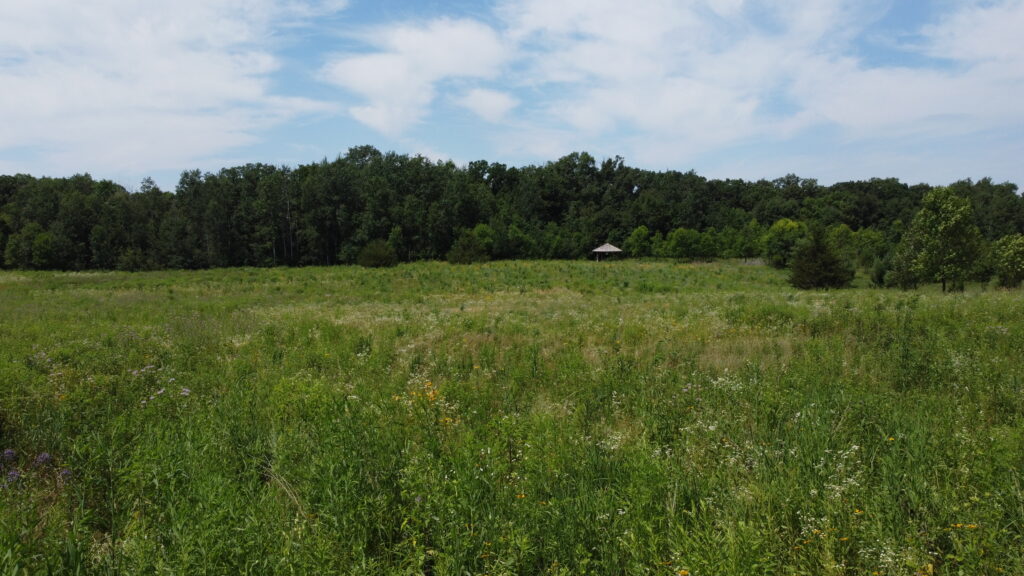
To be continued…