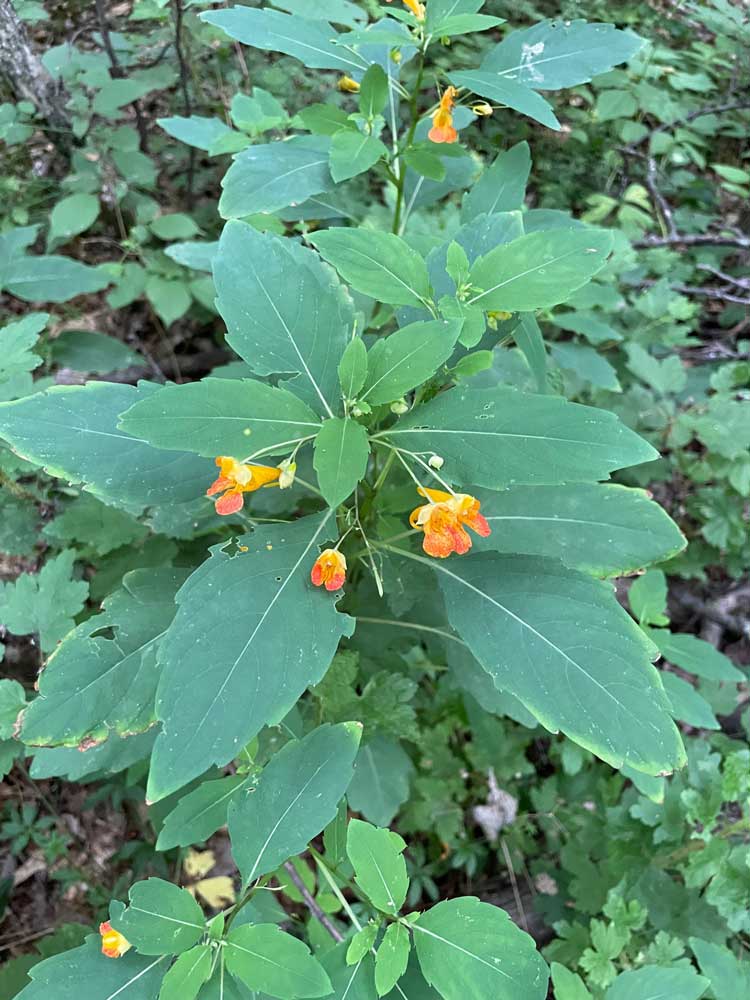
Golden Ragwort – Packera aurea

Native To State: YES
Naturally Occurring: YES

Description

Appearance: Packera aurea is a herbaceous perennial known for its basal rosette of heart-shaped leaves and clusters of yellow, daisy-like flowers.

Leaves: The basal leaves are heart-shaped and often have prominent veining.

Flowers: The plant produces clusters of small, yellow, daisy-like flowers with yellow rays.

Habitat: It is commonly found in wet woodlands and along stream banks.

Distribution: Golden ragwort is native to North America.

Occurrence
Widespread throughout the property

Bracken Fern – Pteridium aquilinum

Native To State: YES
Naturally Occurring: NO

Description

Appearance: Pteridium aquilinum is a large, deciduous fern known for its triangular fronds and tall, upright growth.

Leaves: The fronds are triangular and deeply lobed, resembling the shape of a feather.

Spores: Reproduction occurs through spores produced on the underside of the fronds.

Habitat: It is commonly found in a wide range of habitats, including woodlands, grasslands, and disturbed areas.

Distribution: Bracken fern is found in many parts of the world.

Occurrence
Planted along fern path and on the spring in the back 40 woods.

Wild Geranium – Geranium maculatum

Native To State: YES
Naturally Occurring: YES

Description

Appearance: Geranium maculatum is a herbaceous perennial known for its deeply lobed leaves and pink to lavender flowers.

Leaves: The leaves are palmately lobed and often have a distinctive pattern.

Flowers: The plant produces pink to lavender, five-petaled flowers with darker veins.

Habitat: It is commonly found in woodlands and shaded areas.

Distribution: Wild geranium is native to eastern North America.

Occurrence
Found throughout the wooded areas

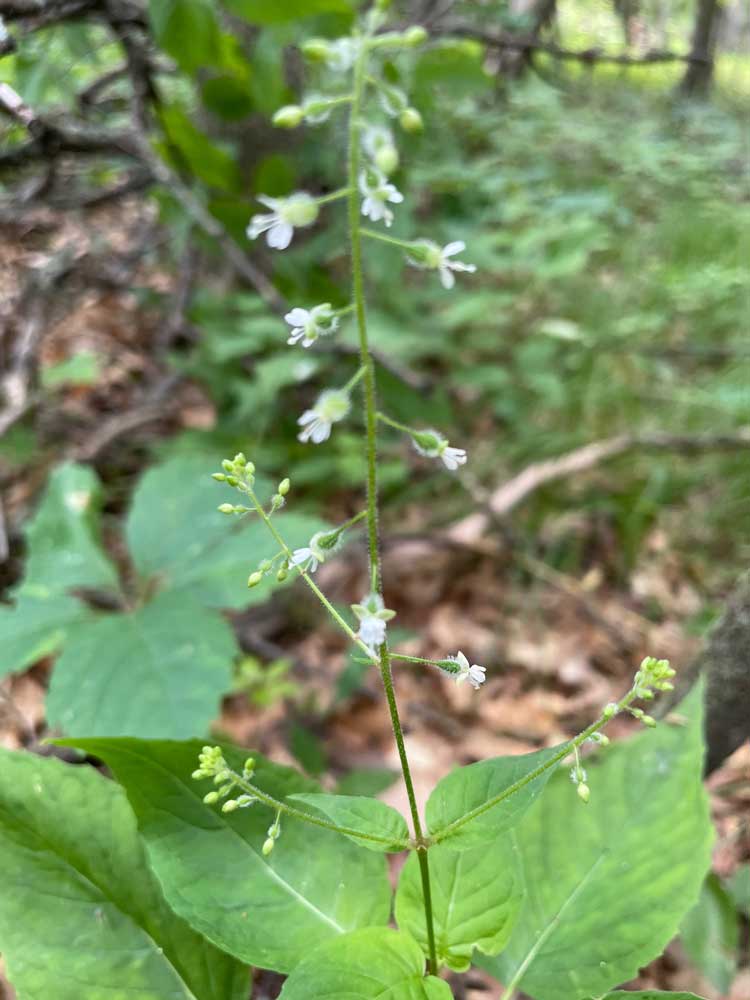
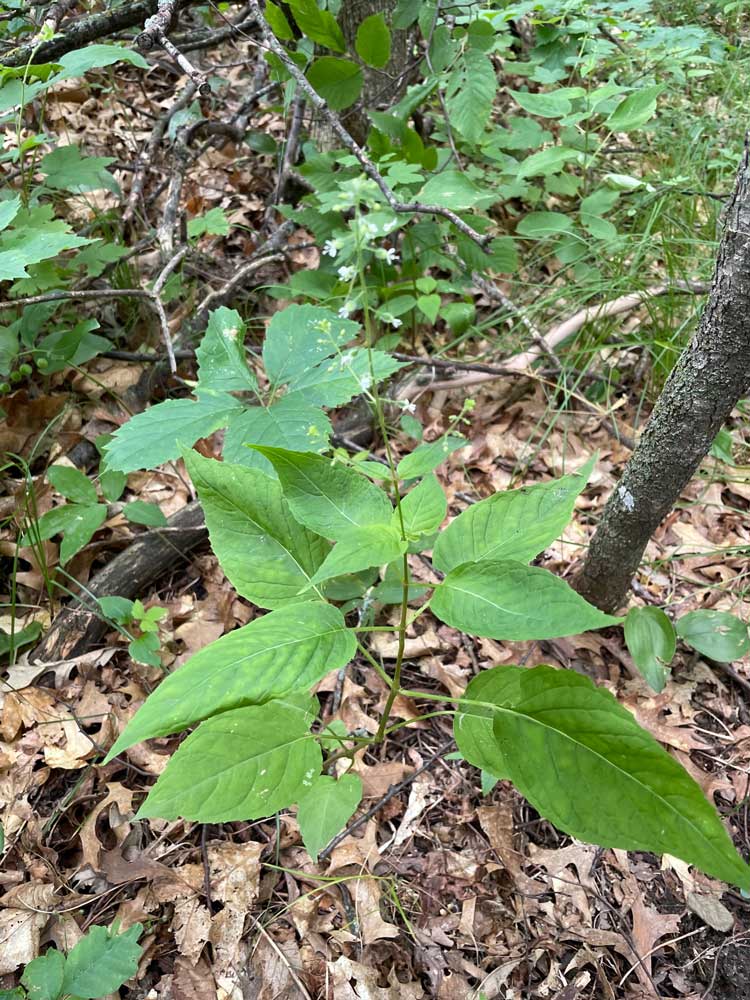
Pennsylvania Bittercress – Cardamine pensylvanica

Native To State: YES
Naturally Occurring: YES

Description

Appearance: Cardamine pensylvanica is a herbaceous annual or biennial plant known for its pinnately divided leaves and small, white flowers.

Leaves: The leaves are pinnately divided into several leaflets.

Flowers: The plant produces small, white, four-petaled flowers in clusters.

Habitat: It is commonly found in moist woodlands, wet meadows, and along stream banks.

Distribution: Pennsylvania bittercress is native to eastern North America.

Occurrence
Several specimens in back 40 spring area and near crick

Swamp Saxifrage – Micranthes pensylvanica

Native To State: YES
Naturally Occurring: YES

Description

Appearance: Micranthes pensylvanica is a herbaceous perennial known for its basal rosette of toothed leaves and clusters of white flowers.

Leaves: The basal leaves are toothed and often have a spatula-shaped appearance.

Flowers: The plant produces clusters of small, white, five-petaled flowers.

Habitat: It is commonly found in rock crevices, cliffs, and alpine habitats.

Distribution: Early saxifrage is native to eastern North America.

Occurrence
Several specimens in back 40 spring area and near crick

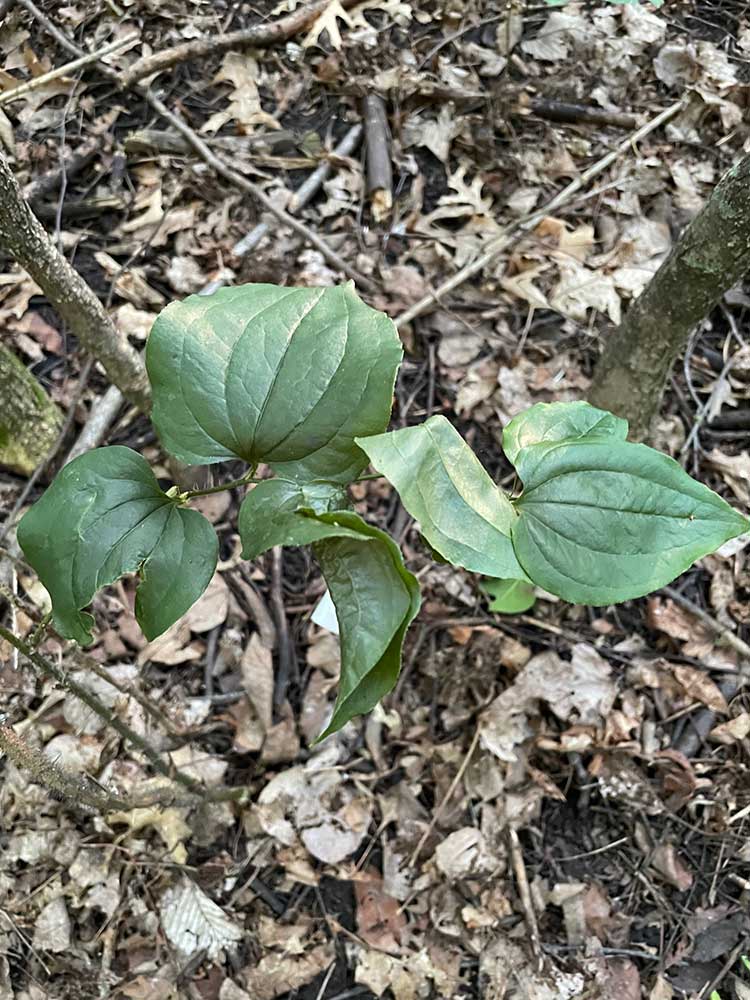
Mountain Maple – Acer spicatum

Native To State: YES
Naturally Occurring: NO

Description

Appearance: Acer spicatum is a deciduous shrub or small tree known for its opposite, palmately lobed leaves and small, greenish-yellow flowers.

Leaves: The leaves are opposite, palmately lobed, and typically have three to five lobes.

Flowers: The plant produces small, greenish-yellow flowers in upright clusters.

Habitat: It is commonly found in woodlands and along stream banks in mountainous regions.

Distribution: Mountain maple is native to North America.

Occurrence
Few specimens planted in back 40 in 2019

False Lilly of the Valley – Maianthemum canadense

Native To State: YES
Naturally Occurring: YES

Description

Appearance: Maianthemum canadense is a herbaceous perennial known for its delicate, white, star-shaped flowers and paired leaves.

Leaves: The leaves are paired, elliptical to lance-shaped, and typically have parallel veins.

Flowers: The plant produces small, white, star-shaped flowers in terminal clusters.

Habitat: It is commonly found in woodlands and shaded areas.

Distribution: Canada mayflower is native to North America.

Occurrence
Specimens found throughout the wooded areas

Canada Anemone – Anemone canadensis

Native To State: YES
Naturally Occurring: YES

Description

Appearance: Anemone canadensis is a herbaceous perennial known for its solitary white flowers and deeply lobed leaves.

Leaves: The leaves are deeply lobed and typically have three lobes.

Flowers: The plant produces solitary white flowers with five petal-like sepals.

Habitat: It is commonly found in moist meadows and along stream banks.

Distribution: Canada anemone is native to North America.

Occurrence
Specimens found throughout the wooded areas

Perfoliate Bellwort – Uvularia grandiflora

Native To State: YES
Naturally Occurring: YES

Description

Uvularia grandiflora (Perfoliate Bellwort) is an herbaceous perennial plant belonging to the Colchicaceae family. Here are some key identification characteristics:

Appearance: Perfoliate bellwort features graceful, arching stems that bear bright green, lance-shaped leaves. The plant has an overall delicate and elegant appearance.

Flowers: The bell-shaped flowers of Uvularia grandiflora are a striking feature. They are pendulous, hanging from the stems on slender stalks. The flowers are typically bright yellow and have six petal-like tepals that give them their bell-like appearance. Each flower can measure around 1 to 2 inches (2.5 to 5 centimeters) in length.

Blooming Period: Large-flowered bellwort produces its blooms in the spring, adding color to woodland settings.

Habitat: This species is native to eastern North America and is often found in rich, moist, and deciduous woodlands, where it thrives in the dappled shade.

Distribution: Perfoliate bellwort can be found in regions ranging from eastern Canada to the eastern United States.

Conservation: While not considered a threatened species, preserving its woodland habitats is crucial for the continued health of large-flowered bellwort populations.

Other Species: Uvularia grandiflora is part of the Uvularia genus, which includes other bellwort species with similar attributes.

Large-flowered bellwort is treasured for its bright and cheerful blossoms, making it a popular choice among wildflower enthusiasts and gardeners alike. Its ability to naturalize in woodland environments and its graceful demeanor contribute to its appeal as a delightful addition to shaded landscapes.

Occurrence
Specimens found throughout the wooded areas

Giant Trillium – Trillium grandiflorum

Native To State: YES
Naturally Occurring: YES

Description

Trillium grandiflorum (Large-flowered Trillium) is a perennial herbaceous plant belonging to the Melanthiaceae family. Here are some key identification characteristics:

Appearance: Large-flowered trillium features a single upright stem arising from a rhizomatous root system. The stem bears three large, elliptical leaves that are whorled around the stem apex.

Flowers: The plant produces a single large flower that sits on top of the three leaves. The flower has three large, white petals (technically sepals) that are broad and ovate in shape. The petals are arranged symmetrically, and the flower measures approximately 2 to 3 inches (5 to 7.5 centimeters) in diameter.

Blooming Period: Large-flowered trillium blooms in the spring, typically from April to May, depending on the region and climate.

Habitat: This species is native to eastern North America and is commonly found in rich, moist deciduous woodlands, often carpeting the forest floor in clusters.

Distribution: Large-flowered trillium can be found in regions ranging from eastern Canada to the eastern United States.

Conservation: While not considered a threatened species, preserving its woodland habitats is important to ensure healthy populations of large-flowered trillium.

Other Species: Trillium grandiflorum is part of the Trillium genus, which includes other trillium species with varying flower colors and sizes.

Large-flowered trillium is admired for its distinctive appearance, particularly the large, showy white flower that stands out against the backdrop of green foliage. Its presence in woodlands adds a touch of elegance to natural landscapes and makes it a sought-after wildflower for both botanists and wildflower enthusiasts.

Occurrence
Specimens planted in former pasture and in back 40 woods.