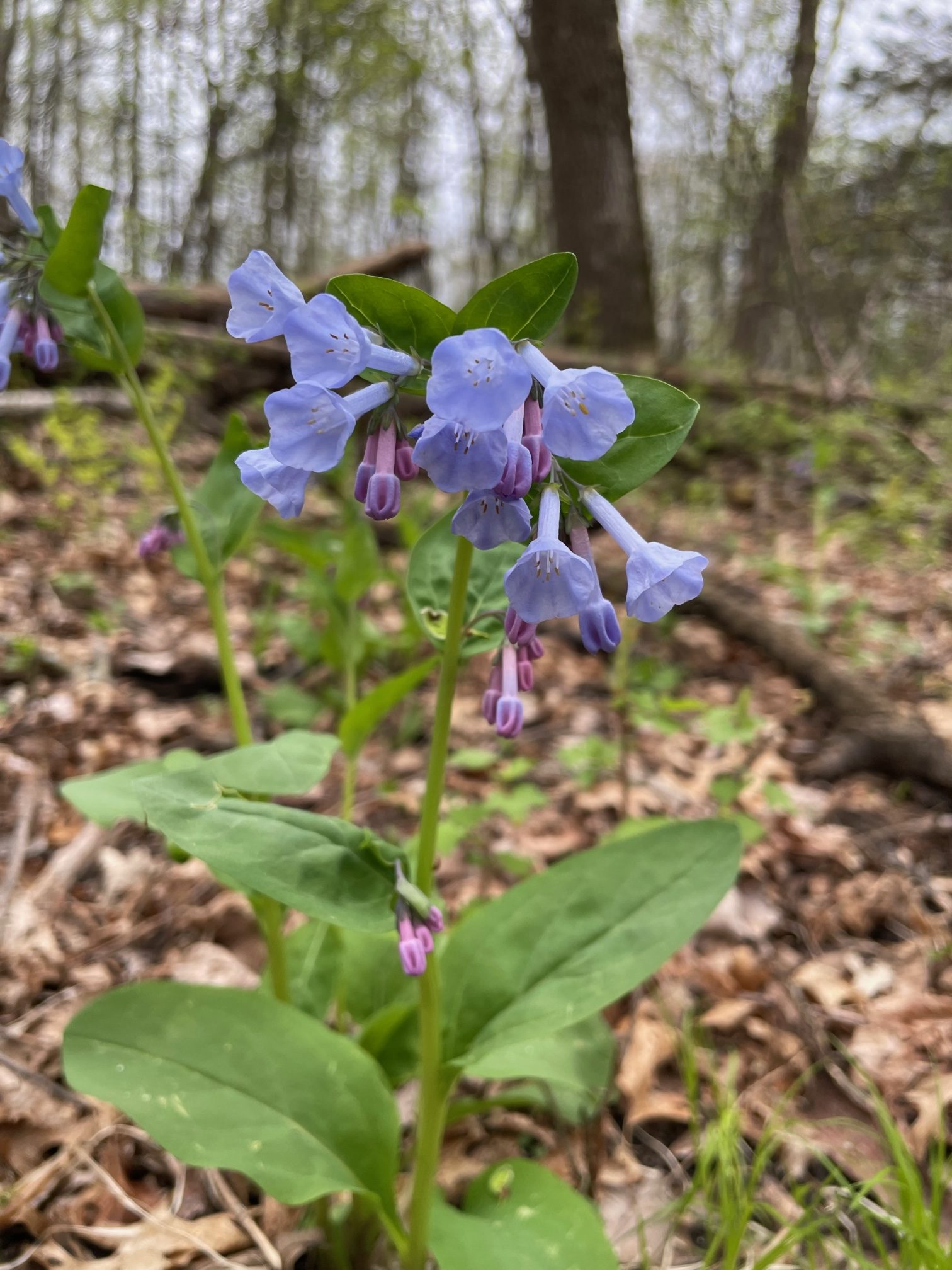
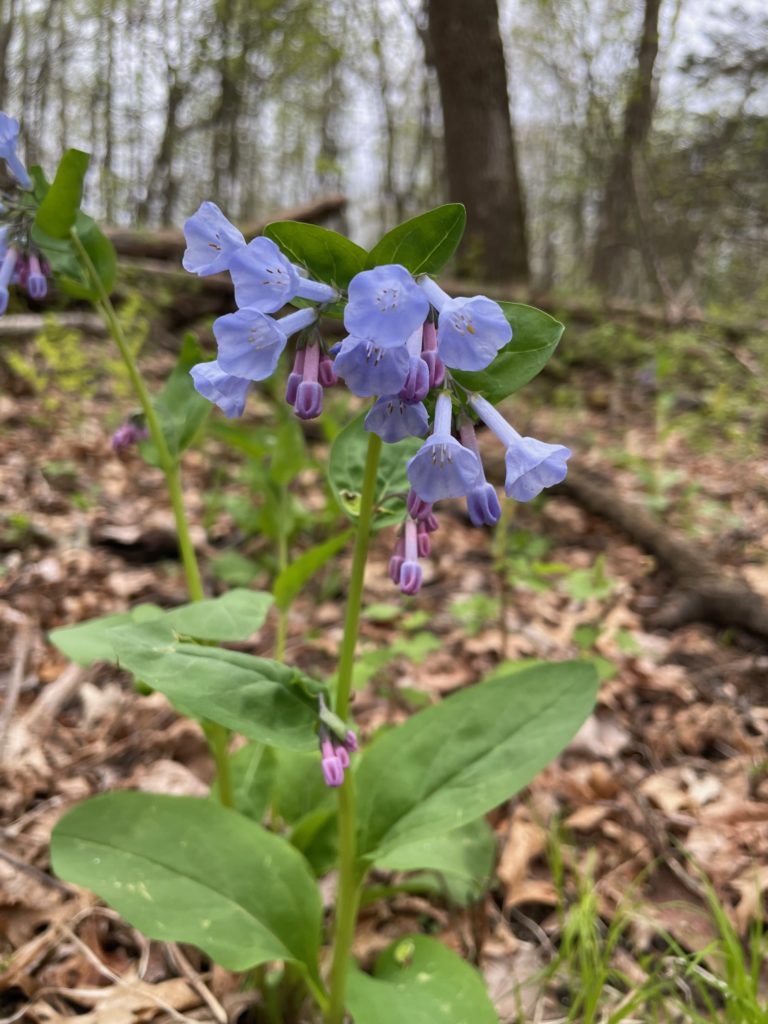
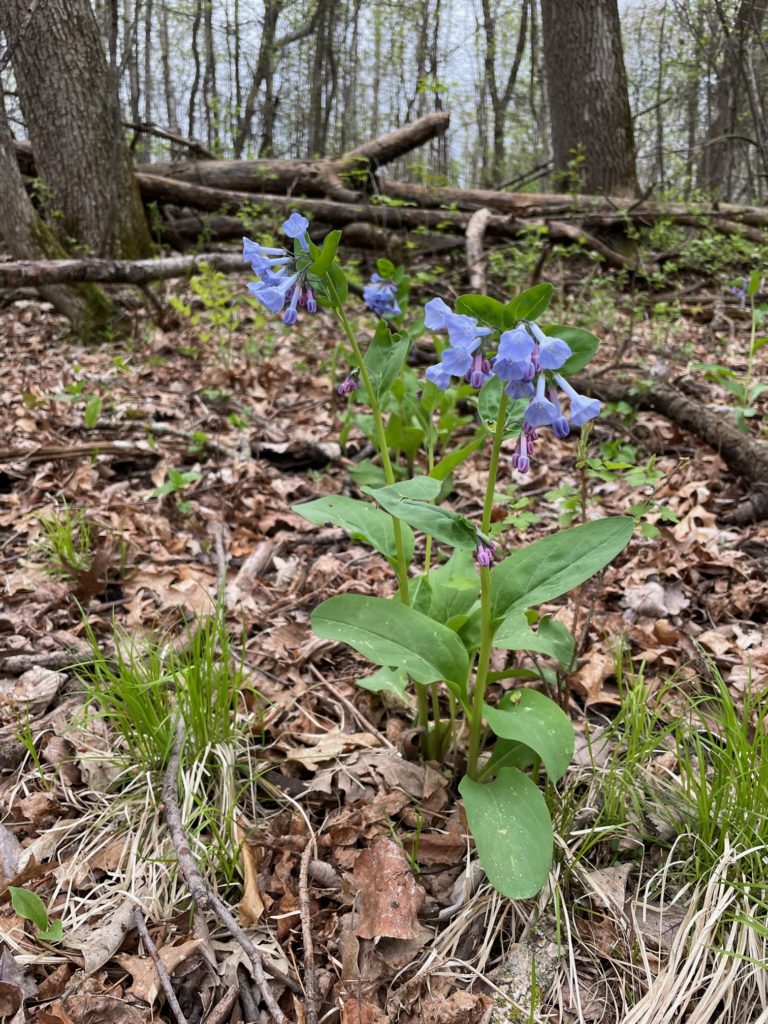
Virginia Bluebells – Mertensia virginica

Native To State: YES
Naturally Occurring: NO

Description

Appearance: Mertensia virginica is a herbaceous perennial known for its bell-shaped, sky-blue flowers and smooth, gray-green leaves.

Leaves: The leaves are alternate, lance-shaped, and have a smooth texture.

Flowers: The plant produces clusters of pendulous, trumpet-shaped, sky-blue flowers that emerge from pinkish buds.

Habitat: It is commonly found in woodlands and along stream banks.

Distribution: Virginia bluebells are native to eastern North America.

Occurrence
Planted in fern area
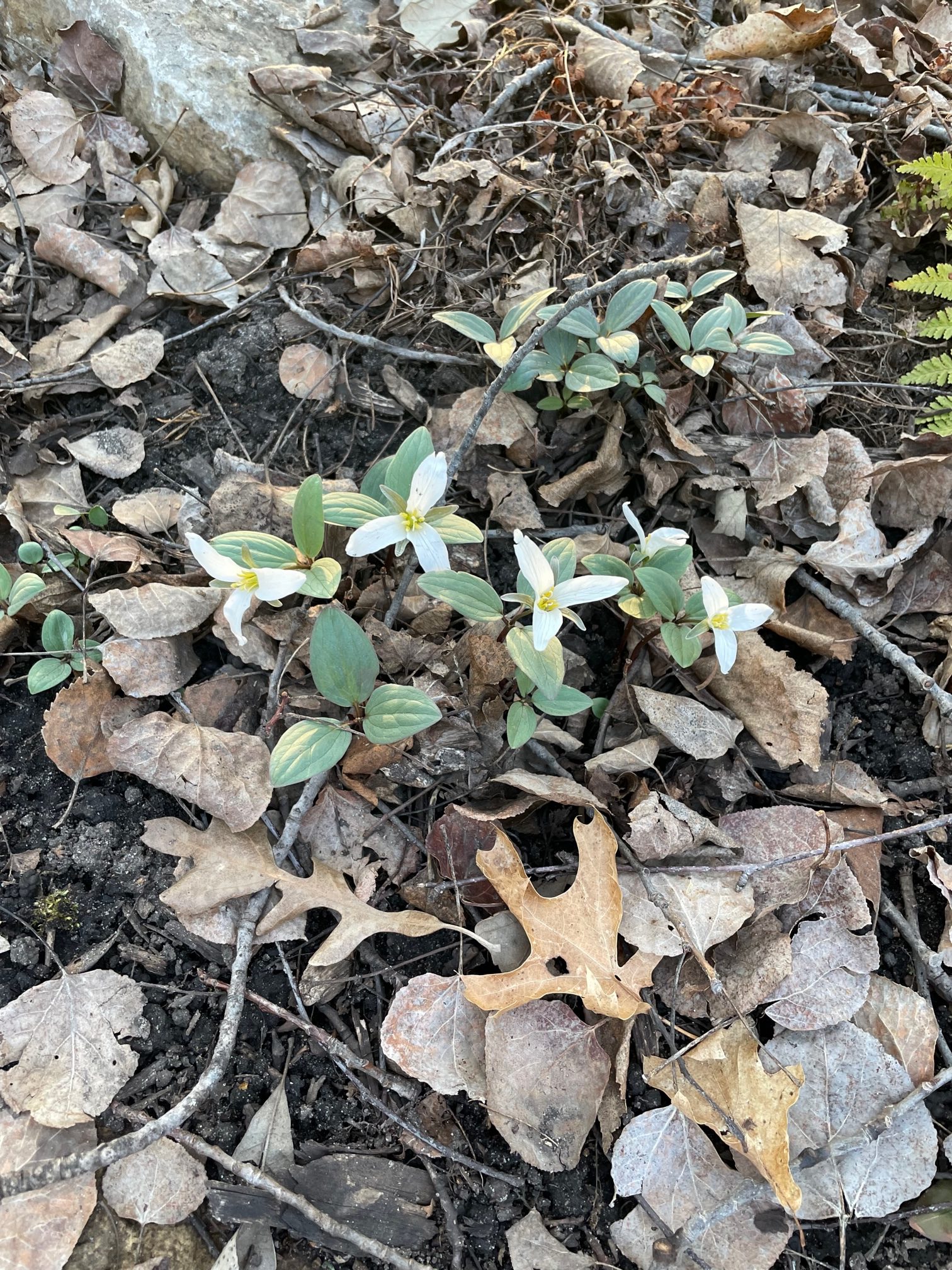
Snow Trillium – Trillium nivale

Native To State: YES
Naturally Occurring: NO

Description

Appearance: Trillium nivale is a herbaceous perennial known for its three-petaled, white flowers and whorl of three leaves.

Leaves: The leaves are whorled in groups of three and are typically ovate in shape.

Flowers: The plant produces solitary, white, three-petaled flowers that appear above the leaves.

Habitat: It is commonly found in deciduous woodlands.

Distribution: Snow trillium is native to eastern North America.

Occurrence
Planted in fern area, back 40 and brush island

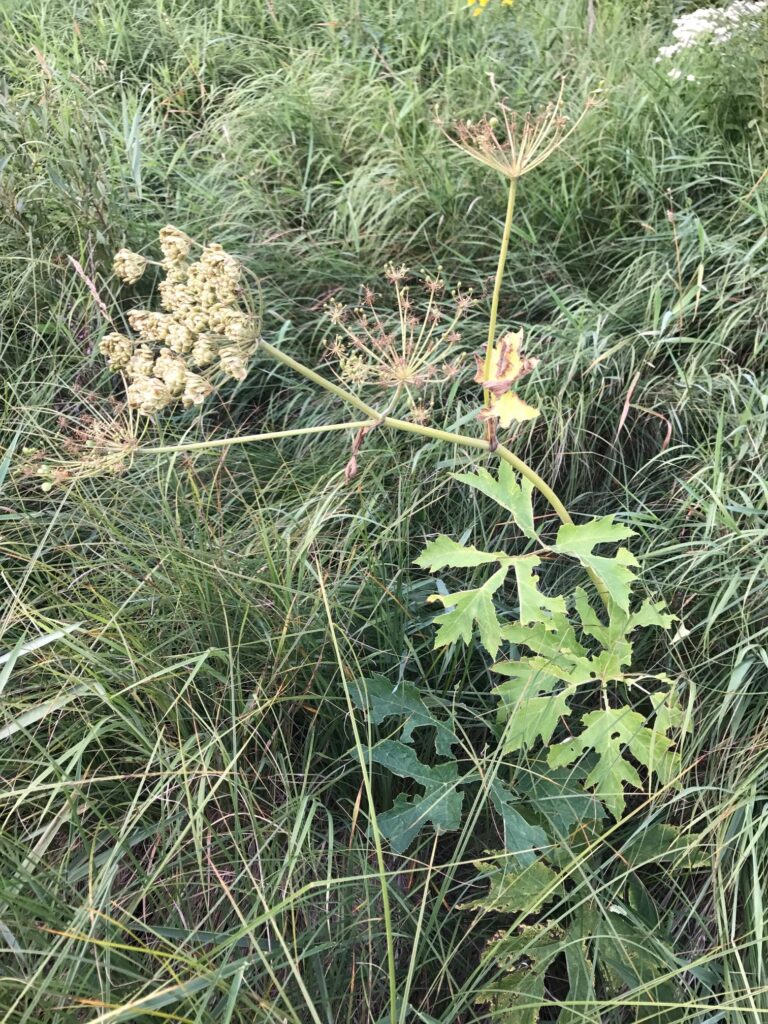
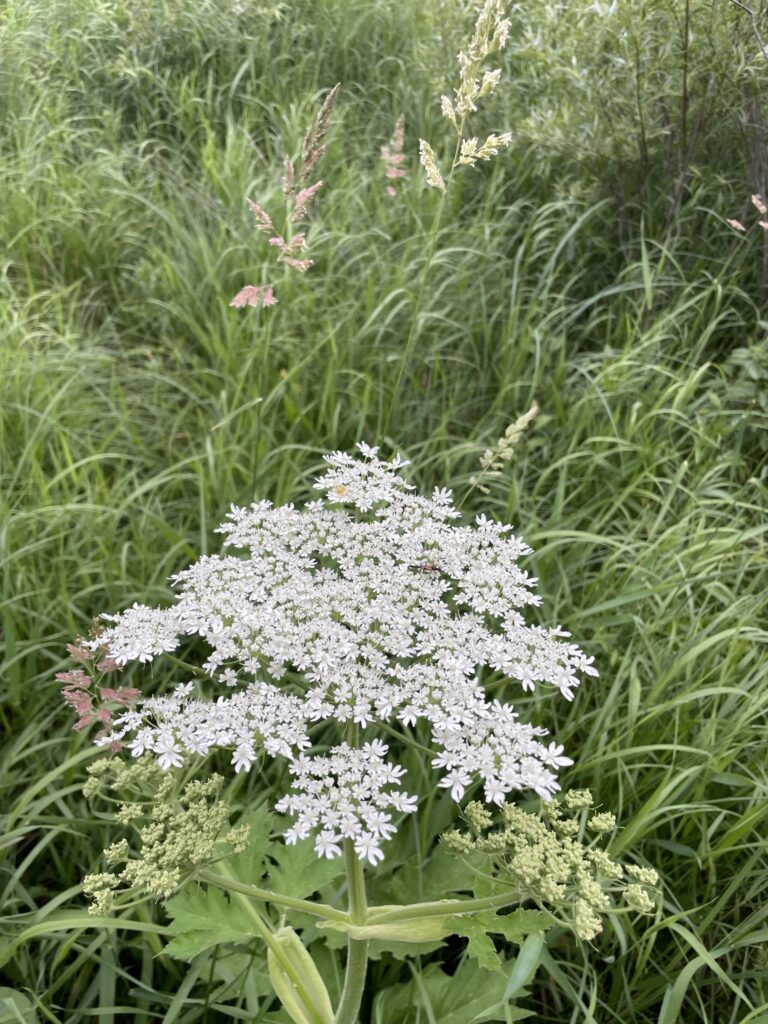
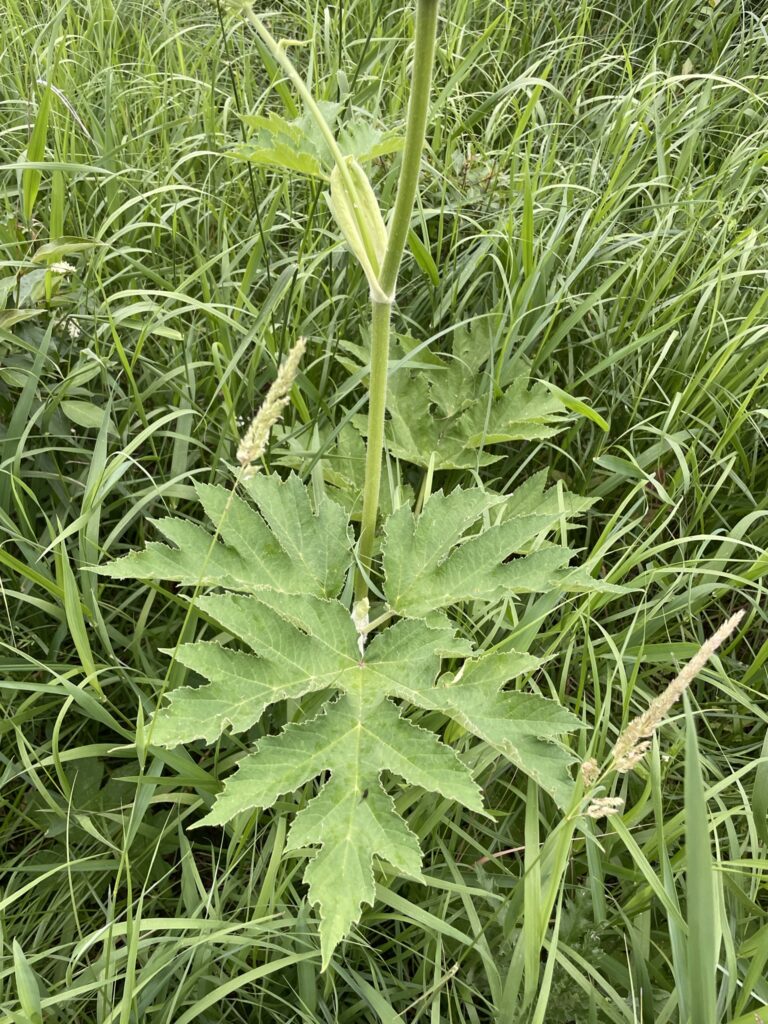
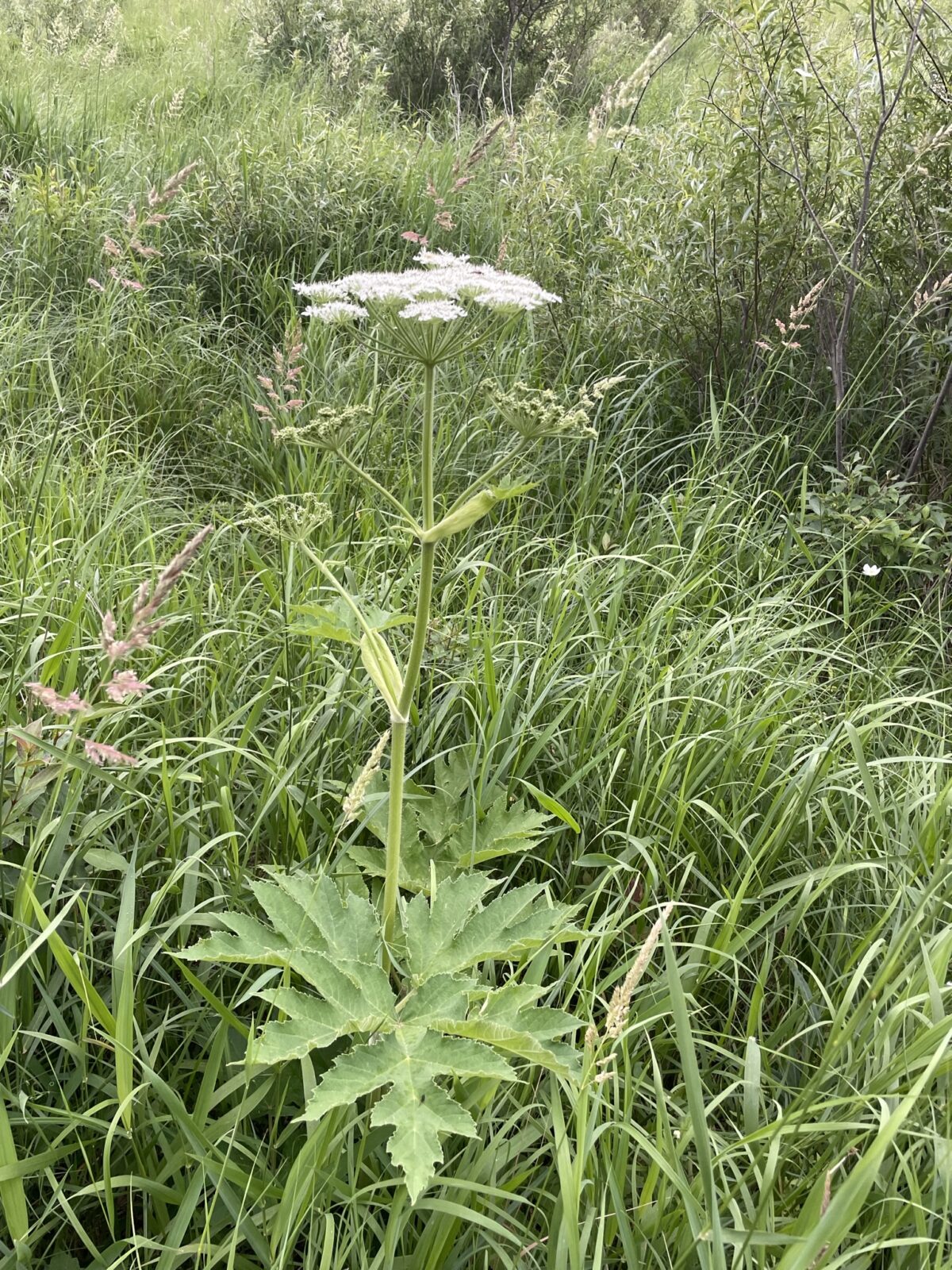
Common Cow Parsnip – Heracleum maximum

Native To State: YES
Naturally Occurring: NO

Description

Appearance: Heracleum maximum is a large herbaceous perennial known for its tall, stout stems and large, compound umbels of white flowers.

Leaves: The leaves are large, palmately lobed, and have toothed margins.

Flowers: The plant produces large, umbrella-like clusters (umbels) of tiny white flowers.

Habitat: It is commonly found in open meadows, wetlands, and along stream banks.

Distribution: Cow parsnip is native to North America.

Occurrence
Seeded along the crick edge.

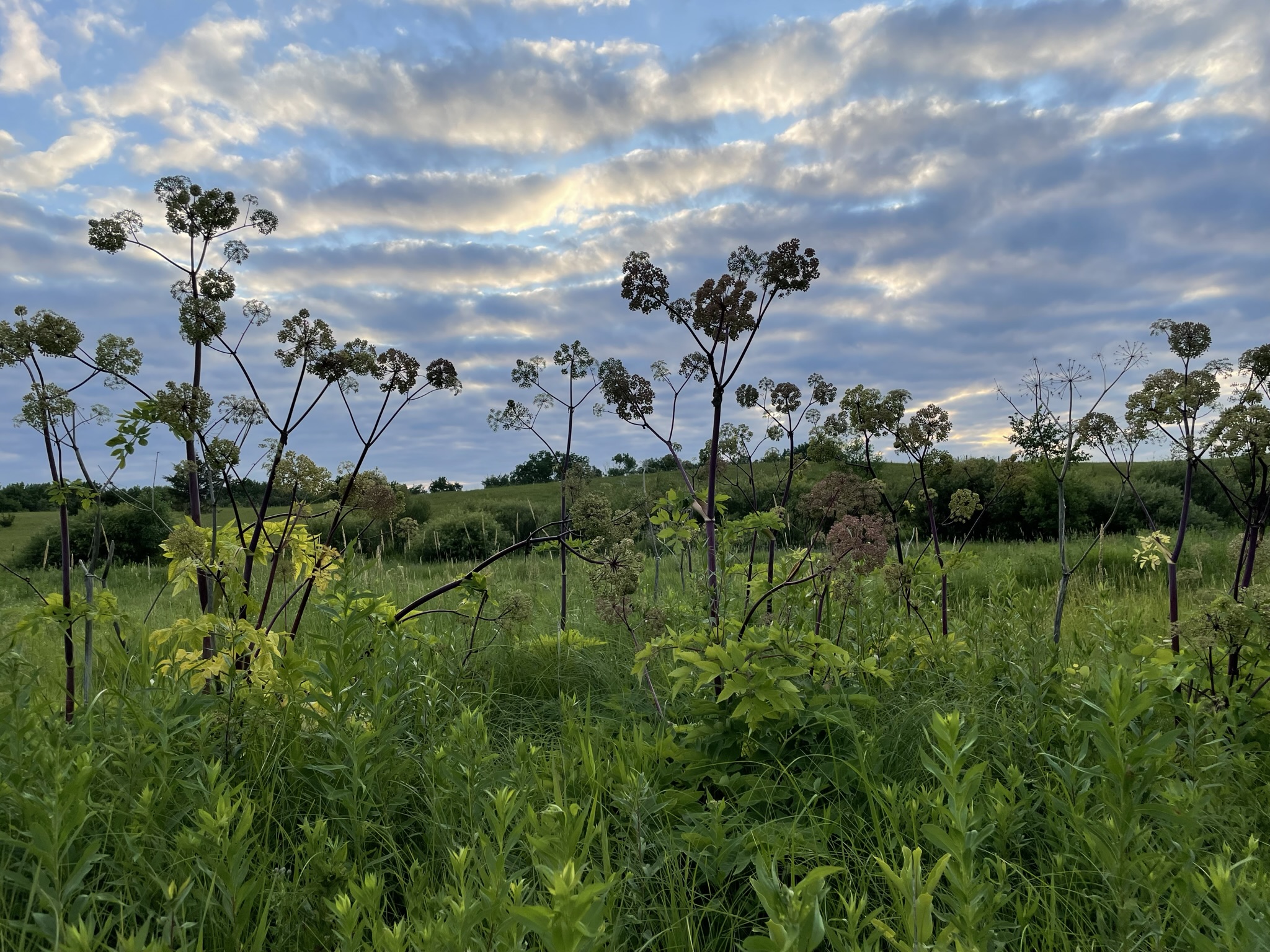
Angelica – Angelica atropurpurea

Native To State: YES
Naturally Occurring: NO

Description

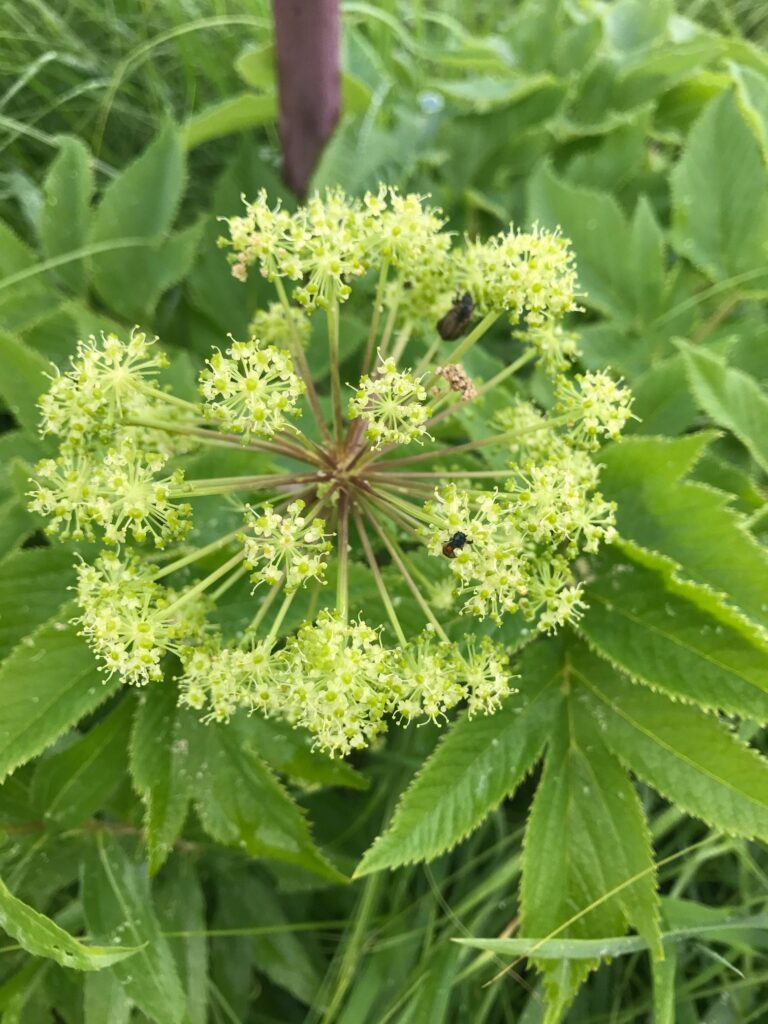
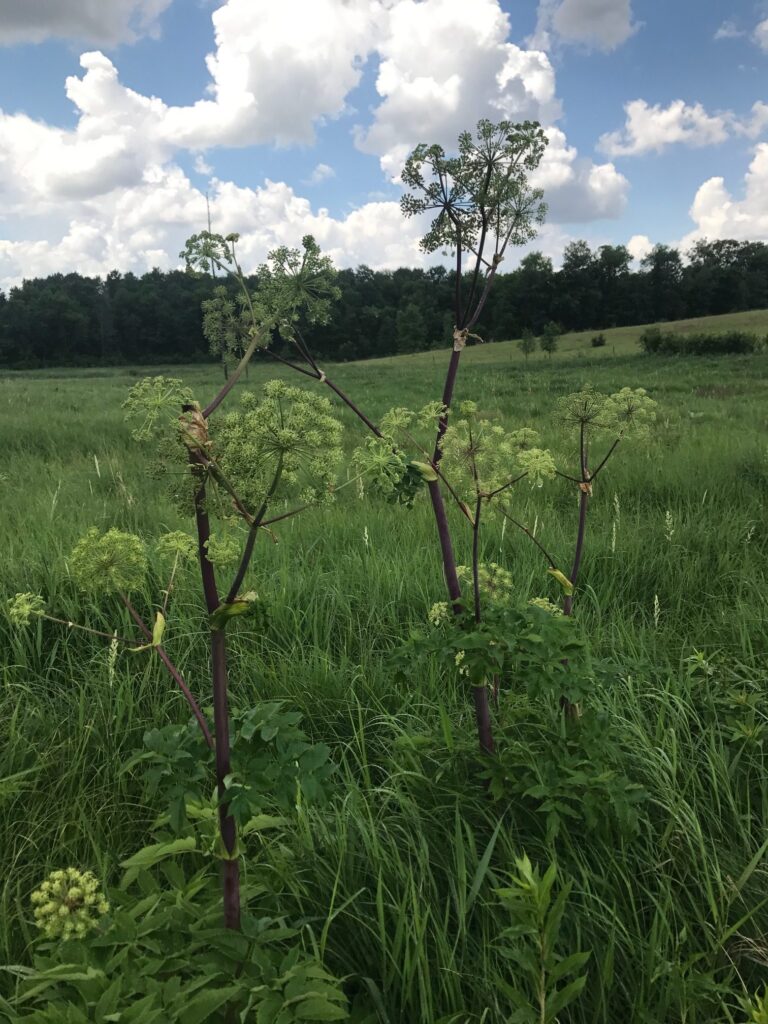
Appearance: Angelica atropurpurea is a tall, herbaceous perennial known for its purple stems and large, compound umbels of greenish-white flowers.

Leaves: The leaves are large, pinnately compound, and often have serrated leaflets.

Flowers: The plant produces large, umbrella-like clusters (umbels) of tiny greenish-white flowers.

Habitat: It is commonly found in wet meadows and along stream banks.

Distribution: Purplestem angelica is native to North America.

Occurrence
Seeded along crick area

Canada Moonseed – Menispermum canadense

Native To State: YES
Naturally Occurring: NO

Description

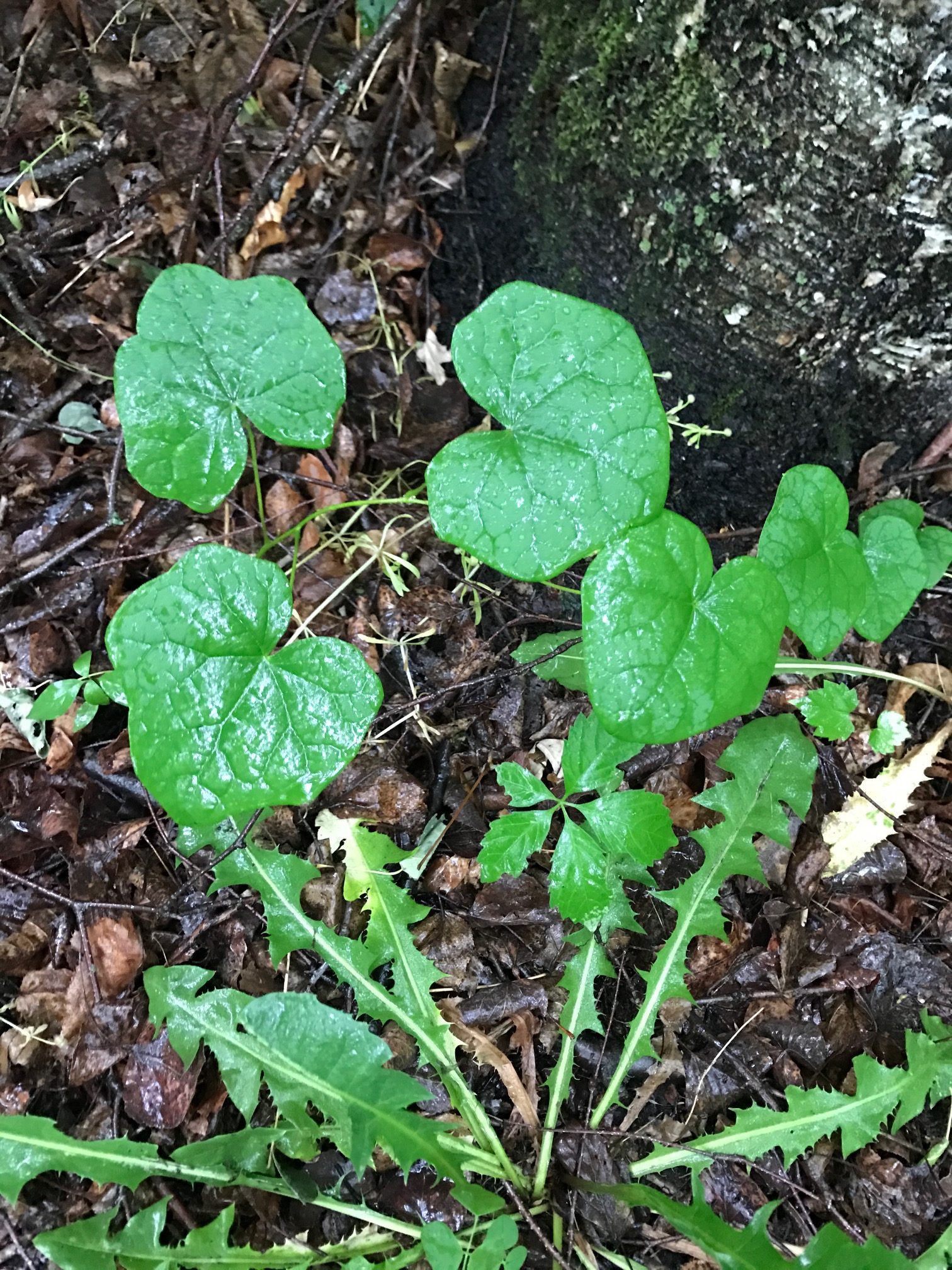
Appearance: Menispermum canadense is a woody vine known for its palmately lobed leaves and small, greenish-yellow flowers.

Leaves: The leaves are alternate, palmately lobed, and resemble the shape of a moon.

Flowers: The plant produces small, greenish-yellow, inconspicuous flowers.

Habitat: It is commonly found in woodlands, thickets, and along stream banks.

Distribution: Canadian moonseed is native to North America.

Occurrence
Planted in fern area and large brush island
Tufted Loosestrife – Lysimachia thyrsiflora

Native To State: YES
Naturally Occurring: YES

Description

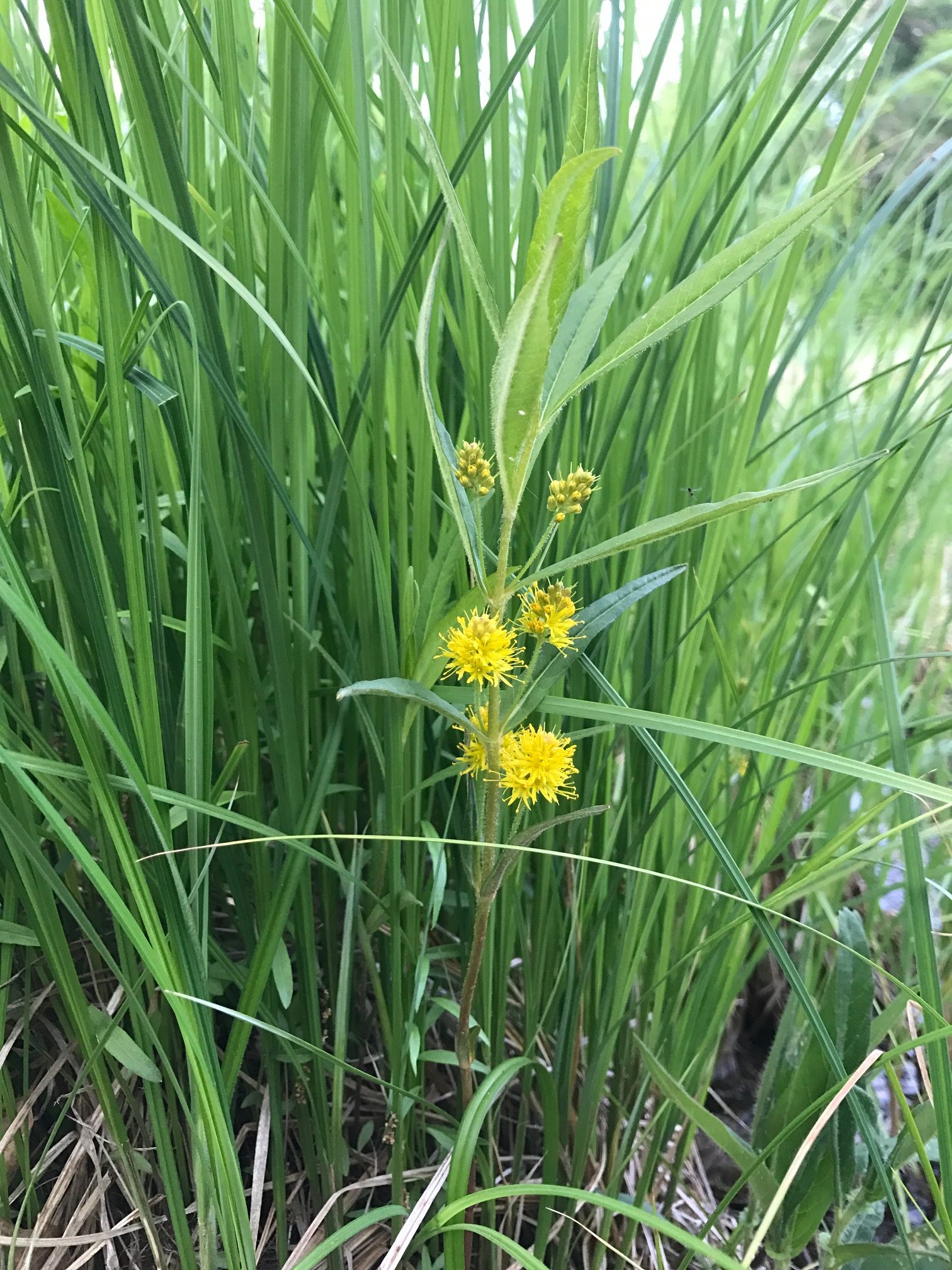
Appearance: Lysimachia thyrsiflora is a herbaceous perennial known for its tall spikes of yellow, star-shaped flowers.

Leaves: The leaves are typically lance-shaped and arranged in whorls along the stem.

Flowers: The plant produces tall spikes of bright yellow, star-shaped flowers.

Habitat: It is commonly found in wetlands, along stream banks, and in moist meadows.

Distribution: Tufted loosestrife is native to North America.

Occurrence
On the perimeter of the back pond

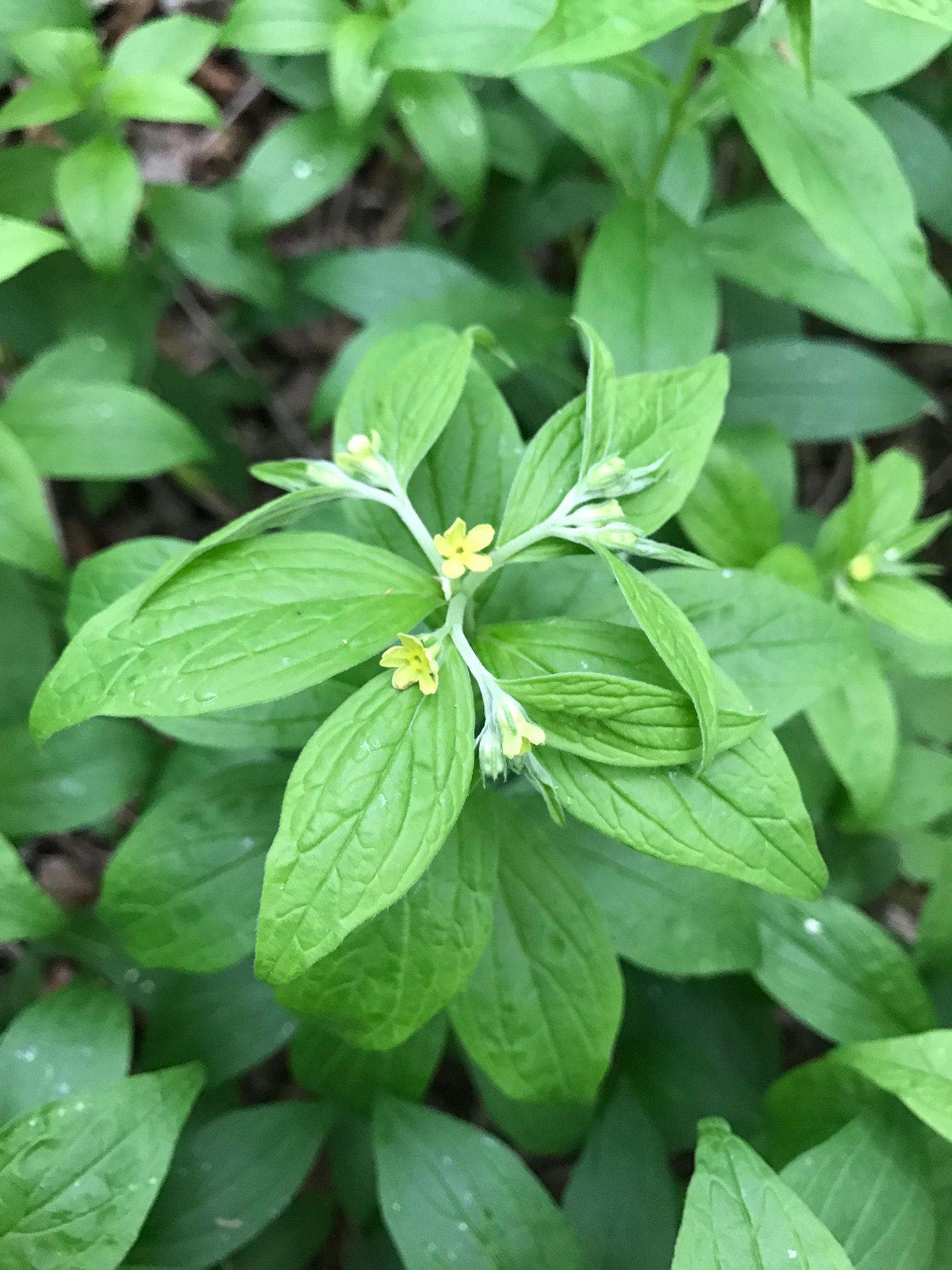
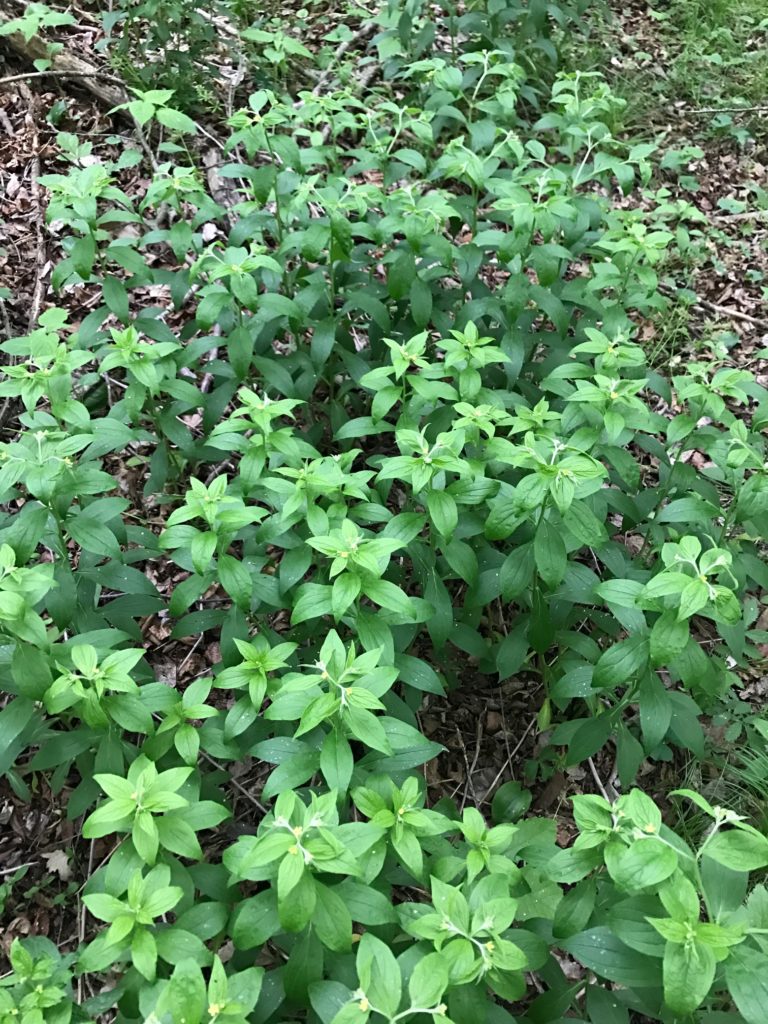
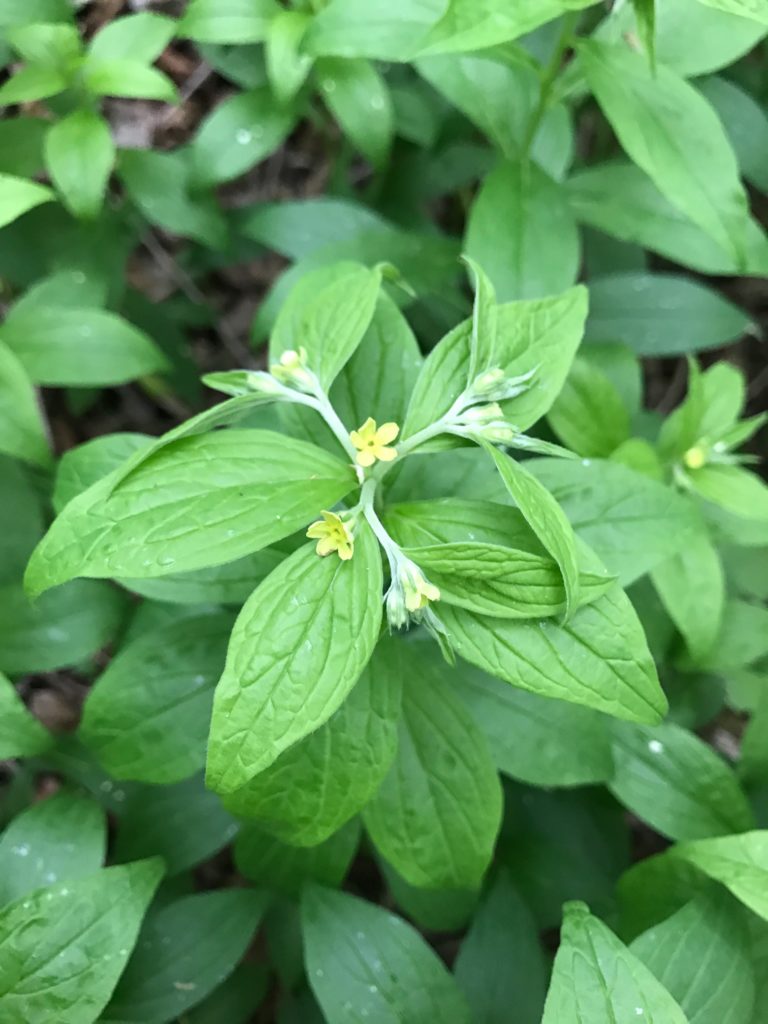
American Gromwell – Lithospermum latifolium

Native To State: YES
Naturally Occurring: YES

Description

Appearance: Lithospermum latifolium is a herbaceous perennial known for its showy, tubular, yellow to orange-yellow flowers and bristly leaves.

Leaves: The leaves are lance-shaped and covered in bristly hairs.

Flowers: The plant produces tubular, yellow to orange-yellow flowers that are typically solitary.

Habitat: It is commonly found in dry, open woodlands and prairies.

Distribution: American gromwell is native to eastern North America.

Occurrence
Found in former pasture woods.

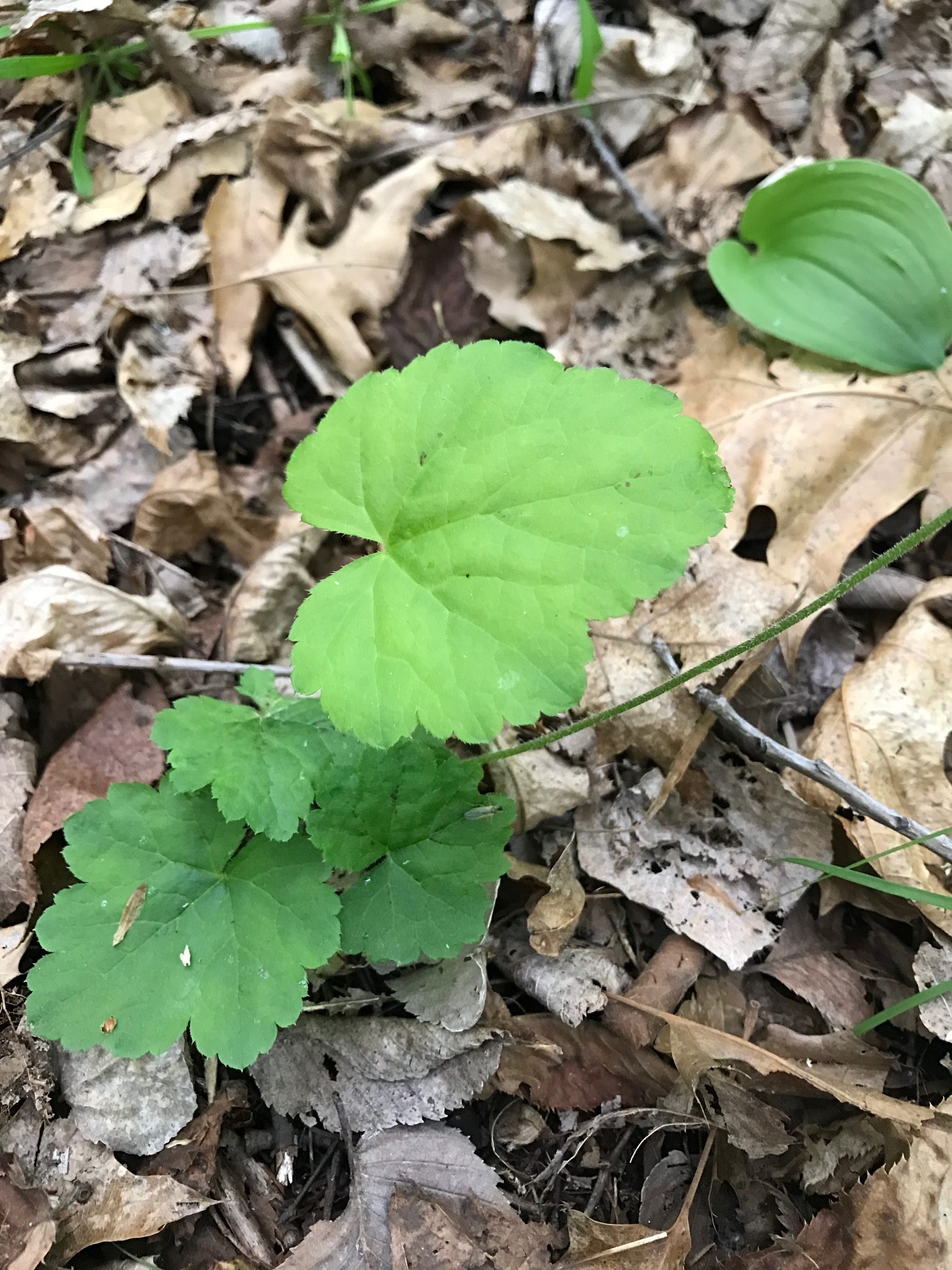
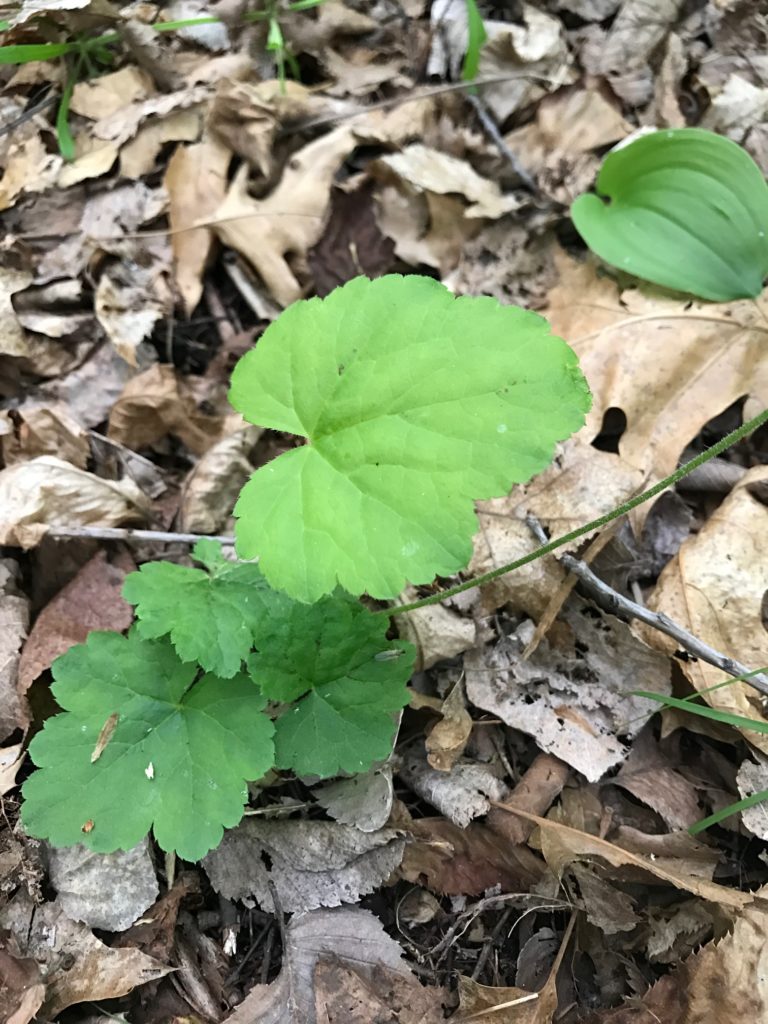
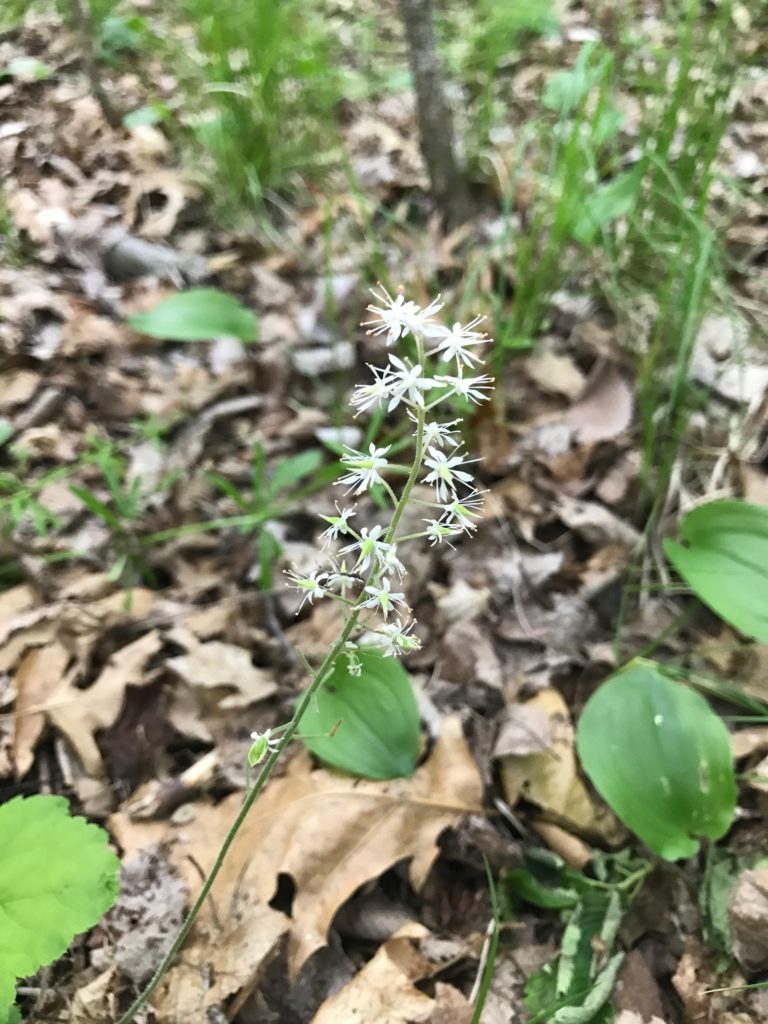
Foam Flower – Tiarella cordifolia

Native To State: YES
Naturally Occurring: NO

Description

Appearance: Tiarella cordifolia is a herbaceous perennial known for its low, spreading growth habit and spikes of small, white to pale pink flowers.

Leaves: The leaves are deeply lobed and often have a distinctive reddish-brown pattern.

Flowers: The plant produces spikes of small, white to pale pink, star-shaped flowers.

Habitat: It is commonly found in moist woodlands and along stream banks.

Distribution: Foamflower is native to eastern North America.

Occurrence
Planted in the fern area

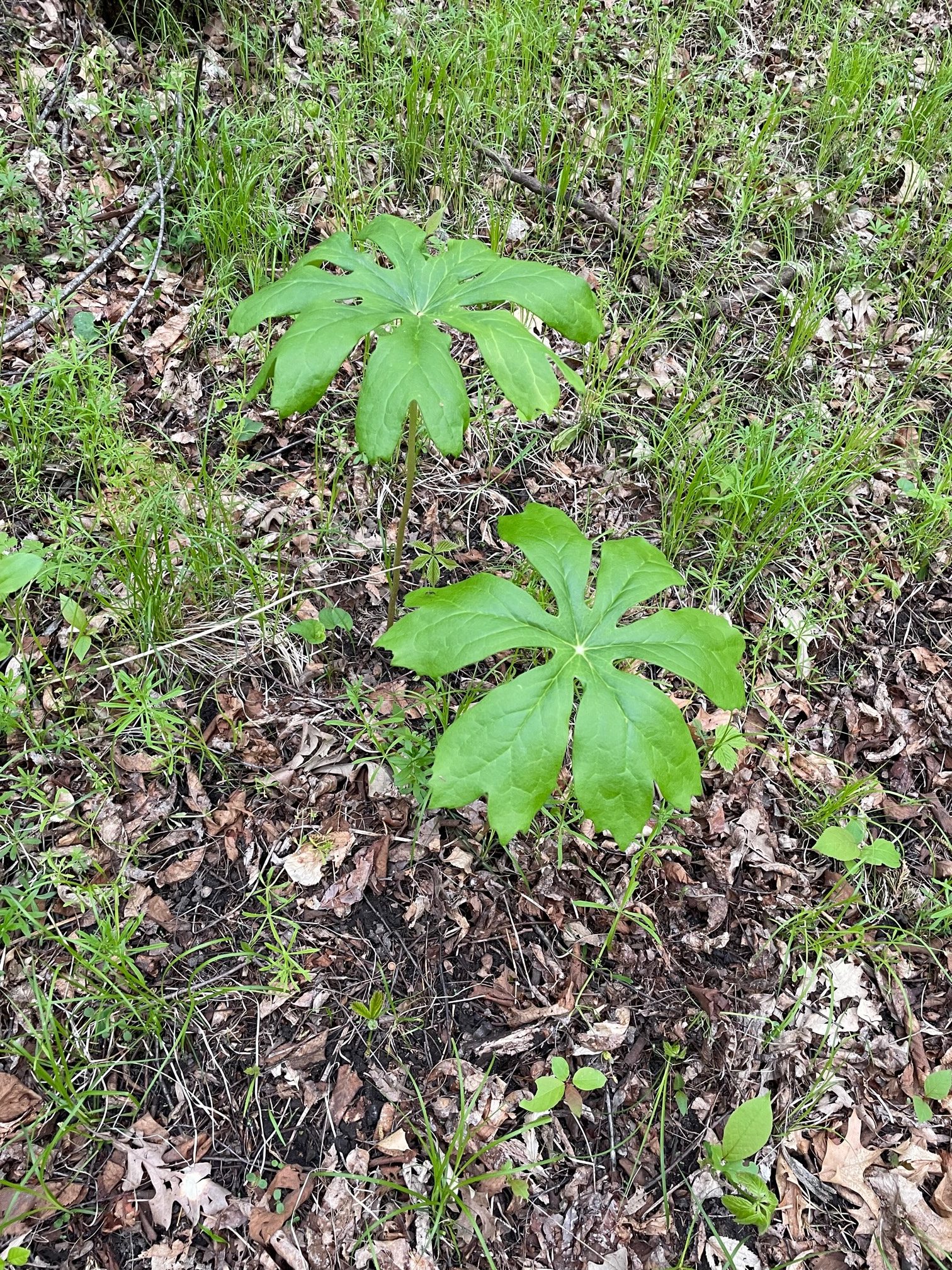
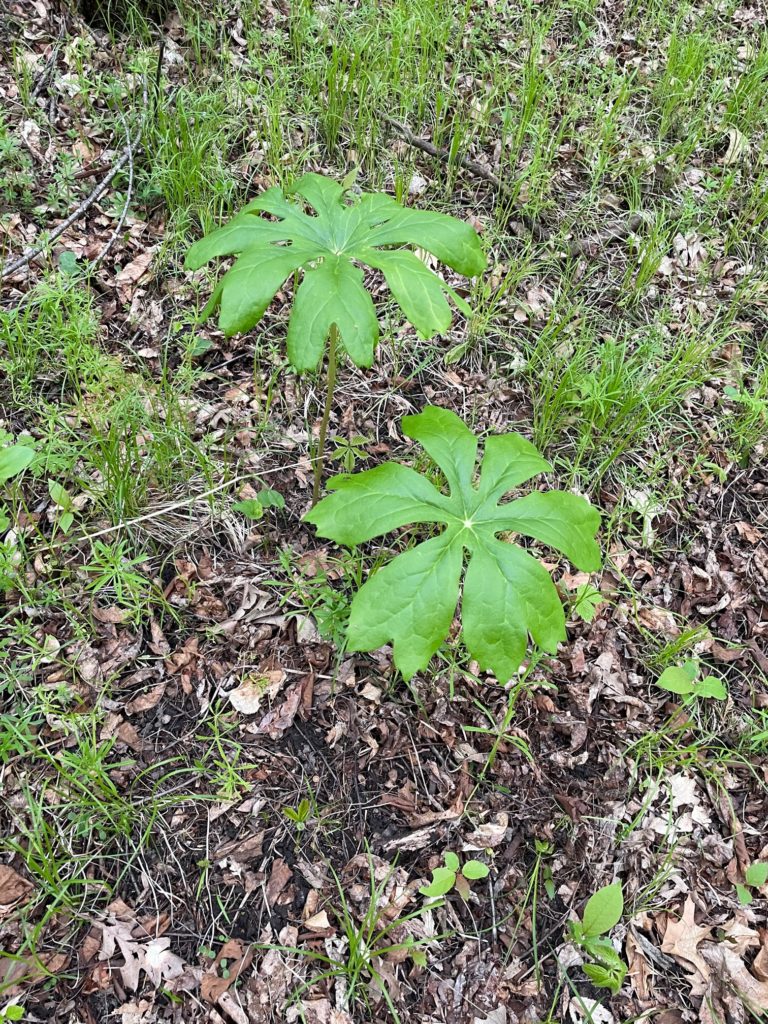
Mayapple – Podophyllum peltatum

Native To State: YES
Naturally Occurring: NO

Description

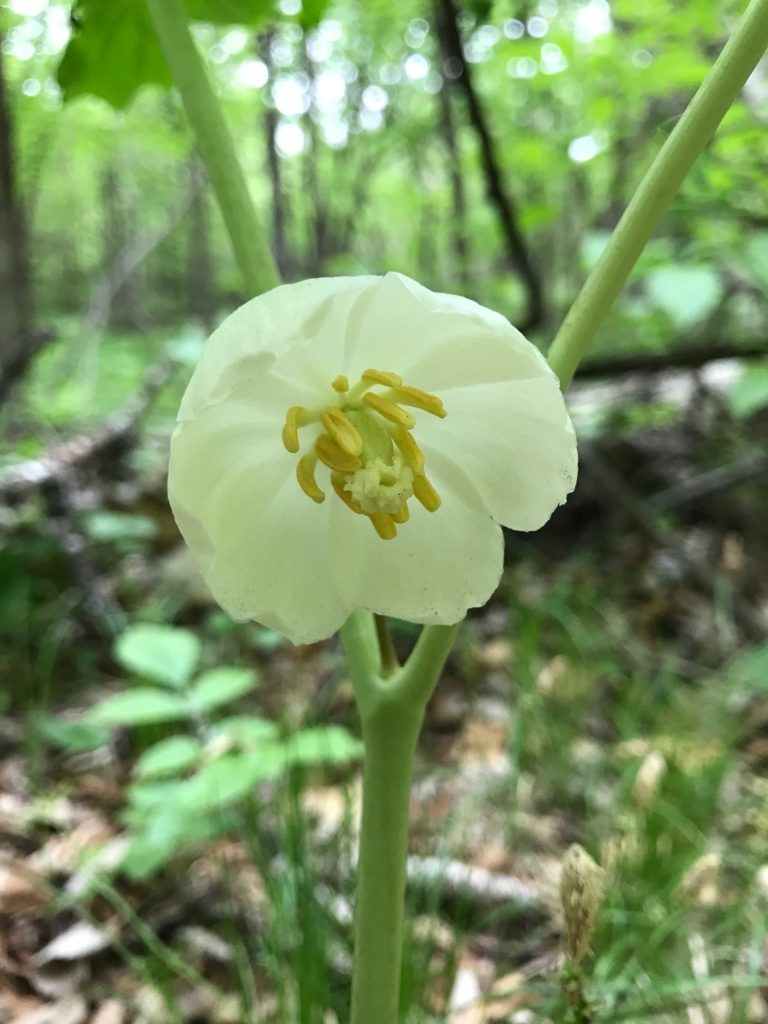
Appearance: Podophyllum peltatum is a herbaceous perennial known for its large, umbrella-like leaves and single, nodding white flower.

Leaves: The leaves are deeply lobed, resembling a closed umbrella.

Flowers: The plant produces a single, nodding white flower with six petals.

Habitat: It is commonly found in rich, moist woodlands.

Distribution: Mayapple is native to eastern North America.

Occurrence
Planted throughout all the wooded areas.

Virginia Spring Beauty – Claytonia virginica

Native To State: YES
Naturally Occurring: NO

Description

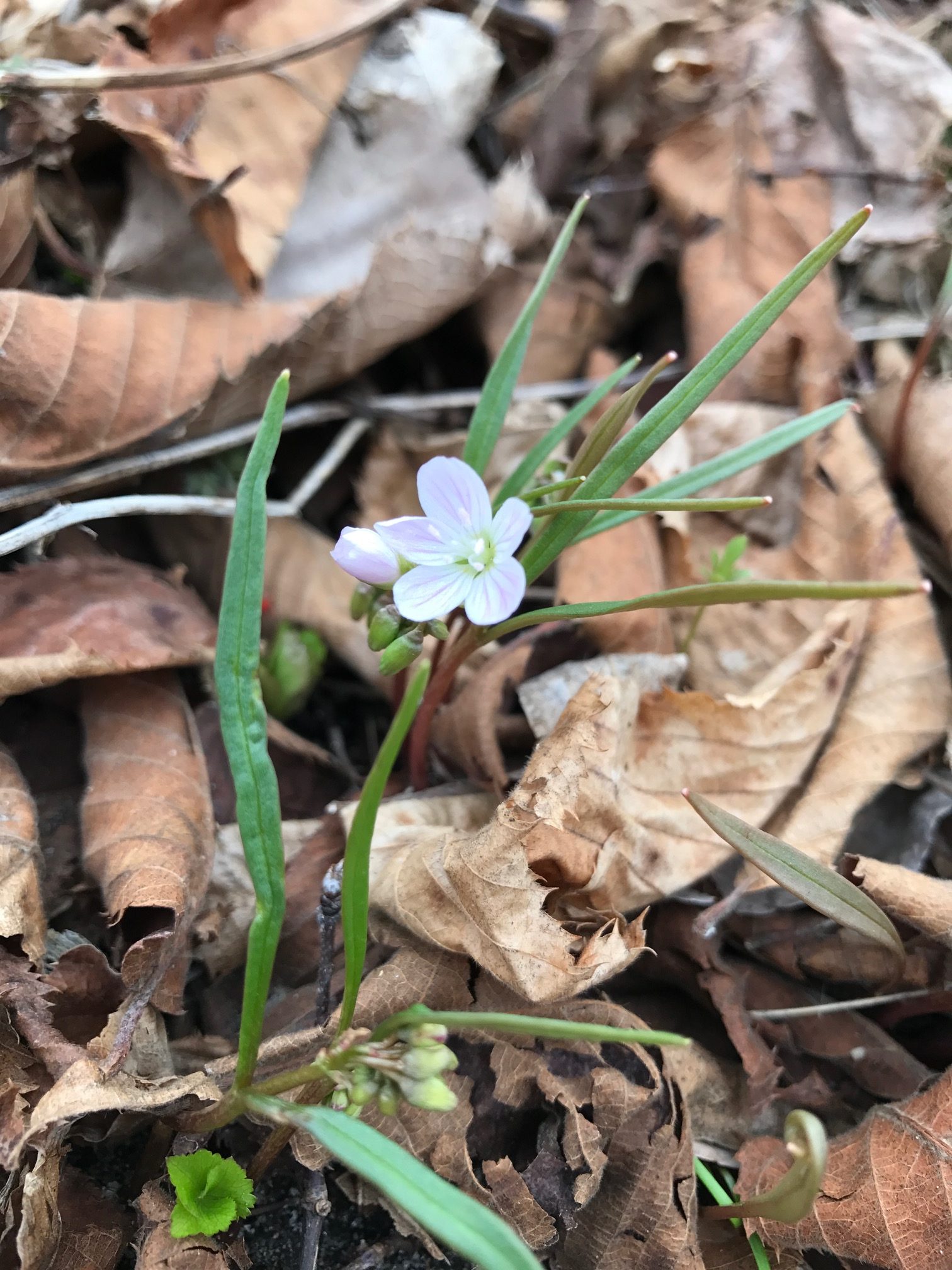
Appearance: Claytonia virginica is a herbaceous perennial known for its delicate, pink to white, star-shaped flowers and linear leaves.

Leaves: The leaves are linear or lance-shaped and emerge from a basal rosette.

Flowers: The plant produces small, pink to white, five-petaled flowers with pink stripes.

Habitat: It is commonly found in woodlands and moist, shaded areas.

Distribution: Virginia springbeauty is native to eastern North America.

Occurrence
Planted in back 40 and in the fern area and the large brush island