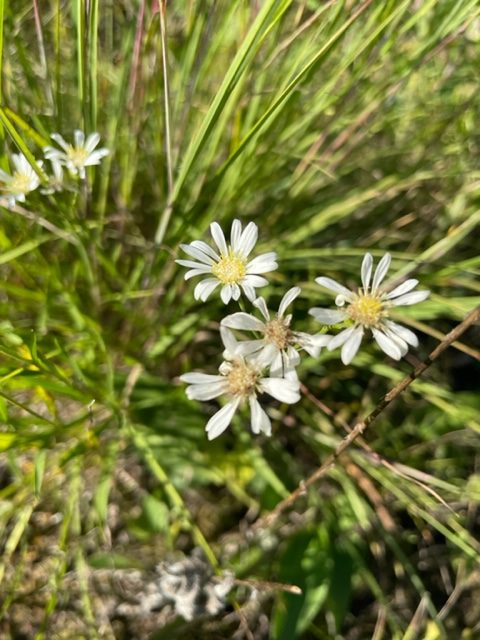
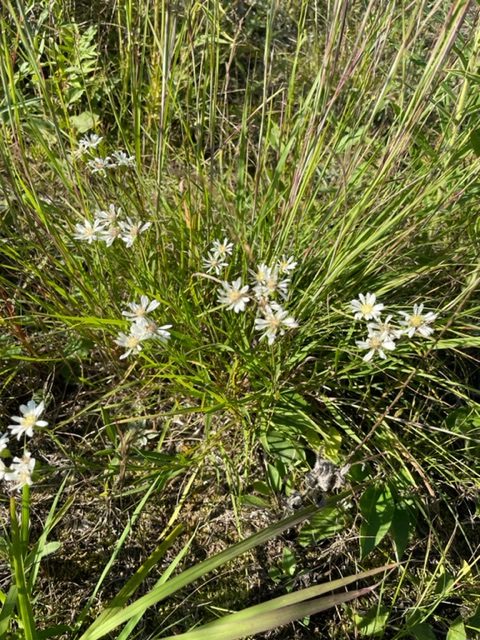
Upland White Goldenrod – Solidago ptarmicoides

Native To State: YES
Naturally Occurring: NO

Description

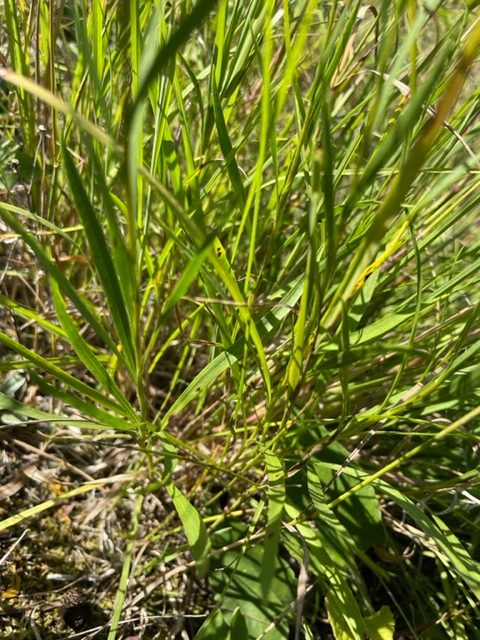
Appearance: Solidago ptarmicoides is a herbaceous perennial known for its white to pale yellow flower heads.

Leaves: The leaves are lance-shaped and alternate along the stem.

Flowers: The plant produces small, white to pale yellow, plume-like flower heads in dense clusters.

Habitat: It is commonly found in meadows, open woodlands, and rocky slopes.

Distribution: White goldenrod is native to North America.

Occurrence
Found in the prairie section

Partridge Pea – Chamaecrista fasciculata

Native To State: YES
Naturally Occurring: NO

Description

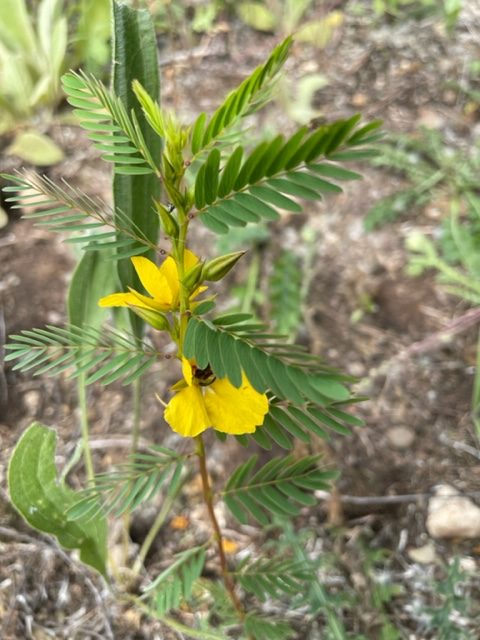
Appearance: Chamaecrista fasciculata is a herbaceous annual known for its delicate, yellow flowers and pinnately compound leaves.

Leaves: The leaves are pinnately compound with numerous small leaflets.

Flowers: The plant produces bright yellow, butterfly-like flowers.

Habitat: It is commonly found in open areas, including prairies and roadsides.

Distribution: Partridge pea is native to North America.

Occurrence
Found in south field forbes bed.

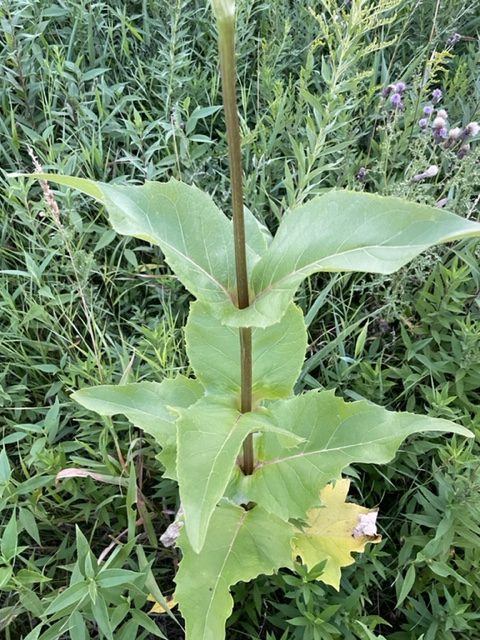
Cup Plant – Silphium perfoliatum

Native To State: YES
Naturally Occurring: NO

Description

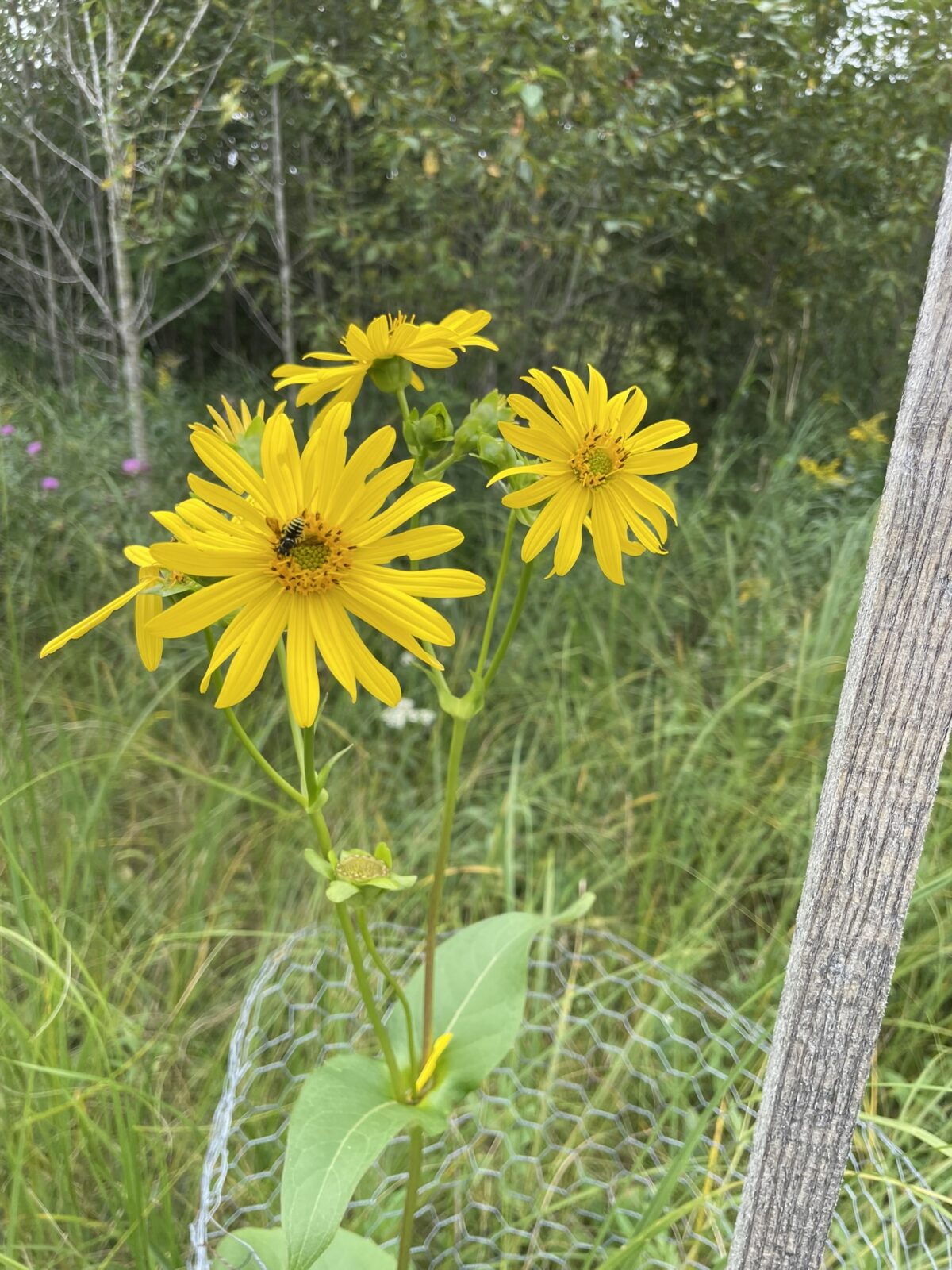
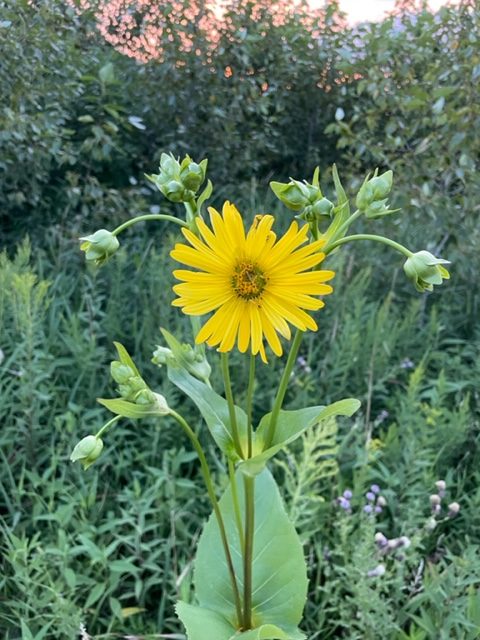
Appearance: Silphium perfoliatum is a tall, herbaceous perennial known for its opposite leaves that clasp the stem and yellow, sunflower-like flowers.

Leaves: The leaves are opposite, broadly lance-shaped, and often fused around the stem, forming a cup.

Flowers: The plant produces large, yellow, sunflower-like flowers with a dark center disk.

Habitat: It is commonly found in wetlands, along stream banks, and in moist meadows.

Distribution: Cup plant is native to North America.

Occurrence
Found in the prairie section

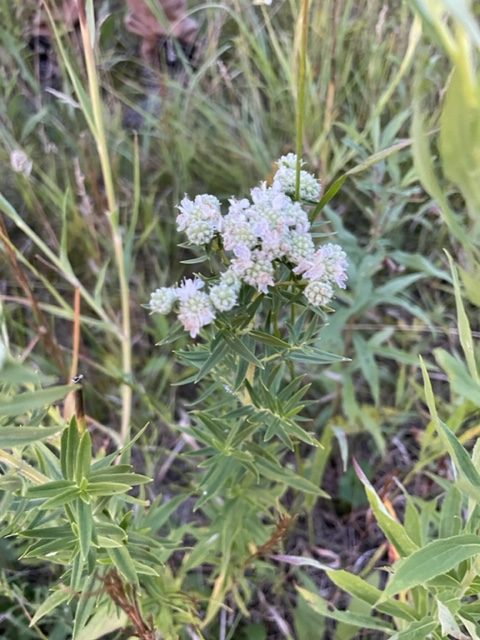
Virginia Mountain Mint – Pycnanthemum virginianum

Native To State: YES
Naturally Occurring: NO

Description

Appearance: Pycnanthemum virginianum is a herbaceous perennial known for its aromatic foliage and dense clusters of white to pale pink flowers.

Leaves: The leaves are lance-shaped and aromatic when crushed.

Flowers: The plant produces dense clusters of small, white to pale pink, tubular flowers.

Habitat: It is commonly found in open woodlands, meadows, and along stream banks.

Distribution: Virginia mountain mint is native to eastern North America.

Occurrence
Found in the prairie areas

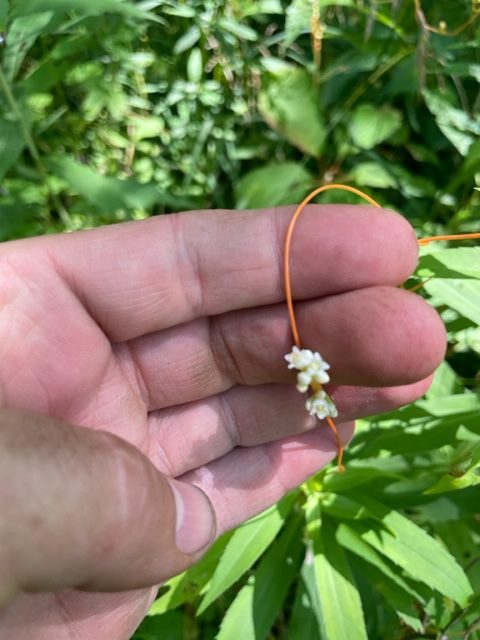
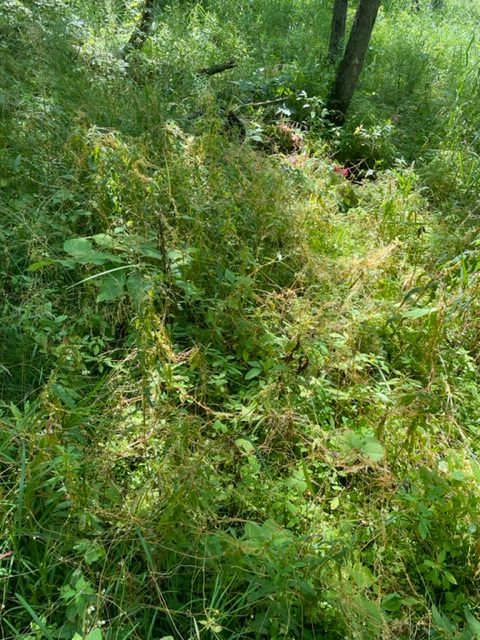
Swamp Dodder – Cuscuta gronovii

Native To State: YES
Naturally Occurring: YES

Description

Appearance: Cuscuta gronovii is a parasitic plant that lacks chlorophyll and appears as thread-like, twining stems with small, scale-like leaves.

Leaves: Dodders are leafless or have tiny, scale-like structures.

Flowers: The plant produces small, white to pinkish, bell-shaped flowers.

Habitat: It is commonly found twining around and parasitizing other plants.

Distribution: Gronovius’ dodder is native to North America.

Occurrence
In back 40 spring area.

Narrow-leaved Purple Coneflower (Echinacea angustifolia)

Native To State: YES
Naturally Occurring: NO

Description

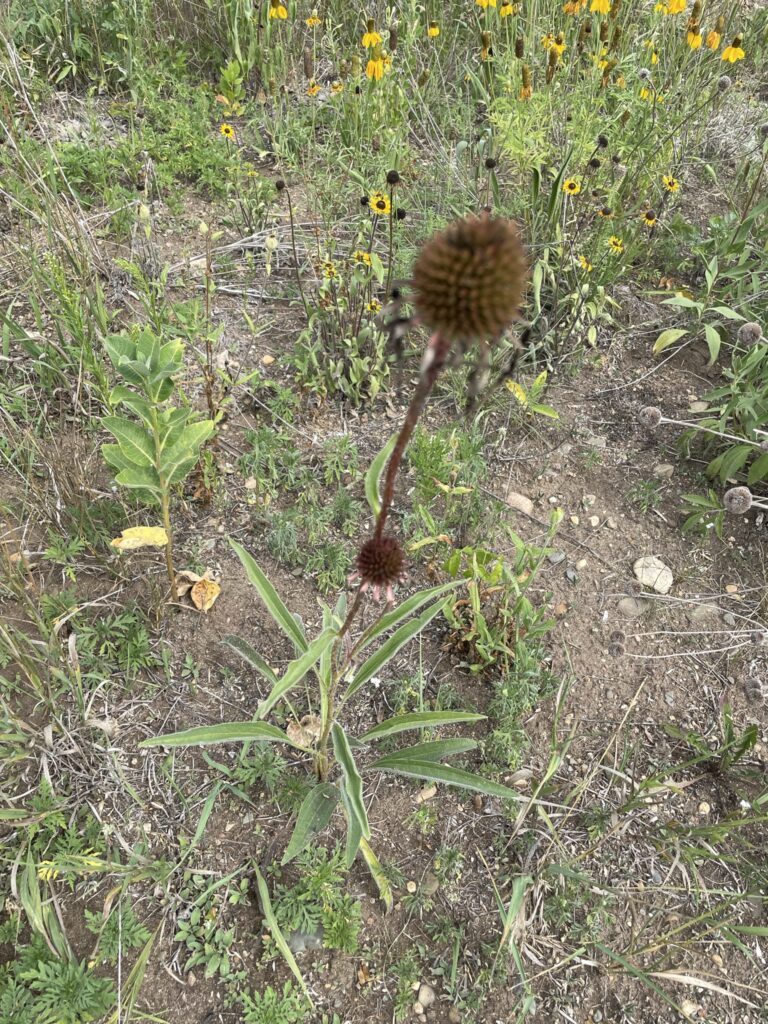
Echinacea angustifolia (Narrow-leaved Coneflower) is a perennial herbaceous plant belonging to the Asteraceae family. Here are some key identification characteristics:

Appearance: Narrow-leaved coneflower is a herbaceous plant with a single, erect stem that can reach heights of 1 to 2 feet (30 to 60 centimeters). The stem is typically unbranched and rises from a basal rosette of leaves.

Leaves: The leaves of Echinacea angustifolia are narrow and lance-shaped, giving rise to the plant’s common name. The leaves are arranged alternately along the stem and have toothed margins.

Flowers: The plant produces striking daisy-like flowers with prominent spiky, reddish-brown central disks and ray florets that are pink to purple in color. The ray florets are drooping and have a slightly reflexed appearance.

Inflorescence: The flowers are held on top of the stem in solitary heads, each surrounded by a ring of green bracts.

Blooming Period: Narrow-leaved coneflower blooms from late spring to mid-summer, attracting pollinators like bees and butterflies to its nectar-rich flowers.

Habitat: This species is native to North America and can be found in a variety of habitats, including prairies, meadows, and open woodlands. It prefers well-drained soils.

Distribution: Narrow-leaved coneflower is found in regions ranging from the central United States to the western parts of Canada.

Conservation: While not considered a threatened species, preserving its natural habitats is important for maintaining healthy populations of narrow-leaved coneflower.

Other Species: Echinacea angustifolia is part of the Echinacea genus, which includes other coneflower species with diverse characteristics.

Narrow-leaved coneflower is admired for its showy and distinctive flowers, making it a popular choice for native plant gardens and wildflower meadows. Its ecological importance in supporting pollinators and its ornamental value contribute to its popularity in horticulture and landscape design.

Occurrence
In both the original prairie section and the new seeded plot.
Pearly Everlasting – Anaphalis margaritacea

Native To State: YES
Naturally Occurring: NO

Description

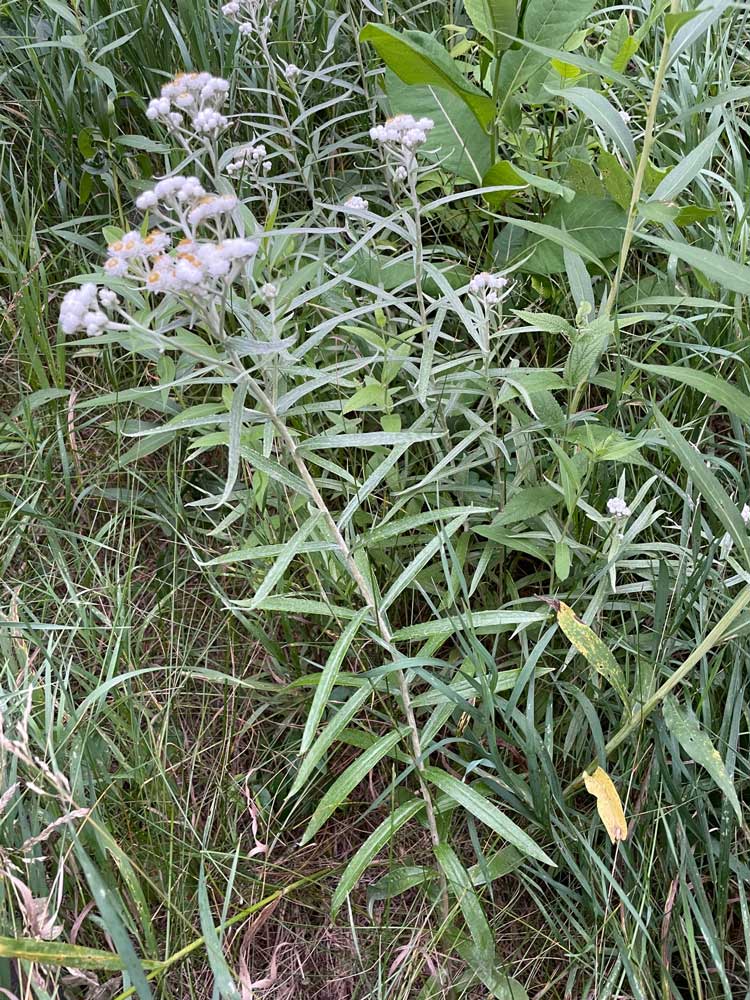
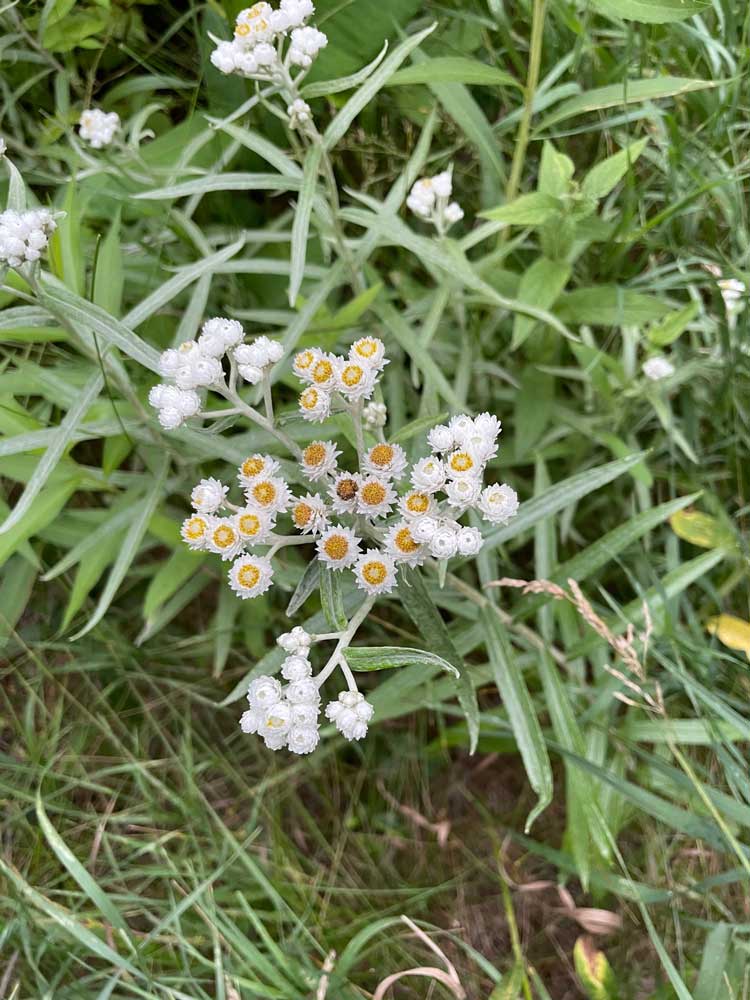
Appearance: Anaphalis margaritacea is a herbaceous perennial known for its woolly stems and clusters of white, button-like flower heads.

Leaves: The leaves are linear to lance-shaped and covered in woolly hairs.

Flowers: The plant produces compact clusters of small, button-like, white or cream-colored flower heads.

Habitat: It is commonly found in meadows, open woodlands, and disturbed areas.

Distribution: Pearly everlasting is native to North America.

Occurrence
Small population found near the original prairie section.

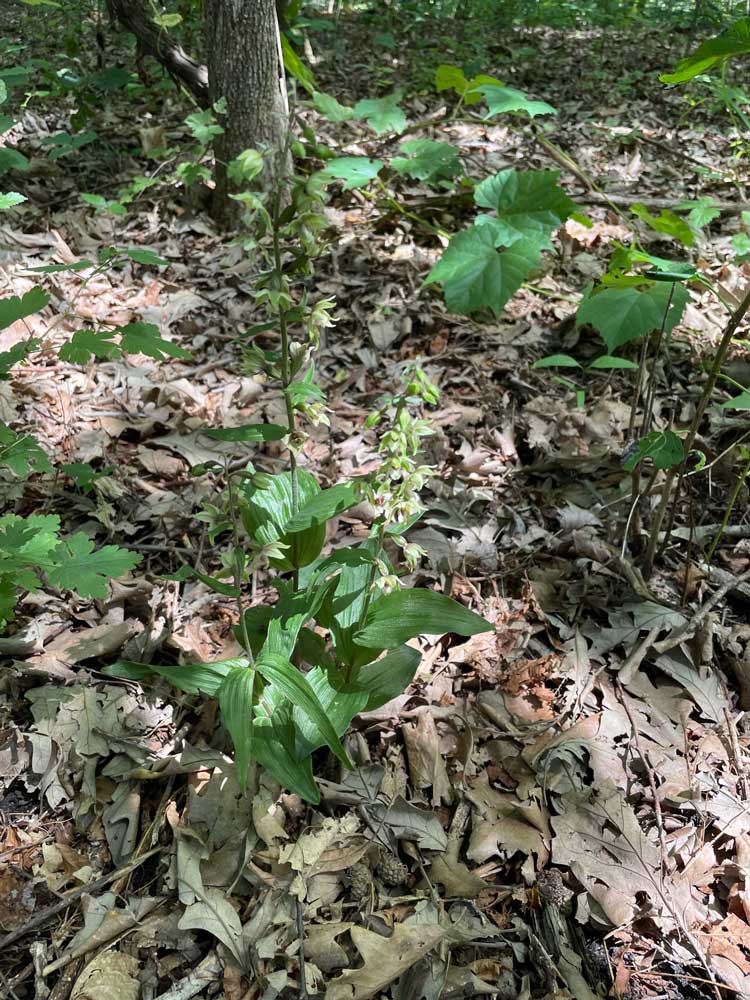
Helleborine – Epipactis helleborine

Native To State: NO
Naturally Occurring: NO

Description

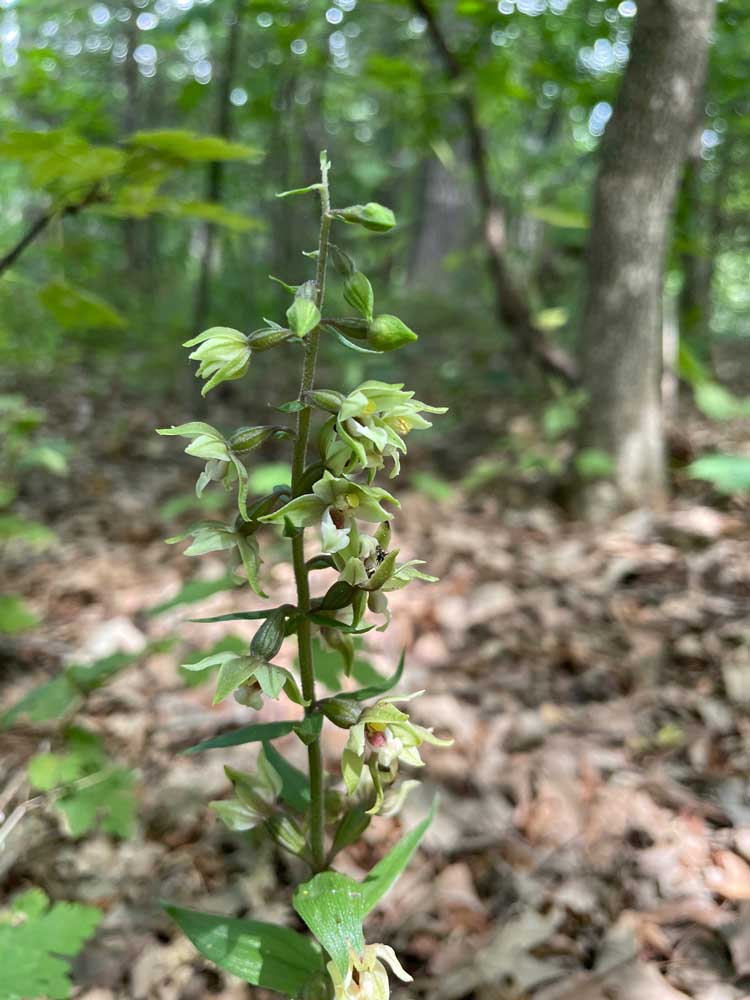
Appearance: Epipactis helleborine is an orchid species known for its tall stem, broad leaves, and small, purple to reddish-brown flowers.

Leaves: The leaves are broad and lance-shaped, often with purple spots.

Flowers: The plant produces small, purple to reddish-brown, orchid-like flowers.

Habitat: It is commonly found in woodlands, grasslands, and disturbed areas.

Distribution: Broad-leaved helleborine is native to Eurasia and has become naturalized in North America.

Occurrence
A few plants found naturalized in former pasture area.

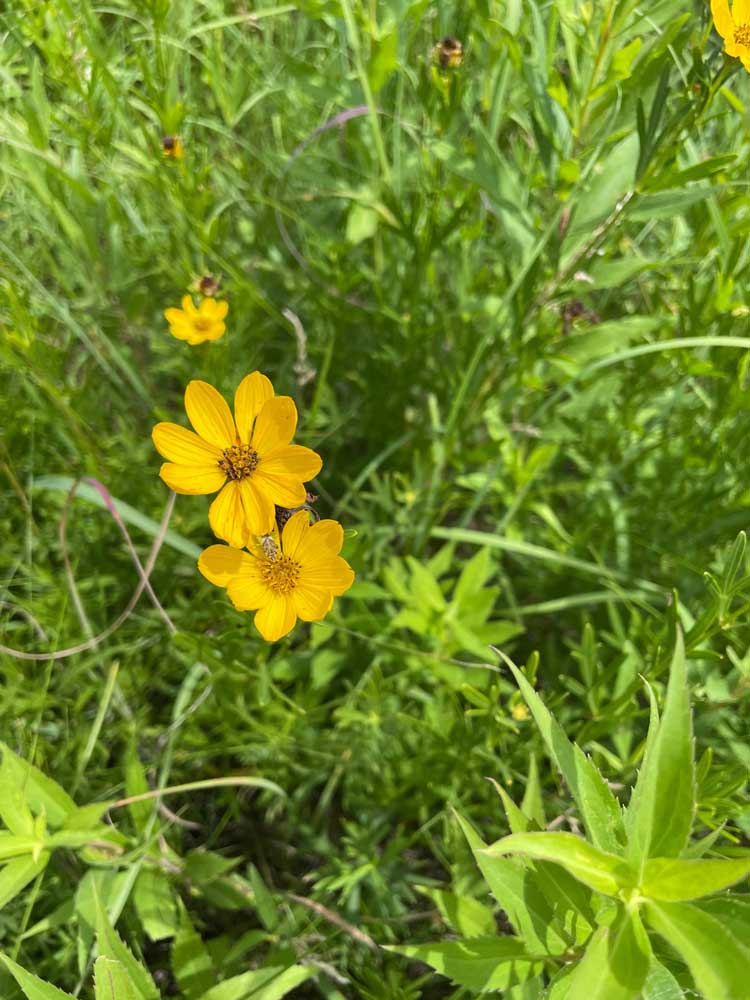
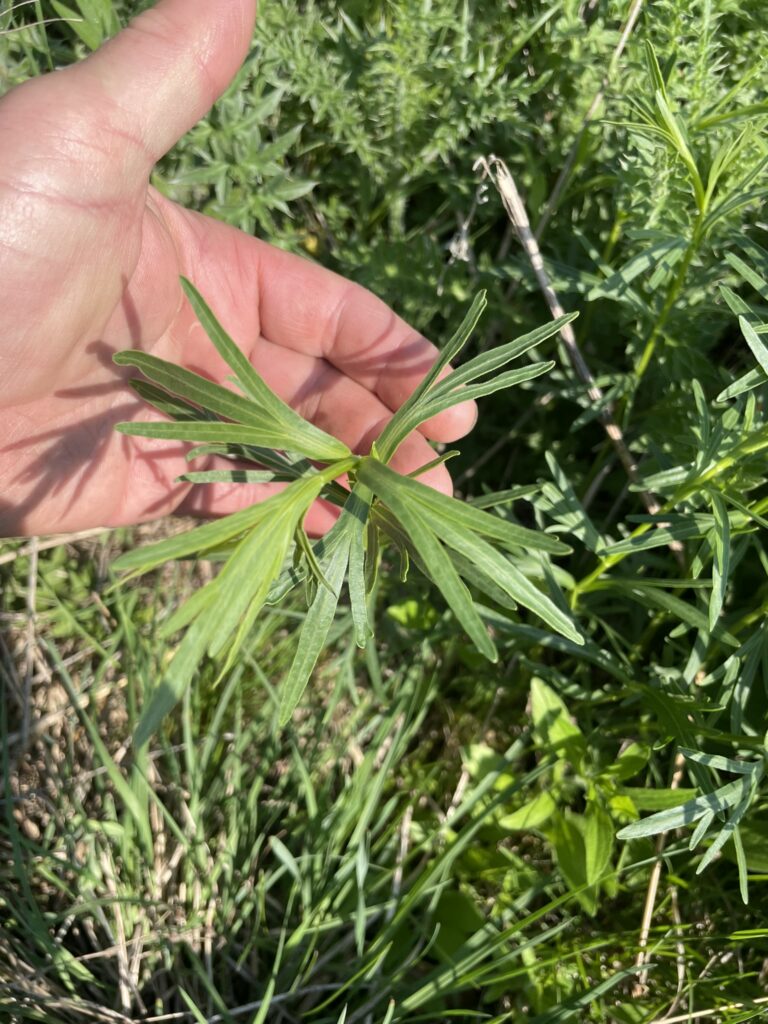
Prairie Coreopsis – Coreopsis palmata

Native To State: YES
Naturally Occurring: NO

Description

Appearance: Coreopsis palmata is a herbaceous perennial known for its tall, slender stems and bright yellow, daisy-like flowers.

Leaves: The leaves are deeply lobed and palmate, giving the plant its name.

Flowers: The plant produces bright yellow, daisy-like flowers with a darker center disk.

Habitat: It is commonly found in prairies, meadows, and open areas.

Distribution: Prairie coreopsis is native to North America.

Occurrence
Growing in the original prairie section

Spotted Touch-me-not – Impatiens capensis

Native To State: YES
Naturally Occurring: YES

Description

Appearance: Impatiens capensis is a herbaceous annual known for its succulent stems, opposite leaves, and distinctive orange, spurred flowers. Orange irregular shaped flowers give rise to elongated seed capsules which pop open when touched.

Leaves: The leaves are opposite, oval, and often have toothed margins.

Flowers: The plant produces orange, spurred flowers with a distinctive shape.

Habitat: It is commonly found in wetlands, along stream banks, and in damp woods.

Distribution: Orange jewelweed is native to North America.

Note: The juice of the stems of this plant is said to alleviate the sting from nettles.

Occurrence
Found in wetter areas where there is some shade.