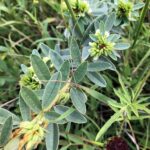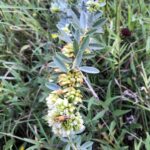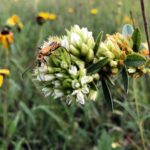
Round-Headed Bush Clover – Lespedeza capitata

Native To State: YES
Naturally Occurring: YES

Description
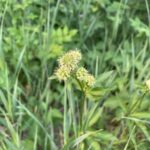
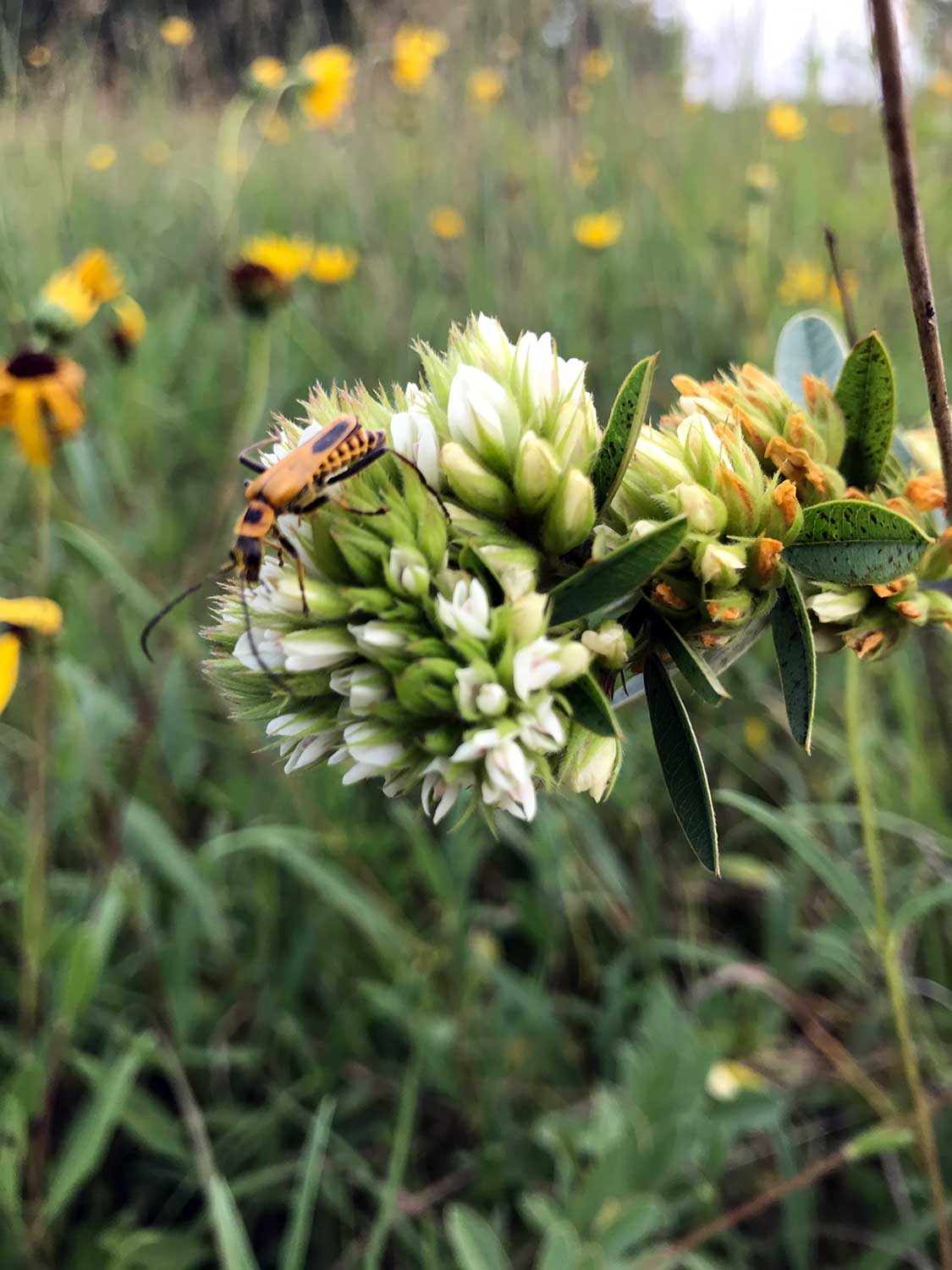
Crowded globe shaped clusters of white flowers on long leaning stems with 3-way compound leaves that are alternate on the stem.

Appearance: Lespedeza capitata is a perennial herb known for its erect stems and globe-like clusters of small, pink to lavender flowers.

Leaves: The leaves are alternate and pinnately compound, with three leaflets.

Flowers: The flowers are pink to lavender and arranged in dense, round clusters at the tips of the stems.

Habitat: It is commonly found in open fields, meadows, and along roadsides.

Distribution: This species is native to eastern and central North America.

Occurrence
Found in prairie section
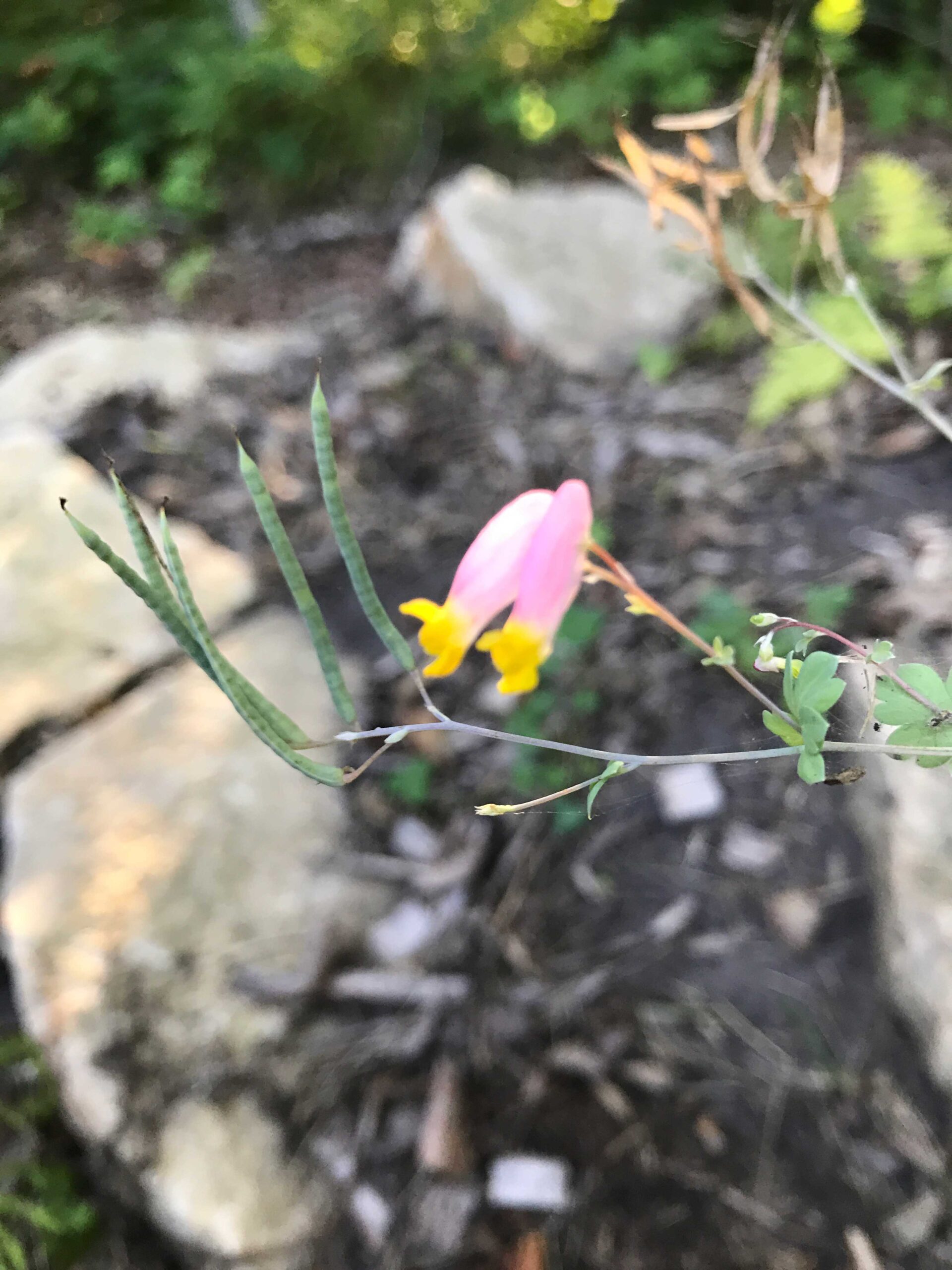
Pale Corydalis – Corydalis sempervirens

Native To State: YES
Naturally Occurring: NO

Description

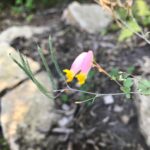
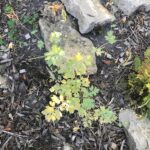
Appearance: Corydalis sempervirens is a perennial herbaceous plant known for its delicate, fern-like leaves and spurred, tubular flowers.

Leaves: The leaves are finely divided and have a lacy appearance.

Flowers: The flowers are spurred and typically pink to lavender in color.

Habitat: It is commonly found in rocky or gravelly soils, often in woodland or forested areas.

Distribution: Rock harlequin is native to eastern North America.

Occurrence
Accidentally introduced into the fern outcropping

Blue Giant Hyssop – Agastache foeniculum

Native To State: YES
Naturally Occurring: YES

Description

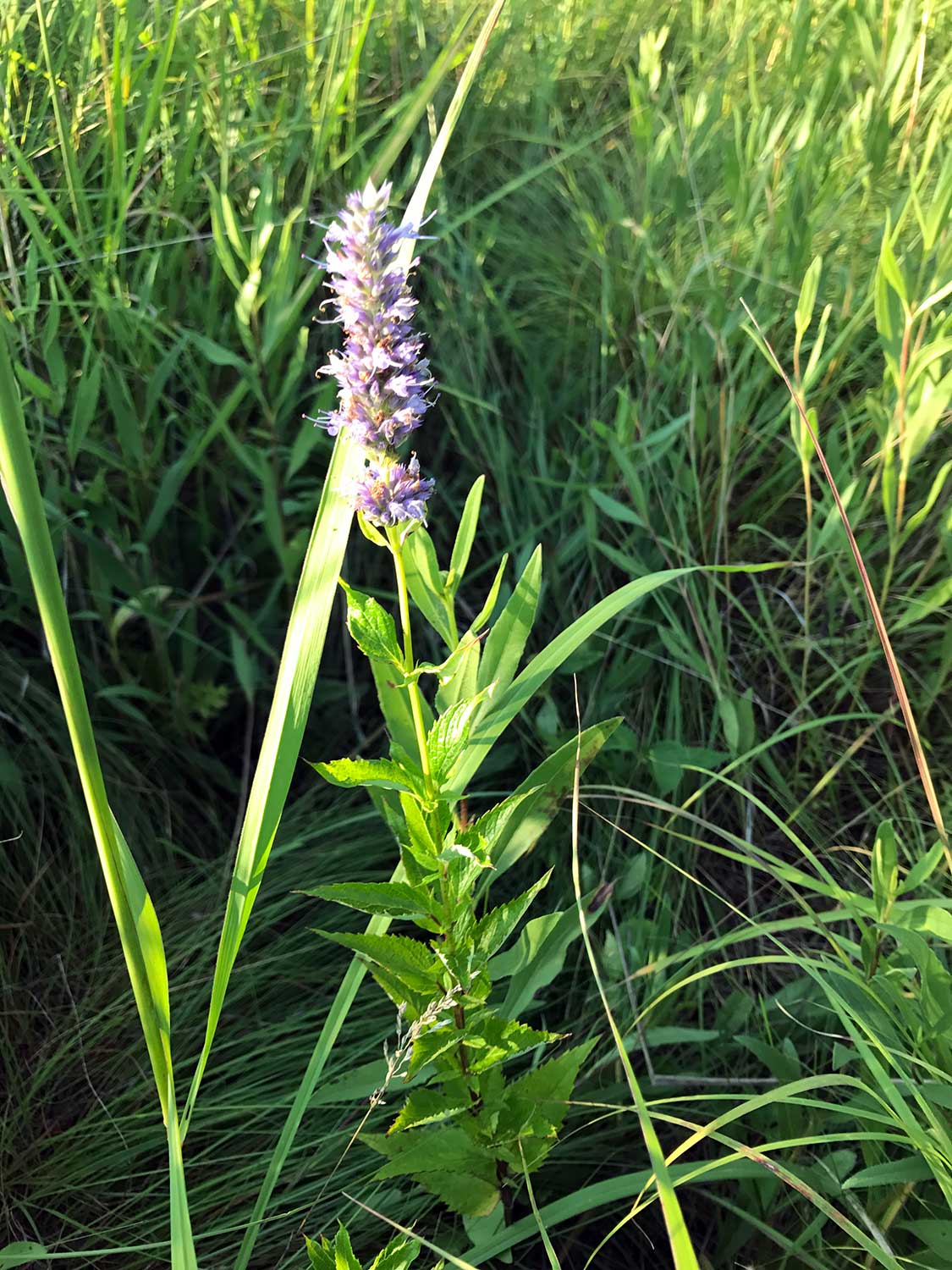
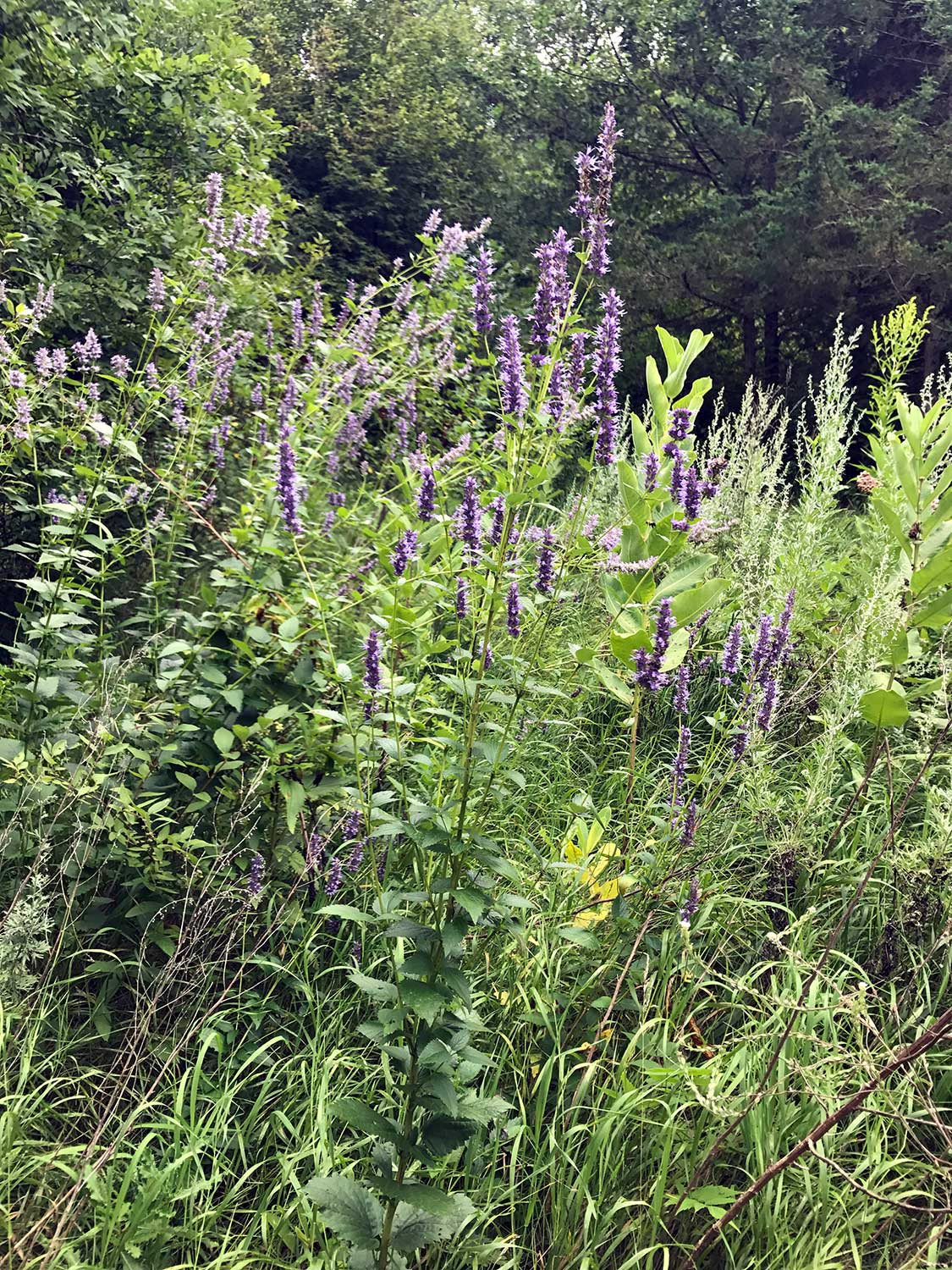
Appearance: Agastache foeniculum is a herbaceous perennial known for its fragrant leaves and spikes of tubular flowers.

Leaves: The leaves are opposite, lance-shaped, and have a strong anise or licorice scent when crushed.

Flowers: The plant produces spikes of tubular flowers that can vary in color from lavender to purple.

Habitat: It is commonly found in prairies, meadows, and open woodlands.

Distribution: Anise hyssop is native to central and eastern North America.

Occurrence
Widespread in the grassy areas of the property

Maryland Black Snakeroot – Sanicula marilandica

Native To State: YES
Naturally Occurring: YES

Description

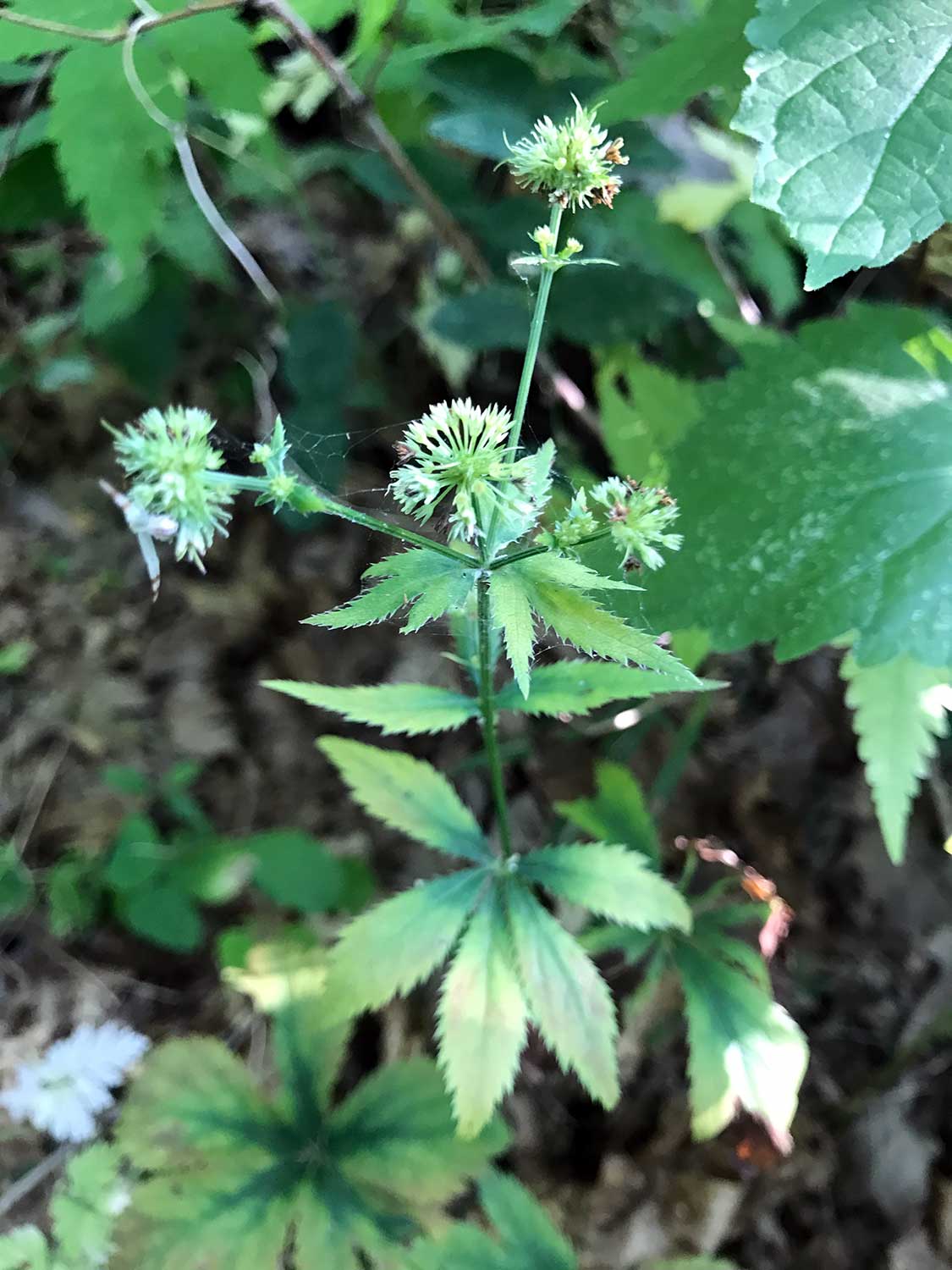
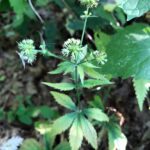
Appearance: Sanicula marilandica is a herbaceous perennial plant known for its compound leaves and clusters of small, greenish-white flowers.

Leaves: The leaves are compound with three leaflets, and they often have toothed margins.

Flowers: The plant produces small, greenish-white flowers arranged in umbels.

Habitat: It is commonly found in woodlands, especially in rich, moist soils.

Distribution: Maryland black snakeroot is native to eastern and central North America

Occurrence
Found in various places in the wooded areas

Purple Giant Hyssop – Agastache scrophulariifolia

Native To State: YES
Naturally Occurring: YES

Description

Appearance: Agastache scrophulariifolia is a herbaceous perennial known for its spikes of tubular, lavender to purple flowers.

Leaves: The leaves are opposite, lance-shaped, and have a minty fragrance when crushed.

Flowers: The plant produces spikes of tubular flowers with a distinctive lavender to purple color.

Habitat: It is commonly found in open woodlands, meadows, and along roadsides.

Distribution: Purple giant hyssop is native to eastern North America.

Occurrence
Found in several places, but particularly in the prairie section
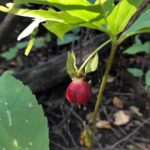
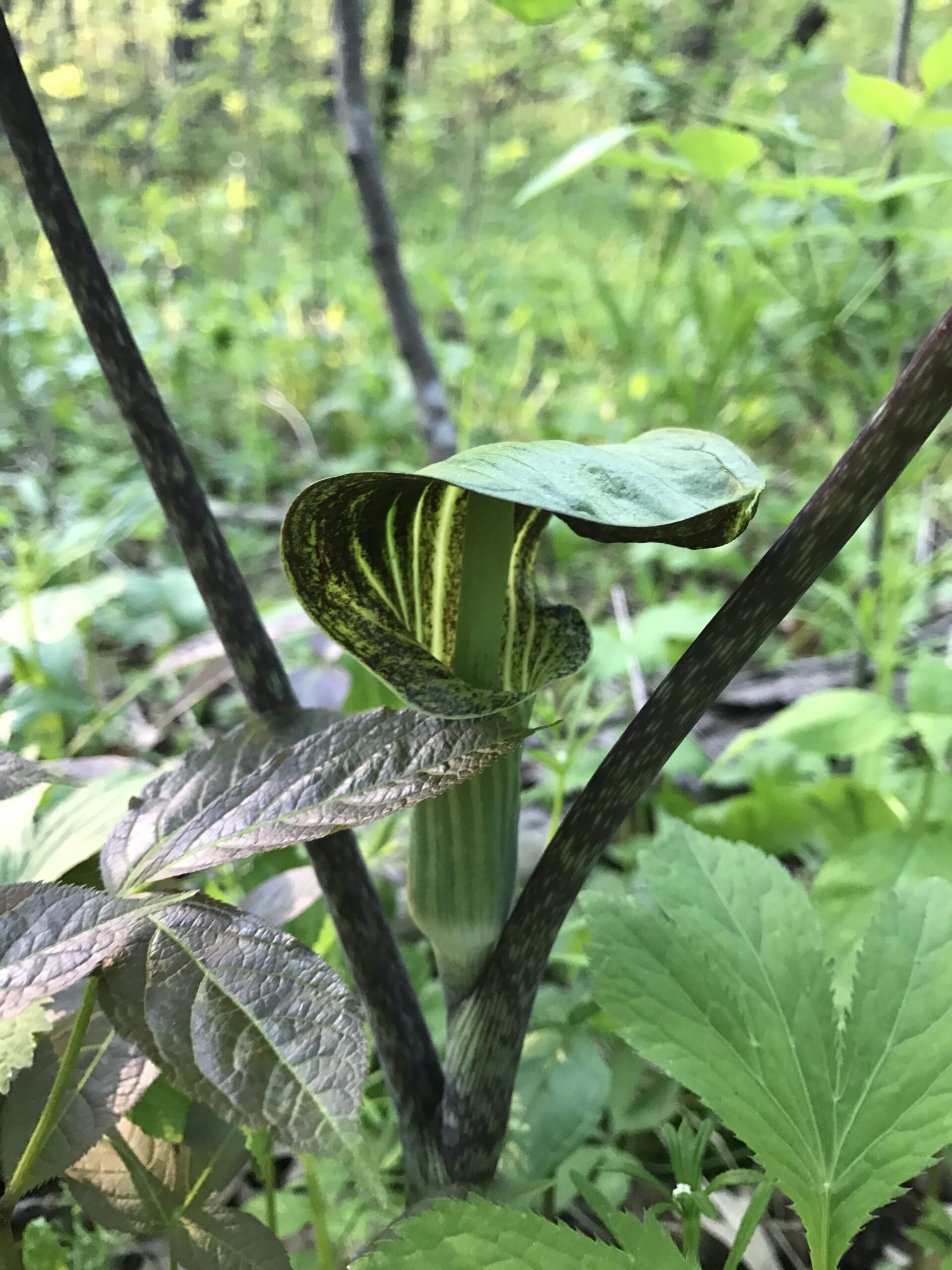
Jack-in-the-Pulpit – Arisaema triphyllum

Native To State: YES
Naturally Occurring: YES

Description

Appearance: Arisaema triphyllum is a unique herbaceous perennial known for its distinctive hood-like spathe and spadix.

Leaves: The leaves are typically divided into three leaflets and emerge in groups.

Flowers: The inflorescence consists of a hood-like spathe (the “pulpit”) and a central spadix (the “Jack”).

Habitat: It is commonly found in moist woodlands and shaded areas.

Distribution: Jack-in-the-pulpit is native to eastern and central North America.

Occurance
Widespread on the property -especially in the back 40

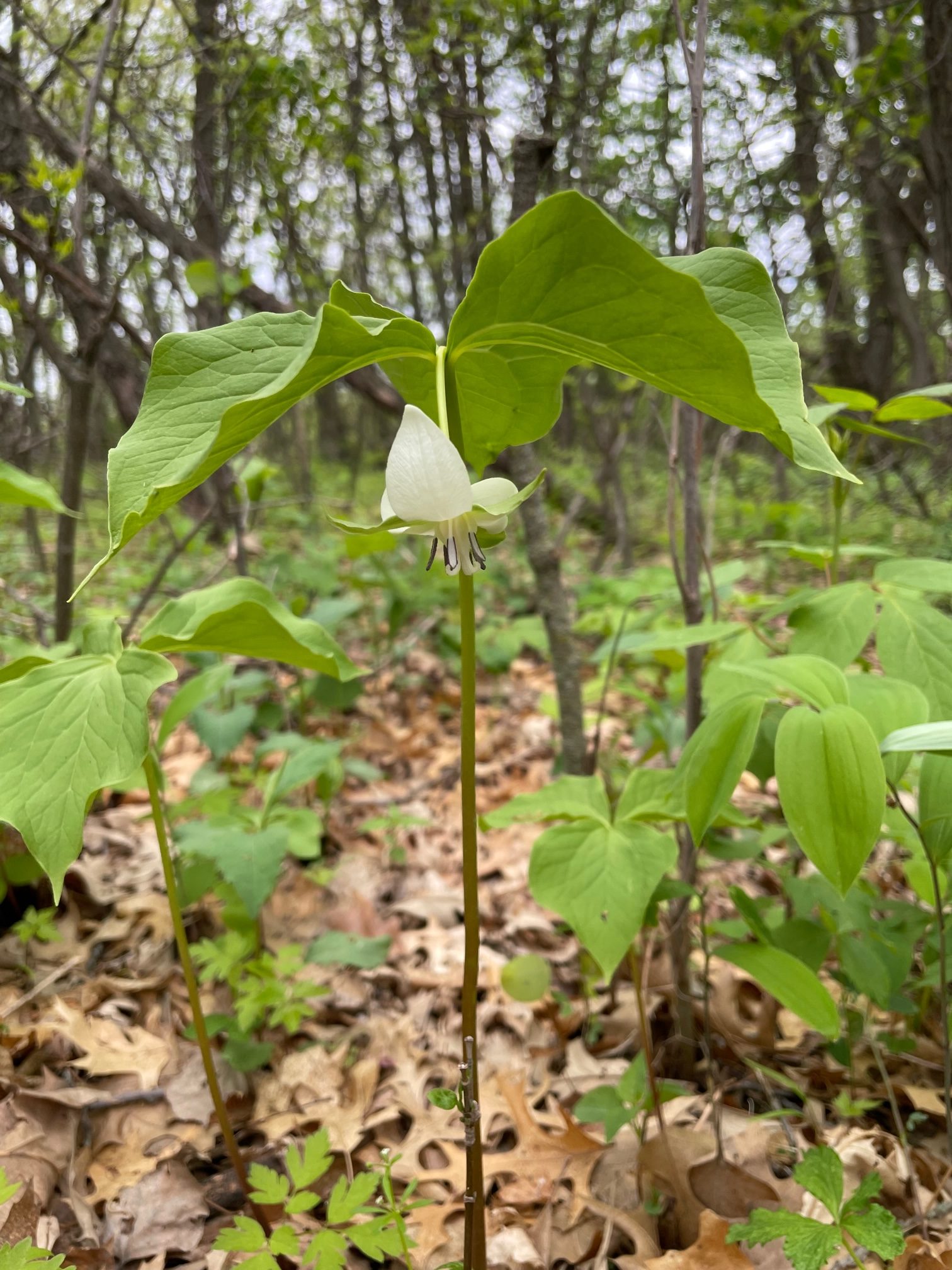
Nodding Trillium – Trillium cernuum

Native To State: YES
Naturally Occurring: YES

Description

Appearance: Trillium cernuum is a woodland perennial known for its nodding, three-petaled flowers.

Leaves: The plant has a whorl of three broad, elliptical leaves beneath the flower.

Flowers: The flowers are typically white or pinkish and nod downward on slender stalks.

Habitat: It is commonly found in rich, moist woodlands.

Distribution: Nodding trillium is native to eastern North America.

Occurance
Found sparsely through the wooded areas of the property

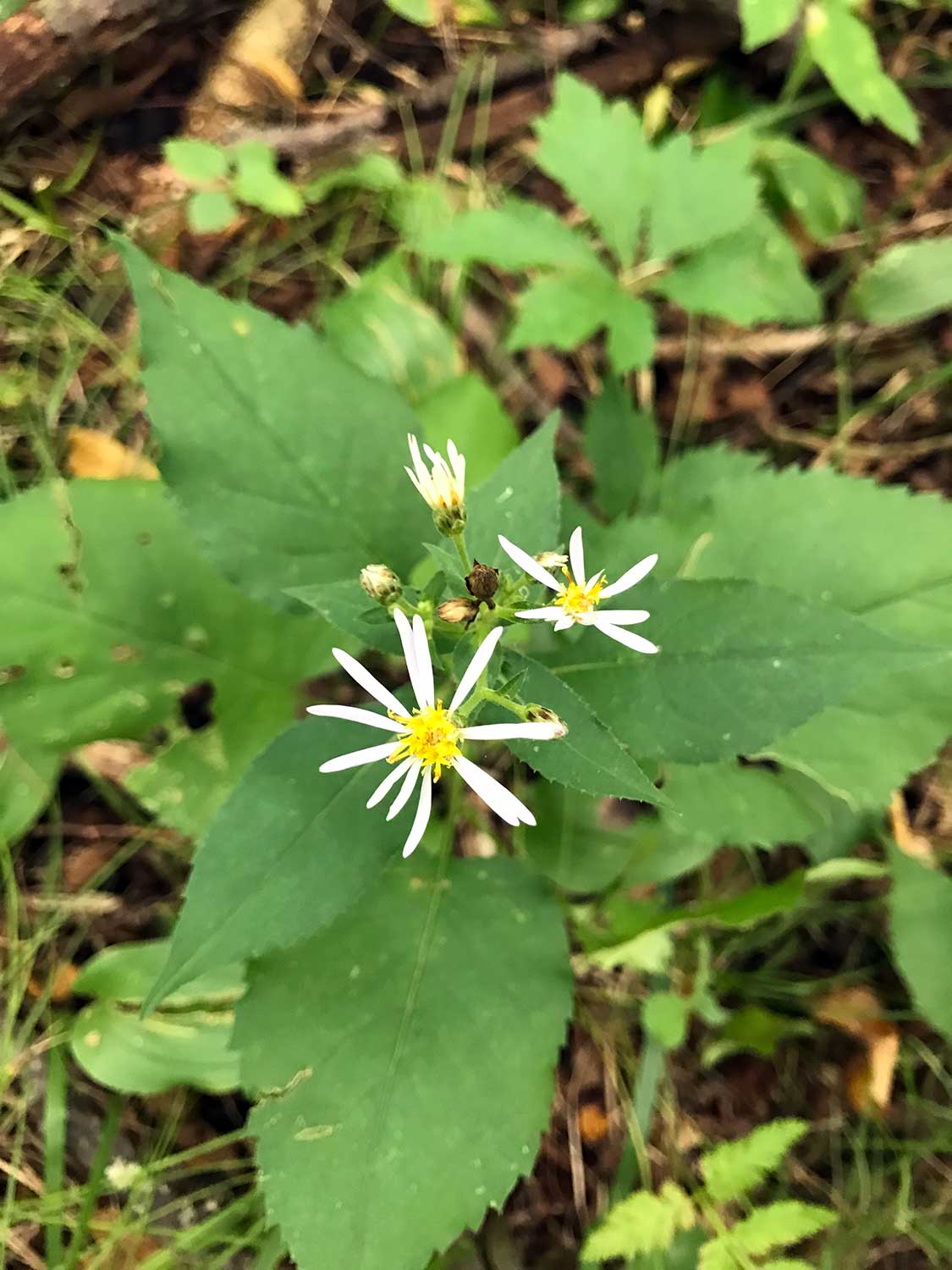
Broad-Leaved Aster – Eurybia macrophylla

Native To State: YES
Naturally Occurring: YES

Description

Appearance: Eurybia macrophylla is a perennial herbaceous plant known for its large, heart-shaped leaves and small, daisy-like flowers.

Leaves: The leaves are opposite, heart-shaped, and often coarsely toothed along the margins.

Flowers: The plant produces small, white to pale purple flowers with yellow centers.

Habitat: It is commonly found in woodlands and along stream banks.

Distribution: Bigleaf aster is native to eastern North America.

Occurance
Found in existing woods in former pasture and especially in the wet area of the back 40

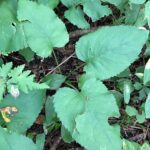
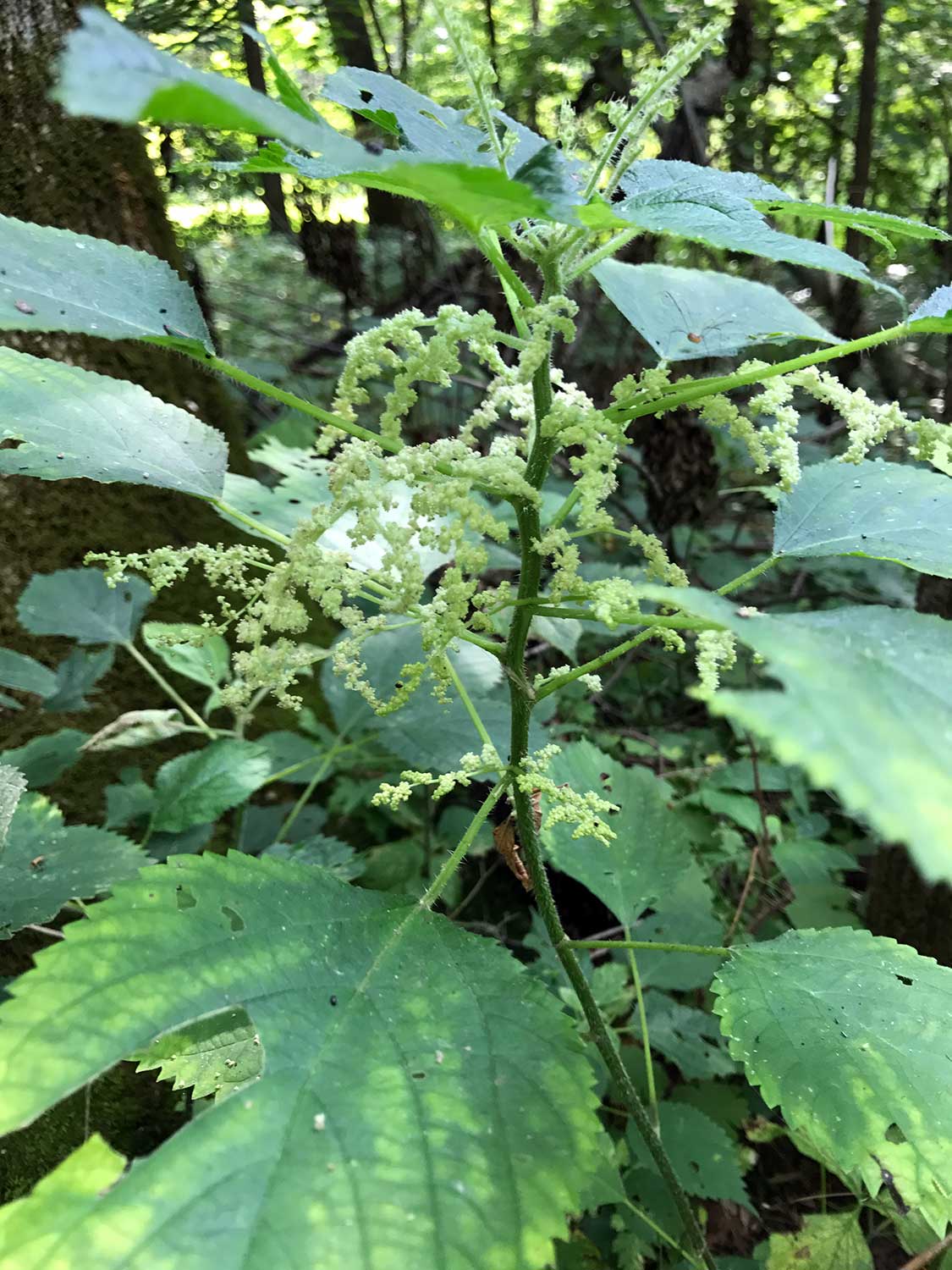
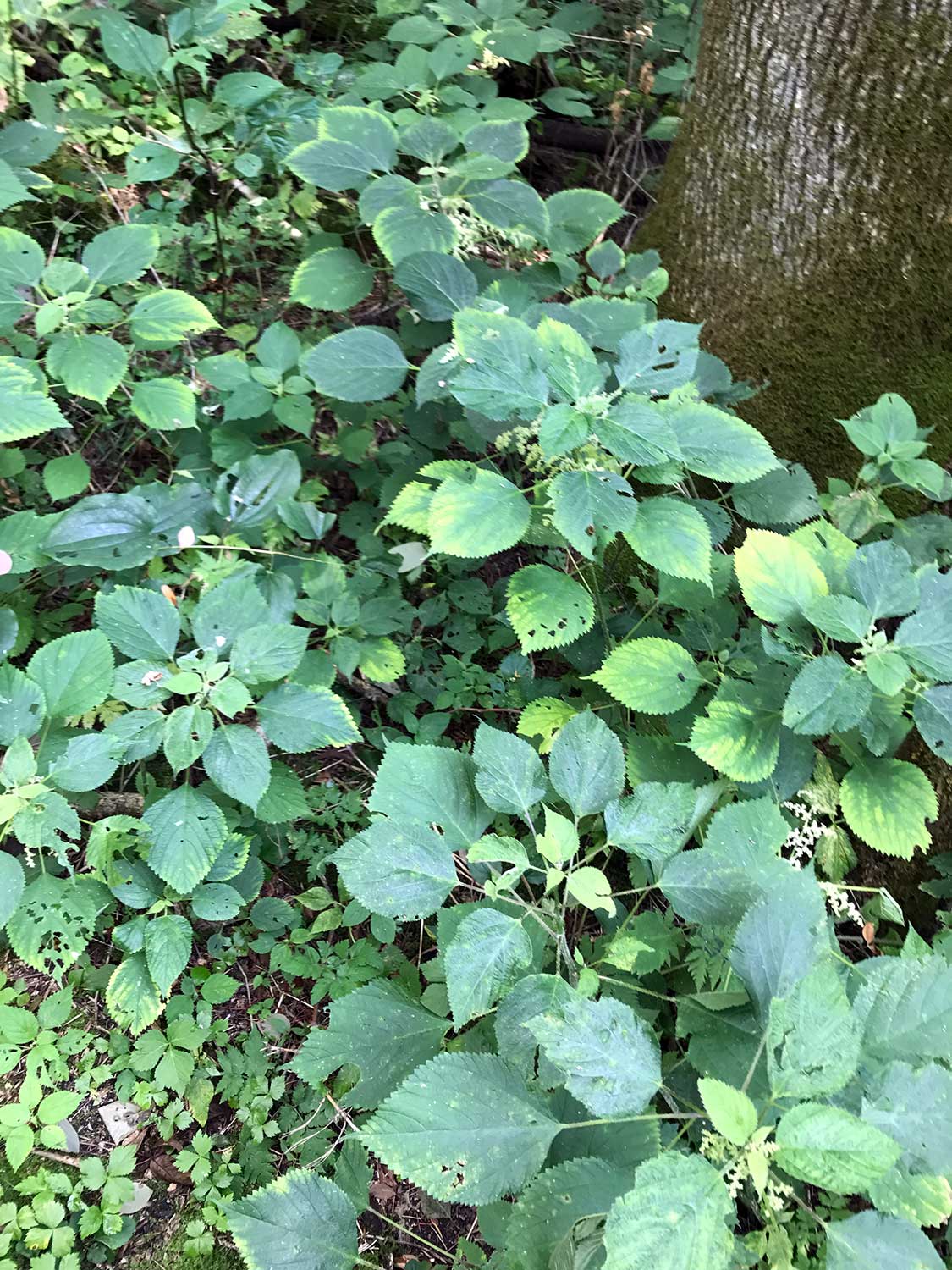
Giant Nettle – Laportea canadensis

Native To State: YES
Naturally Occurring: YES

Description

Appearance: Laportea canadensis is a perennial herbaceous plant known for its serrated leaves and stinging hairs.

Leaves: The leaves are alternate, serrated, and covered with stinging hairs that can cause skin irritation.

Flowers: The plant produces small, greenish flowers in clusters.

Habitat: It is commonly found in moist woodlands and along stream banks.

Distribution: Wood nettle is native to eastern North America.

I find the giant nettle stings worse, but for a shorter time than the regular stinging nettle.

Occurance
Found in existing woods in former pasture and especially in the wet area of the back 40

Common Tansy – Tanacetum vulgare

Native To State: NO
Naturally Occurring: NO

Description

Appearance: Tanacetum vulgare is a perennial herb known for its fern-like leaves and yellow, button-like flower heads.

Leaves: The leaves are finely divided and have a strong, somewhat pungent odor when crushed.

Flowers: The plant produces small, yellow, button-like flower heads in flat-topped clusters.

Habitat: It is commonly found in disturbed areas, along roadsides, and in fields.

Distribution: Common tansy is native to Eurasia but has become naturalized in North America.

Occurrence
This plant is considered invasive. However, it is found around the old original farmstead.  A dug out foundation where a few artifacts have been found, such as a cream can. It was most likely planted by these people and has persisted for over 100 years here, but has not spread further.